Breatheasy
Can anxiety cause chest pain every day? Why it won’t go away, and what helps
Ongoing anxiety can cause chest pain or discomfort most days, through tense muscles, breathing habits and reflux. Why it lingers, how it links to costochondritis, how long it lasts, what helps, and when to get checked again.
 Breatheasy team27 October 2026 · 6 min read
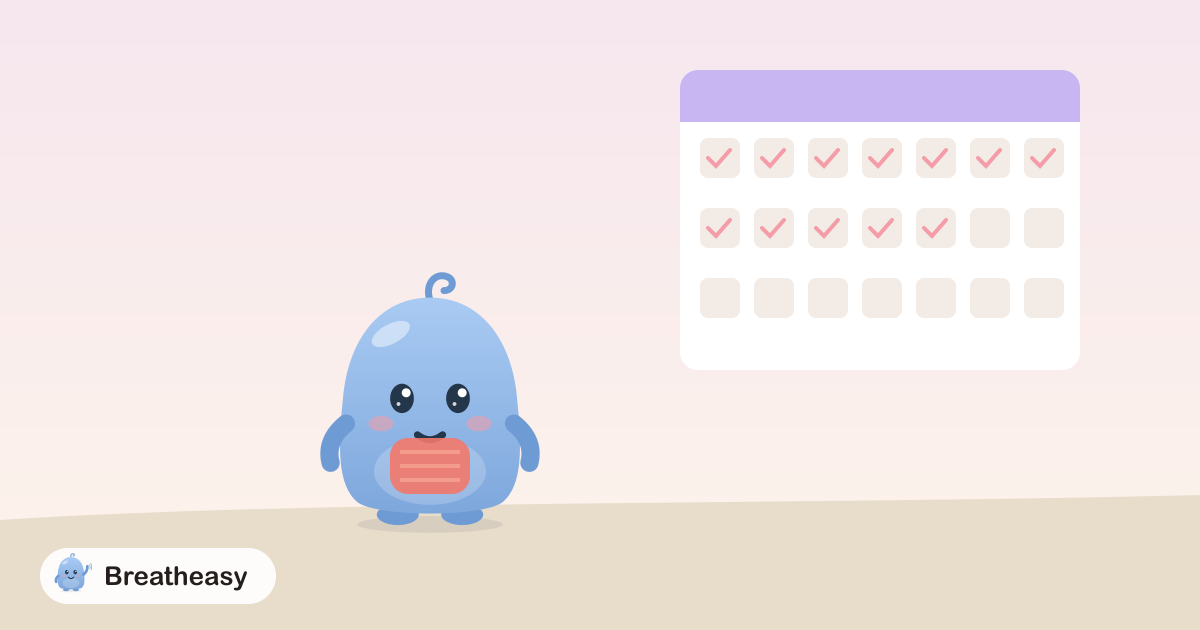
It’s there when you wake up, or it comes and goes all day: a tightness, an ache, a sore spot in your chest. You’ve maybe been checked already and told your heart is fine, but it keeps coming back, and it’s hard not to worry.
Here’s why anxiety can cause chest pain day after day, what else can cause lingering chest discomfort, and how to break the cycle.
If your chest pain is new, suddenly worse, feels different from usual, or comes with pain spreading to your arm, neck, jaw or back, breathlessness, sweating or nausea, call 911 (or your local emergency number).
Can anxiety cause chest pain every day?
Yes. A single panic attack causes chest pain that eases within minutes. But when anxiety is there most of the time, several things keep chest discomfort going:
- Muscles that never fully relax. Constant bracing leaves the muscles between your ribs and across your chest and shoulders tight and sore, a bit like an aching back after days of stress.
- A breathing habit. Many anxious people breathe fast and high in their chest all day without noticing, which overworks chest muscles and keeps them tight.
- Reflux. Stress, irregular meals, coffee and alcohol can bring on heartburn most days.
- Watching and checking. Pressing on your chest, checking your pulse or searching symptoms keeps your attention locked on every sensation, so you notice discomfort you might otherwise ignore, and the worry tightens your muscles further.
Other causes of constant chest discomfort
Lingering chest pain often isn’t anxiety alone. Common causes include:
- Costochondritis: inflammation where your ribs join your breastbone. The NHS says it causes sharp pain that’s often worse when you move your upper body, lie down, breathe deeply or press on your chest, and it can last a few weeks to several months.
- Muscle strain from exercise, lifting, coughing or posture
- Acid reflux, with burning behind the breastbone, worse after meals or lying down
- Asthma, with tightness, wheezing and coughing
- Angina, chest tightness brought on by exertion or stress that eases with rest, which needs a doctor
- Other heart and lung conditions, which a doctor can check for
Anxiety and costochondritis
Costochondritis isn’t caused by anxiety, but the two often go together. A sore spot on your chest is frightening, so it brings on anxiety. Anxiety tenses the surrounding muscles and makes you press and check the sore area, which can keep it irritated. And because the pain can be sharp and on the left side, it’s easy to fear it’s your heart.
If a doctor has diagnosed costochondritis, the NHS says it usually gets better on its own over time. Painkillers that help with inflammation, like ibuprofen, may be recommended, so ask a pharmacist whether they’re safe for you. Avoiding activities that make it worse and trying to press on the sore spot less can help too.
How long can anxiety chest pain last?
- During a panic attack: usually peaks within about 10 minutes and eases as the panic settles.
- After a bad episode: tense muscles can stay sore for hours or a day or two.
- With ongoing anxiety: discomfort can come and go for weeks, especially if muscles stay tense and you keep checking.
- Costochondritis: a few weeks to several months.
Chest pain that’s lasted more than a few days, or keeps coming back, should be checked by a doctor.
Why it won’t go away: the chest pain loop
- You notice a sensation in your chest.
- You worry it’s your heart.
- Worry tenses your chest muscles and speeds your breathing.
- The sensation gets stronger.
- You check: pressing, pulse-taking, searching symptoms, asking for reassurance.
- You feel relief for a moment, then notice the next sensation.
Breaking the loop at any point helps it fade.
What helps
- Get checked, then trust the result. See a doctor about daily chest pain. If your heart is fine, try to treat that as the answer rather than seeking more tests, unless something changes.
- Cut back on checking. Pressing on your chest, checking your pulse and searching symptoms keep the focus on your chest. Try to do it less each day.
- Breathe low and slow a few times a day, with a longer out-breath than in-breath.
- Use warmth on sore chest muscles.
- Move. Gentle exercise, like walking, loosens tense muscles and lowers anxiety.
- Watch your posture and take breaks from hunching over screens.
- Go easy on caffeine and alcohol, and avoid late, heavy meals if reflux is part of it.
- Treat the anxiety. Cognitive behavioural therapy (CBT) is very effective for health worries and panic. Our post on health anxiety explains more.
When to get checked again
Go back to your doctor if:
- the pain changes, gets worse or feels different
- it comes on when you exert yourself and eases with rest
- you have new symptoms, like breathlessness, swollen ankles, a cough or fever
- you’re losing weight without trying
And call 911 for sudden, severe or spreading chest pain, whatever you’ve been told before. Having anxiety doesn’t protect you from other conditions.
Frequently asked questions
Can anxiety cause chest pain for weeks?
Yes, if anxiety stays high and your chest muscles stay tense. But chest pain lasting weeks should always be checked by a doctor, to rule out costochondritis, reflux, heart and lung problems.
Why does my anxiety chest pain not go away?
Usually because the loop keeps going: tense muscles, shallow breathing and constant checking keep the sensation and the worry alive. Treating the anxiety and cutting back on checking help most.
Is constant chest discomfort a sign of something serious?
Often it isn’t, but it can be, which is why it should be checked. Once a doctor has ruled out serious causes, ongoing discomfort is often from muscles, costochondritis, reflux or anxiety.
Can anxiety cause chest pain on the left side?
Yes. Anxiety chest pain can be anywhere, including over your heart. Location alone can’t tell you the cause, so new left-sided chest pain should be checked.
How Breatheasy can help
Once a doctor has checked you, Breatheasy can help you break the daily chest pain loop. A few minutes of guided breathing, with your phone pulsing gently as you breathe in, helps tense chest muscles relax. Ten-second check-ins and a journal help you see how chest discomfort tracks with stress, sleep and caffeine, and give you a record to share with your doctor instead of checking over and over. If discomfort turns into panic, tap “I’m feeling anxious” and Luma walks you through it. Breatheasy can’t tell what’s causing chest pain, so if anything changes or you’re unsure, call 911 first. Breatheasy is coming soon to iPhone and Android.
Sources
- Costochondritis, NHS
- Chest pain, NHS
- Angina, NHS
- Heartburn and acid reflux, NHS
- Panic disorder, NHS