Breatheasy
Does caffeine cause anxiety? How coffee affects your nerves, and how to cut down
How caffeine affects anxiety and panic, how much is in coffee, tea and energy drinks, how it affects your sleep, how to cut down without withdrawal, and when caffeine is an emergency.
 Breatheasy team27 October 2026 · 6 min read
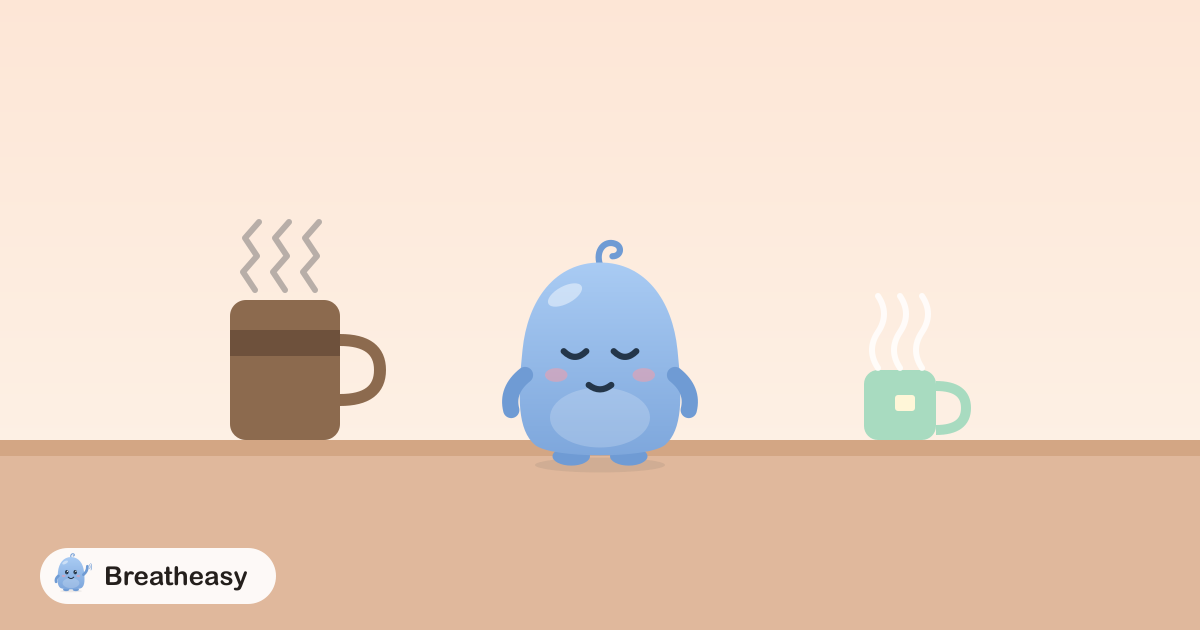
You have your morning coffee, and an hour later your heart is racing, your hands are shaky and your thoughts are spinning. Is it anxiety, or is it the coffee?
Often it’s both. Caffeine is the world’s most popular stimulant, and for people prone to anxiety, it can make a real difference to how they feel. Here’s how it works, how much is too much, and how to cut down without feeling awful.
How caffeine affects your body
Caffeine works mainly by blocking adenosine, a chemical that builds up during the day and makes you feel sleepy. With adenosine blocked, you feel more alert. Caffeine also increases adrenaline, which:
- speeds up your heart
- raises your blood pressure a little
- makes you jittery or shaky
- can upset your stomach and make you need the toilet
- keeps you awake
Those are almost exactly the body sensations of anxiety. If you’re prone to panic, your brain may notice the racing heart and read it as danger, which can tip into a panic attack.
Does caffeine cause anxiety?
Caffeine doesn’t cause an anxiety disorder on its own. But it can:
- Cause anxiety symptoms, especially in larger amounts. MedlinePlus lists restlessness, shakiness, a fast heart rate, insomnia, headaches, dizziness and anxiety as effects of too much caffeine.
- Make existing anxiety worse.
- Trigger panic attacks in people who are prone to them.
When caffeine causes significant anxiety, doctors call it caffeine-induced anxiety disorder. It usually settles when caffeine is cut back.
Caffeine and panic attacks
People with panic disorder seem to be particularly sensitive. A review of eight randomised, double-blind studies, in which people with panic disorder were given caffeine, found that every one showed caffeine increased anxiety, panic attacks, or both.
If you have panic attacks, it’s worth trying a few weeks with much less caffeine, or none, to see if they become less frequent.
How much caffeine is too much?
The US Food and Drug Administration says up to 400 mg a day isn’t generally linked to dangerous effects in healthy adults. But people vary a lot in how sensitive they are and how fast they clear it. If you’re anxious, your comfortable amount may be far lower.
Rough amounts in a 12 oz drink, according to the FDA:
| Drink (12 oz) | Caffeine |
|---|---|
| Brewed coffee | about 113 to 247 mg |
| Energy drink | about 41 to 246 mg |
| Black tea | about 71 mg |
| Green tea | about 37 mg |
| Caffeinated soda | about 23 to 83 mg |
| Decaf coffee (8 oz) | about 2 to 15 mg |
Watch for hidden caffeine in pre-workout powders, caffeine pills, some pain relievers and cold medicines, “focus” supplements, chocolate and some iced teas. Pure or highly concentrated caffeine powders are dangerous: the FDA says less than half a teaspoon can cause toxic effects like seizures.
During pregnancy, the American College of Obstetricians and Gynecologists suggests keeping caffeine under 200 mg a day.
Caffeine and sleep
MedlinePlus says you may feel the effects of caffeine for four to six hours, and it lingers in your body after that. In one study, caffeine taken 6 hours before bed still disrupted sleep compared with a placebo.
Poor sleep makes your brain more reactive to stress the next day, so an afternoon coffee can feed anxiety in a roundabout way. Many anxious people do better keeping caffeine to the morning.
Caffeine and medicines
Some medicines and supplements can interact with caffeine, including stimulants, certain antibiotics, asthma medicines and heart medicines. Some, like the antidepressant fluvoxamine, slow down how fast your body clears caffeine, so the same cup of coffee has a stronger effect. If you take regular medicine, ask your pharmacist whether caffeine is okay.
How to cut down without withdrawal
If you’re used to caffeine, stopping suddenly can cause withdrawal. A review of the research found that symptoms usually start 12 to 24 hours after your last dose, peak between about 20 and 51 hours, and last 2 to 9 days. They include:
- headache, in about half of people
- tiredness and low energy
- drowsiness and feeling foggy
- low mood or irritability
- difficulty concentrating
Withdrawal can feel a lot like anxiety too, which is why cutting down slowly works better:
- Track what you have now for a few days, including tea, soda and energy drinks.
- Cut down by a small amount every few days, like one cup, or swap one coffee for half-caf.
- Move your last caffeine earlier in the day.
- Swap in caffeine-free drinks you enjoy, like herbal tea, decaf or sparkling water.
- Drink water, keep moving and get enough sleep while you adjust.
When caffeine is an emergency
Very large amounts of caffeine, especially from pills, powders or several energy drinks, can be dangerous. Call 911 or Poison Control (1-800-222-1222) if someone has had a lot of caffeine and has chest pain, a very fast or irregular heartbeat, vomiting, confusion, trouble breathing or a seizure.
Frequently asked questions
Can coffee cause panic attacks?
It can trigger them in people who are prone to panic. Caffeine speeds up your heart and makes you jittery, and a panic-prone brain can read those feelings as danger. Many people find they have fewer panic attacks when they cut down.
How long does caffeine anxiety last?
The jittery feeling usually peaks within an hour or so of your drink and fades over a few hours as your body clears the caffeine. Slow breathing, water, food and a walk can help while you wait.
Is decaf okay if I have anxiety?
For most people, yes. Decaf still contains a small amount of caffeine, usually 2 to 15 mg in an 8 oz cup, which most people don’t notice.
Is tea better than coffee for anxiety?
Tea usually has less caffeine than coffee, so many people find it gentler. Herbal teas like chamomile or peppermint have none.
How Breatheasy can help
Breatheasy can help you find your own caffeine limit. Ten-second check-ins let you note how you feel through the day, so you can see whether anxiety follows that second coffee or afternoon energy drink. If caffeine has left you jittery or close to panic, tap “I’m feeling anxious” and Luma walks you through slow breathing and grounding until your body settles. Breatheasy is coming soon to iPhone and Android.
Sources
- Spilling the beans: how much caffeine is too much?, US Food and Drug Administration
- Caffeine, MedlinePlus, US National Library of Medicine
- Caffeine challenge test and panic disorder: a systematic literature review, Vilarim and others, Expert Review of Neurotherapeutics, 2011
- A critical review of caffeine withdrawal, Juliano and Griffiths, Psychopharmacology, 2004
- Caffeine effects on sleep taken 0, 3, or 6 hours before going to bed, Drake and others, Journal of Clinical Sleep Medicine, 2013
- Moderate caffeine consumption during pregnancy, American College of Obstetricians and Gynecologists