Breatheasy
How to help kids with anxiety: what to say, what to do, and what to avoid
Practical ways parents can help an anxious child or teen: how to support without feeding the fear, a step-by-step brave ladder, what to say instead of reassurance, body tools for kids, and when to get professional help.
 Breatheasy team27 October 2026 · 6 min read
Your child gets a stomach ache every school morning. Or they won’t sleep alone, ask the same worried questions over and over, or melt down before birthday parties. You want to help, but you’re not sure whether to push them, protect them or wait for it to pass.
Here’s what research and experience show actually helps anxious children and teens, and the common traps that can make it worse.
Normal worries vs anxiety that needs help
All children have fears, and many are a normal part of growing up:
- toddlers: separation from parents, strangers, loud noises
- young children: the dark, monsters, animals, being alone
- school-age children: performance, getting things wrong, natural disasters, illness
- teenagers: fitting in, how they look, exams, the future
It’s worth paying closer attention when a fear is much stronger than you’d expect for their age, lasts for months, or gets in the way of school, friendships, sleep or family life.
Signs of anxiety in children
- frequent stomach aches, headaches or feeling sick, especially before school or events
- clinginess, or trouble separating from you
- avoiding school, parties, sport or new situations
- asking the same worried questions again and again
- tantrums, tears or anger when facing something they fear
- trouble falling asleep, or wanting to sleep with you
- being very hard on themselves about mistakes
- in teens: withdrawing, irritability, refusing to go out, or panic attacks
Why accommodating the fear backfires
When a child is frightened, it’s natural to step in: let them skip the party, sleep in your bed, answer every worried question, order for them at restaurants. Researchers call this family accommodation. It comes from love, and it brings quick relief for everyone.
But over time, accommodation tells a child two things: that the situation really is dangerous, and that they can’t cope without you. Anxiety usually grows.
A programme called SPACE (Supportive Parenting for Anxious Childhood Emotions) teaches parents to gently reduce accommodation while staying warm and supportive. In a randomised trial, SPACE worked as well as CBT delivered directly to the child, which is good news for families whose child won’t go to therapy.
What to say instead
Combine empathy (I see how hard this is) with confidence (I know you can handle it):
“I know you feel really nervous about going to the party. That makes sense, it’s new. I also know you can do hard things. Let’s figure out how.”
“I can tell you’re worried. I’m not going to keep answering the same question, because I know the worry will just ask again. I think you can handle not knowing for sure.”
Avoid both extremes: “There’s nothing to be scared of” dismisses the feeling, while “Okay, you don’t have to go” feeds the fear.
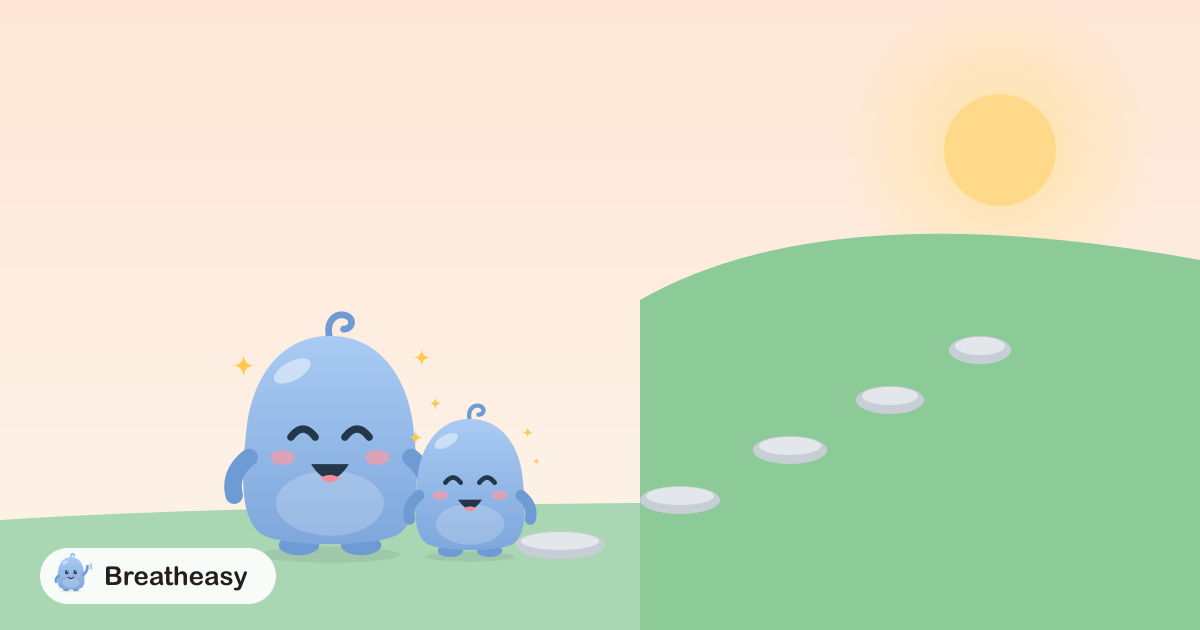
Build a brave ladder
Help your child face fears step by step:
- Choose a fear together, like sleeping in their own room.
- Break it into small steps, from easiest to hardest. For example: you sit by the bed until they fall asleep, then by the door, then in the hallway, then check in after five minutes, then say goodnight and leave.
- Start with a step that feels hard but doable.
- Repeat each step until it feels easier, then move up.
- Praise the effort, not just the outcome: “You were really brave staying even though you were scared.”
Small rewards can help younger children stay motivated.
Teach body tools
Children feel anxiety in their bodies, so give them tools they can use:
- Belly breathing: “Smell the flower” (breathe in), “blow out the candle” (breathe out slowly).
- Squeeze and let go: squeeze fists or a soft toy tight, then flop like a rag doll.
- Grounding games: “Find five blue things,” or name everything they can hear.
- Name it: help them call it what it is, like “the worry monster” or “my alarm going off”, which makes it feel less scary.
Practise these when they’re calm, so they’re ready when needed. Our post on grounding techniques has more ideas.
Everyday things that help
- Keep routines predictable, especially around school, meals and bedtime.
- Protect sleep. Tired children are far more anxious.
- Watch screens and news, particularly before bed and about frightening events.
- Model coping. Let them see you feel nervous and do the thing anyway: “I’m a bit nervous about this meeting, so I’m going to take some slow breaths.”
- Give a heads-up about changes, without dwelling on them for days.
- Work with school. Teachers can help with gradual steps and quiet spaces. In the US, a 504 plan can set out supports at school for children whose anxiety affects their learning.
For teenagers
Teens often want more independence, so:
- ask before advising: “Do you want me to help, or just listen?”
- problem-solve together rather than fixing things for them
- respect their privacy, while staying alert to warning signs
- watch for avoidance, like dropping activities, staying in their room or refusing school
- keep an eye on substances, which some teens use to cope with anxiety
When to get help
Talk to your child’s doctor if anxiety:
- is affecting school, friendships, sleep or family life
- has lasted several months
- is causing panic attacks or regular physical symptoms
- is leading to school refusal
- comes with low mood, self-harm or talk of not wanting to be here
Get help right away if your child talks about suicide or self-harm. Call or text 988 (US), which teens can use themselves, or 911 in an emergency.
Anxiety in children is very treatable. CBT with gradual exposure is the most researched treatment, and parent-focused programmes like SPACE work well too. For moderate to severe anxiety, a doctor may also suggest medicine, usually alongside therapy.
Frequently asked questions
Should I let my anxious child stay home from school?
Occasionally staying home when they’re genuinely unwell is fine. But staying home because of anxiety usually makes the next day harder. Work with the school on small steps back, and talk to a doctor if school avoidance is becoming a pattern.
How do I stop reassuring my child all the time?
Answer a worried question once, kindly and clearly. If it comes again, gently say: “I’ve answered that one. I think it’s the worry asking. What do you think?” Then help them do something else. Reassurance helps for a moment, but the worry soon wants more.
Is my child’s anxiety my fault?
No. Anxiety comes from a mix of genes, temperament and life experiences. Parents don’t cause it, but parents are one of the most powerful parts of helping it get better.
What if my child refuses to see a therapist?
Programmes like SPACE work through parents alone, without the child needing to attend. In a randomised trial, they were as effective as CBT for the child. Ask your doctor about parent-based treatment.
How Breatheasy can help
An anxious child often means an anxious parent, and your calm helps them more than you might think. Breatheasy can help you stay steady. Its breathing exercises pulse your phone gently as you breathe in, and the panic button walks you through anxious moments step by step. Breatheasy is coming soon to iPhone and Android.
Sources
- Anxiety in children, NHS
- Child and adolescent mental health, National Institute of Mental Health
- Parent-based treatment as efficacious as cognitive-behavioral therapy for childhood anxiety, Lebowitz and others, Journal of the American Academy of Child and Adolescent Psychiatry, 2020
- 988 Suicide and Crisis Lifeline