Breatheasy
Anxiety before and during your period: why it happens and what helps
Why anxiety often rises in the week or two before your period, how to tell PMS from PMDD, what helps, the treatments that work, and when to get support.
 Breatheasy team27 October 2026 · 7 min read
Every month, it seems to come back: a week or so of feeling on edge, tearful, irritable or full of dread. Then your period starts, and within a few days you feel like yourself again.
If that sounds familiar, you’re not imagining it. Anxiety linked to your cycle is common, it has real causes, and there’s a lot that helps.
If you have thoughts of ending your life, at any point in your cycle, please call or text 988 (US) now, or call 911 in an emergency.
Is anxiety before your period normal?
Yes. Mood changes, including anxiety, irritability and low mood, are among the most common symptoms of premenstrual syndrome (PMS). They usually start in the 1 to 2 weeks before your period (the luteal phase) and ease within a few days of bleeding starting.
Some people also notice anxiety during the first day or two of their period, especially if they have painful cramps, heavy bleeding or poor sleep.
Why it happens
After ovulation, levels of oestrogen and progesterone rise and then fall sharply before your period. These hormones affect brain chemicals involved in mood, including serotonin and GABA, the brain’s main “calming” messenger.
Research suggests that people with strong premenstrual symptoms don’t usually have abnormal hormone levels. Instead, their brains seem to be more sensitive to the normal changes. That’s why two people with the same hormone levels can feel completely different.
Other things can add to it:
- Poor sleep, which is common in the days before a period
- Pain and bloating, which make it harder to cope
- Existing anxiety or depression, which often gets worse before a period. This is called premenstrual exacerbation.
- Stress, which tends to make PMS symptoms stronger
What period anxiety can feel like
- feeling on edge, tense or restless
- worrying more than usual, or catastrophising
- irritability or snapping at people
- feeling tearful or overwhelmed
- trouble sleeping
- a racing heart or panic attacks
- feeling rejected or sensitive to criticism
- body symptoms like bloating, breast tenderness, headaches and tiredness
PMS or PMDD?
Premenstrual dysphoric disorder (PMDD) is a severe form of PMS that affects a small percentage of people with periods. The symptoms are similar, but much stronger, and they seriously affect work, relationships or daily life.
Signs it might be PMDD:
- intense anxiety, anger, hopelessness or low mood before your period
- feeling out of control, or like a different person
- conflict with people that you regret afterwards
- thoughts of self-harm or suicide that come with your cycle
- symptoms that clear up within a few days of your period starting, every cycle
PMDD isn’t a weakness or “just hormones”. It’s a recognised medical condition, and it responds well to treatment.
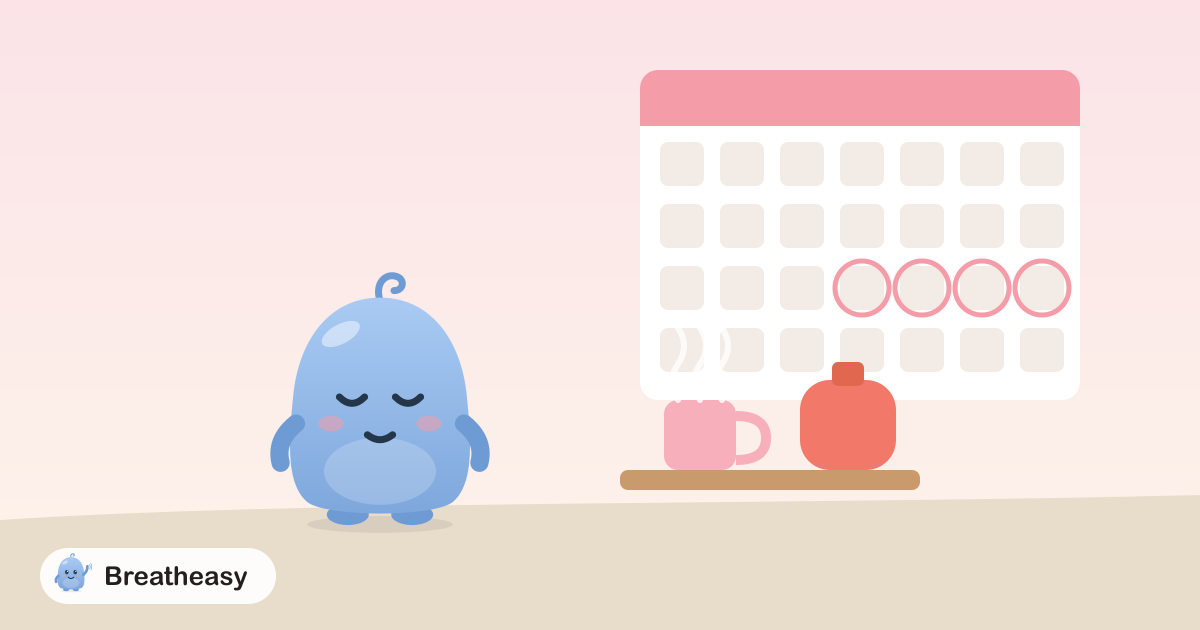
Track it for two or three cycles
The most useful thing you can do is keep a simple daily record. Each day, note:
- your mood and anxiety (for example, 1 to 10)
- sleep, pain and any other symptoms
- the days you bleed
After two or three cycles, you’ll usually be able to see whether your anxiety follows your cycle, or whether it’s there all month and just gets worse before your period. That makes a big difference to which treatment helps. Doctors use daily ratings like these to diagnose PMDD, so bring them to your appointment.
What helps
In the moment:
- Breathe out slowly. In for 4, out for 6. A long out-breath slows your heart and calms your body’s alarm.
- Name it. “This is my premenstrual anxiety. It’s real, and it will ease in a few days.” Knowing the pattern can take some of the fear out of it.
- Lower the load. If you can, plan easier days for your hardest week.
Through the month:
- Move your body. Regular exercise can ease PMS symptoms, including mood.
- Protect your sleep, especially in the week before your period.
- Go easy on caffeine and alcohol, which can both make anxiety and sleep worse.
- Eat regularly, and include calcium-rich foods like yoghurt and leafy greens. The American College of Obstetricians and Gynecologists says taking 1,200 mg of calcium a day can help reduce the physical and mood symptoms of PMS. Check with your doctor or pharmacist before starting a supplement.
- Tell the people close to you. It’s easier for them to support you if they understand the pattern.
Treatments that work
If self-help isn’t enough, talk to a doctor. Options include:
- SSRIs. These antidepressants are a first-line treatment for PMDD. For some people they can be taken just in the second half of the cycle, and they often work faster for PMDD than for depression.
- Hormonal contraception. Some pills that stop ovulation can help PMS and PMDD. But hormonal contraception affects people differently, and for some it makes mood worse. Our post on whether birth control can cause anxiety explains more.
- Cognitive behavioural therapy (CBT), which can help with the anxiety and the way you cope with it.
- Specialist treatments for severe PMDD that hasn’t responded to other treatment.
When it might be something else
- Anxiety all month. If tracking shows anxiety most of the time, it may be generalised anxiety or panic disorder that gets worse before your period. That deserves its own treatment.
- Perimenopause. In your 40s, periods can become irregular and anxiety can appear for the first time or get worse. Our post on anxiety and brain fog mentions this too.
- Thyroid problems, which can cause anxiety, a racing heart and changes to your periods.
When to get help
See a doctor if:
- premenstrual anxiety is affecting your work, relationships or daily life
- you think you might have PMDD
- you have panic attacks
- your periods are very painful or heavy
Get help right away if you have thoughts of harming yourself. Call or text 988 (US), or 911 in an emergency. The International Association for Premenstrual Disorders (iapmd.org) also has information and peer support for PMDD.
Frequently asked questions
Can your period cause anxiety attacks?
Yes. Some people have panic attacks only, or mostly, in the week before their period. If you already have panic attacks, they can become more frequent at that time. Tracking helps you see the pattern and plan for it.
How long does premenstrual anxiety last?
It usually starts somewhere in the 1 to 2 weeks before your period and eases within a few days of your period starting. If it lasts all month, talk to a doctor.
Why do I feel so anxious the week before my period?
Your hormones fall sharply in that week, and some brains are more sensitive to that change than others. Poor sleep, pain and stress can add to it.
Is PMDD a mental health condition?
PMDD is recognised as a depressive disorder in the DSM-5, the manual doctors use to diagnose mental health conditions. It’s linked to your cycle, but it’s real and treatable, and it’s not your fault.
How Breatheasy can help
Breatheasy can help you see your pattern and get through the hard days. Ten-second check-ins and a journal make it easy to track your mood every day, so you can spot cycle-linked anxiety and share it with a doctor. When anxiety spikes, tap “I’m feeling anxious” and Luma walks you through slow breathing and grounding, with your phone pulsing gently as you breathe in. Breatheasy is coming soon to iPhone and Android.
Sources
- Premenstrual syndrome (PMS), American College of Obstetricians and Gynecologists
- PMS (premenstrual syndrome), NHS
- International Association for Premenstrual Disorders
- Generalised anxiety disorder in adults, NHS
- Overactive thyroid, NHS