Breatheasy
What is anxiety? A clear guide to what it is, why it happens and what helps
What anxiety is, what it does to your body and mind, when everyday worry becomes an anxiety disorder, the different types, and the treatments that work.
 Breatheasy team27 October 2026 · 7 min read
Anxiety is something everyone feels. It’s the knot in your stomach before a job interview, the racing heart when you hear a strange noise at night, the “what if” that keeps you awake before a big day.
For some people, though, anxiety becomes too loud, too often, or goes off when there’s nothing to fear. Here’s a clear guide to what anxiety is, why it happens, and what helps.
What anxiety is
Anxiety is a feeling of worry, fear or unease, usually about something that might happen. It comes with changes in your body, your thoughts and what you do.
Think of it as your body’s smoke alarm. Its job is to warn you about danger and get you ready to act. A good smoke alarm goes off when there’s a fire. An oversensitive one goes off when you make toast. Both sound exactly the same, and both feel urgent. Anxiety problems are often a sensitive alarm, not a broken person.
Fear and anxiety are close cousins. Fear is about a danger that’s here now: a car swerving towards you. Anxiety is about a danger that might come: what if the car swerves? They use the same alarm system in your body.
What anxiety does to your body
When your brain senses a threat, it switches on the fight-or-flight response. Adrenaline and other stress hormones get your body ready to run or fight:
- your heart beats faster and harder, to pump blood to your muscles
- you breathe faster, to take in more oxygen
- your muscles tense, ready to move
- digestion slows, so you may feel sick or get butterflies
- you sweat, to cool you down
- your senses sharpen, and your attention locks on to the threat
This response kept our ancestors alive. Today, it fires for exams, emails and awkward conversations, where running and fighting don’t help. So the energy has nowhere to go, and you feel it as a racing heart, shaking, tension and restlessness.
What anxiety does to your mind
- worrying, often about many different things
- imagining the worst (“what if…”)
- finding it hard to concentrate, or your mind going blank
- feeling on edge, irritable or unable to relax
- trouble falling or staying asleep
What anxiety makes you do
Anxiety pushes you to keep yourself safe, so you might:
- avoid situations that make you anxious
- check things again and again
- ask other people for reassurance
- over-prepare, or put things off
These help in the short term. But over time they can keep anxiety going, because your brain never gets the chance to learn that you can cope.
When does anxiety become a problem?
Everyday anxiety comes and goes, matches the situation and fades once it’s over. It might be a sign of an anxiety disorder if your anxiety:
- is much stronger than the situation calls for
- lasts for weeks or months, or is there most days
- is hard to control or switch off
- comes with panic attacks
- makes you avoid places, people or activities
- gets in the way of work, school, relationships or sleep
Types of anxiety disorder
| Type | What it’s like |
|---|---|
| Generalised anxiety disorder (GAD) | Worrying about lots of different things most days, for 6 months or more, and finding it hard to stop |
| Panic disorder | Repeated, unexpected panic attacks, and fear of having more |
| Social anxiety disorder | Intense fear of being judged or embarrassed in social situations |
| Specific phobias | Strong fear of a particular thing, like flying, heights, needles or vomiting |
| Agoraphobia | Fear of places where escape or help might be hard to find, like crowds or public transport |
| Separation anxiety | Intense worry about being apart from people you’re close to |
Two closely related conditions are now grouped separately by doctors: obsessive-compulsive disorder (OCD), with unwanted thoughts and urges to do things to feel safe, and post-traumatic stress disorder (PTSD), which follows a frightening event.
How common is anxiety?
Very. Anxiety disorders are the most common mental health conditions in the world. In the US, around 1 in 5 adults has had an anxiety disorder in the past year, and around 1 in 3 will have one at some point in their life. Women are more likely to be diagnosed than men.
If you have anxiety, you’re far from alone.
What causes anxiety?
There’s usually no single cause. It’s often a mix of:
- genes: anxiety tends to run in families
- temperament: some people are naturally more cautious or sensitive
- life experiences: stress, loss, trauma or a difficult childhood
- ongoing pressure: money worries, work, caring for someone, illness
- health conditions: like an overactive thyroid or heart rhythm problems
- substances: caffeine, alcohol, cannabis and some medicines, or coming off them
Treatments that work
Anxiety is one of the most treatable mental health problems.
- Cognitive behavioural therapy (CBT). CBT helps you notice the thoughts and habits that keep anxiety going and gently change them, often by facing feared situations step by step. It’s the most researched therapy for anxiety.
- Medicine. Antidepressants called SSRIs and SNRIs are commonly prescribed for anxiety. They take a few weeks to work. Other medicines are sometimes used for short periods.
- Self-help. Guided self-help books and courses based on CBT, regular exercise, good sleep and less caffeine and alcohol all help.
Many people do best with a combination. A doctor can talk you through what fits you.
When to get help
Talk to a doctor if anxiety is affecting your daily life, if you’re having panic attacks, or if you’re using alcohol or drugs to cope. A doctor may ask you to fill in a short questionnaire called the GAD-7 to see how much anxiety has bothered you recently.
If you’re having thoughts of ending your life, please call or text 988 (US) now, or call 911 in an emergency.
Frequently asked questions
Is anxiety a mental illness?
Everyday anxiety isn’t. It’s a normal emotion that everyone has. When anxiety is intense, lasts a long time and gets in the way of your life, it may be an anxiety disorder, which is a mental health condition, and a very treatable one.
What’s the difference between stress and anxiety?
Stress is usually a response to a pressure you can name, like a deadline, and it eases when the pressure goes. Anxiety can carry on after the stressful thing is over, or appear without a clear cause, and it’s more about what might happen.
Can anxiety go away on its own?
Sometimes, especially if it was caused by a stressful time that has passed. But anxiety disorders often hang around or come back without treatment. The good news is that treatment works well, so you don’t have to wait it out.
What’s the difference between anxiety and a panic attack?
Anxiety usually builds gradually and can last a long time. A panic attack is a sudden surge of intense fear that peaks within minutes. Our guide to anxiety and panic attacks explains both.
How Breatheasy can help
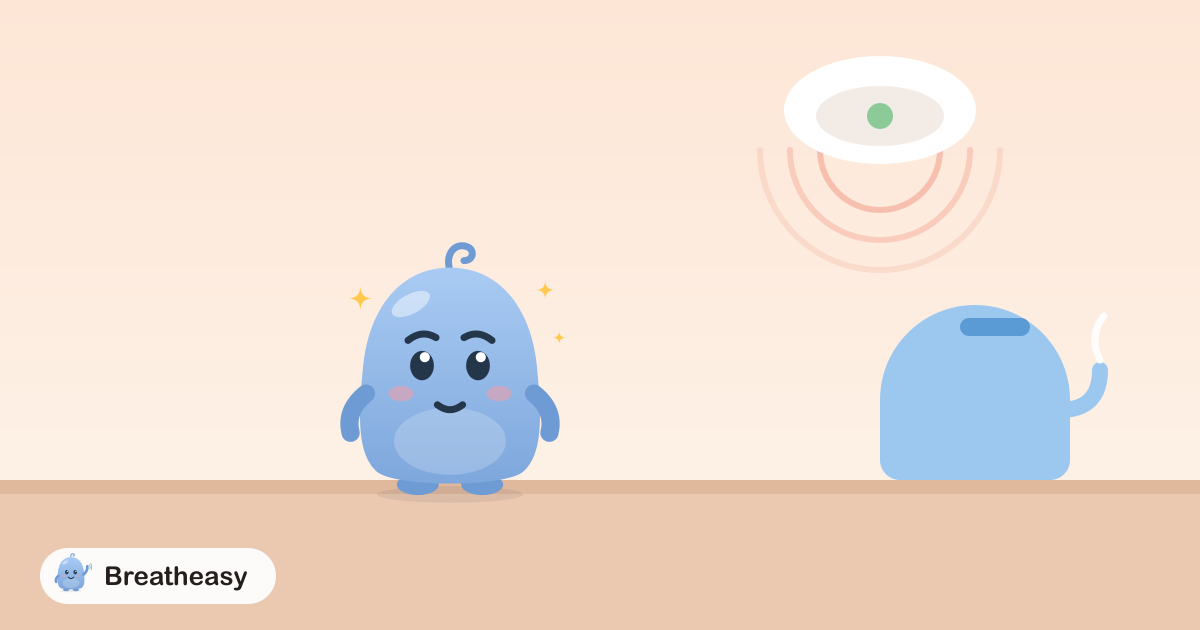
Breatheasy helps you calm your body’s alarm and understand your own anxiety. Tap “I’m feeling anxious” and Luma walks you through it: rate how strong it feels, breathe slowly as your phone pulses gently, ground yourself with 5-4-3-2-1, then see how far the anxiety came down. Short lessons explain what anxiety is doing in your body, and a two-week anxiety check using the GAD-7 helps you see how you’re doing over time. Breatheasy is coming soon to iPhone and Android.
Sources
- Anxiety disorders, National Institute of Mental Health
- Any anxiety disorder: statistics, National Institute of Mental Health
- Anxiety disorders fact sheet, World Health Organization
- Generalised anxiety disorder in adults, NHS
- Cognitive behavioural therapy (CBT), NHS