Breatheasy
How to make an anxiety coping kit you can take anywhere
What to put in a pocket-sized anxiety kit, organised by your senses, plus a calm card in your own words, versions for work, the car and travel, a checklist to copy, and how to use it so it helps long term.
 Breatheasy team27 October 2026 · 6 min read
When anxiety or panic hits, it’s hard to remember what helps. Your thinking brain goes quiet and your alarm system takes over. That’s exactly why it helps to prepare something ahead of time, when you’re feeling okay.
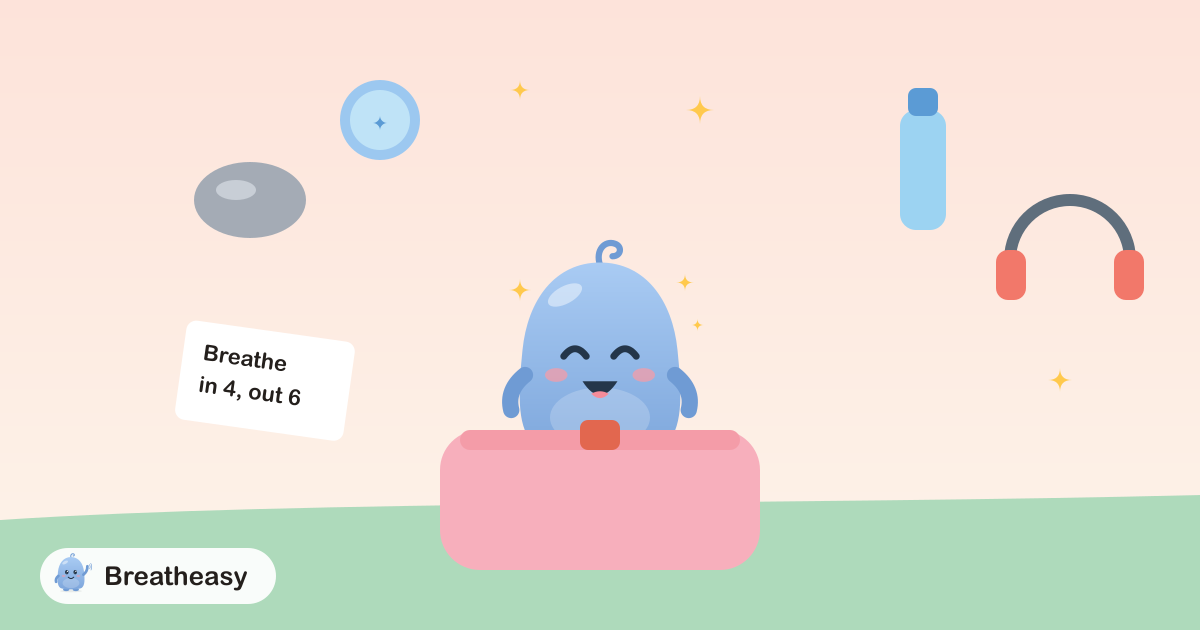
An anxiety coping kit is a small pouch or bag with a few things that help you calm your body and ground yourself, wherever you are. Here’s how to make one that actually works.
Start with a calm card
The most powerful item in your kit costs nothing. It’s a small card, or a note on your phone, written in your own words while you feel calm. When anxiety hits, you don’t have to think. You just read and follow it.
Include:
- What’s happening. “This is anxiety. It feels awful, but it isn’t dangerous. It always passes.”
- Your first step. “Breathe in for 4, out for 6. Do it five times.”
- A grounding exercise. “Name 5 things I can see, 4 I can feel, 3 I can hear, 2 I can smell, 1 I can taste.”
- A reminder of past wins. “I got through the one at the supermarket in March. I can get through this.”
- Who to call. One or two people who know how to help.
- When to get urgent help. For example: “If I have chest pain that spreads, or I feel faint, call 911.” Your doctor can help you decide what belongs here.
Build the rest around your senses
Anxiety pulls your attention inward, to racing thoughts and body sensations. Strong, simple sensations pull it back out into the present. Pick one or two from each group that work for you.
Something cold
- a small instant cold pack, or a cold drink in a bottle
- a cooling face wipe
Cold on your face and wrists can help slow your heart and snap your attention back to the present. If you have a heart condition, check with your doctor first.
Something to touch
- a smooth stone or a worry stone
- a fidget toy, stress ball or putty
- a small piece of soft or textured fabric
- a hand cream you like the feel and smell of
A strong taste
- strong mints, sour sweets or chewing gum
- a small snack, in case low blood sugar is adding to the shakiness
Strong tastes are surprisingly grounding. Check for allergies, and if you have diabetes, choose snacks that fit your plan.
Something to listen to
- headphones or earbuds
- a calming playlist, sounds like rain or waves, or a guided breathing track saved for offline use
- earplugs, if busy places overwhelm you
Don’t use headphones while driving or crossing busy roads, where you need to hear what’s around you.
Something to look at
- a photo of a person, pet or place you love
- a short note from someone who cares about you
- sunglasses, if bright light or crowds feel too much
Something for your body
- a bottle of water
- any medicine your doctor has prescribed for these moments, taken only as prescribed
- a list of your regular medicines and any allergies, in case you ever need medical help
Your phone, ready to help
- charged, with a small power bank in your kit
- calming apps, playlists and contacts set up in advance
- crisis numbers saved: 988 (call or text, US) and 911 in an emergency
A kit for each place
- Work or school: a desk drawer with a cold drink, a fidget, earplugs and your calm card. Our post on panic attacks at work has steps you can use quietly at your desk.
- The car: water, mints and your calm card in the glove box. Never use your phone while driving. If panic hits, slow your breathing, and when it’s safe, pull over before reaching for anything. Our post on panic attacks while driving explains more.
- Travel and flights: headphones, downloaded sounds, a snack, water bought after security, and your calm card. Our post on turbulence anxiety has a plan for bumpy flights.
- Bedside: a soft light, water and something calming to listen to. Our post on calming an anxiety attack at night has a step-by-step plan.
How to use your kit so it helps long term
A coping kit is meant to help you through hard moments so you can keep living your life. But there’s a catch worth knowing about.
If you start to feel you can’t go anywhere without your kit, or you only feel safe because a certain item is with you, it can turn into what therapists call a safety behaviour. Safety behaviours bring short-term relief, but they can stop your brain learning that you can cope on your own, which keeps anxiety going.
So:
- Use the kit to help you stay, not to help you avoid. Use it so you can stay in the shop or the meeting, not so you can leave sooner.
- Use the least you need. Try your breathing first, and reach for more only if you need it.
- Practise going without it sometimes, in situations you’re building confidence in.
- Notice your progress. Needing the kit less is a sign it’s working.
A therapist trained in cognitive behavioural therapy (CBT) can help you get the balance right.
Checklist to copy or print
- A calm card in my own words
- Something cold
- Something to touch
- A strong taste
- Something to listen to, saved for offline use
- A photo or note that makes me feel safe and loved
- Water
- Prescribed medicine, if I have any, and a list of my medicines and allergies
- Phone charged, plus a power bank
- People to call, and 988 and 911 saved
Frequently asked questions
What should be in an anxiety kit?
A calm card with your own steps, something cold, something to touch, a strong taste like mints, something to listen to, water, and the numbers of people who can help. Keep it small enough to carry every day.
Does a coping kit really help?
It can, especially at the start, because it means you don’t have to think clearly in the moment. The things inside, like slow breathing and grounding through your senses, are well-known ways to calm anxiety. It works best alongside longer-term help, like CBT.
Can I make a coping kit for my child?
Yes. Let them choose the items, keep it simple, and practise using it together when they’re calm. Picture cards for each step can help younger children.
How often should I update my kit?
Every few months, or whenever something stops working. Swap items out, refresh snacks and check that your phone numbers and medicines are up to date.
How Breatheasy can help
Breatheasy can be the part of your kit that’s always in your pocket. Tap “I’m feeling anxious” and Luma walks you through it: rate how strong it feels, breathe slowly as your phone pulses gently, ground yourself with 5-4-3-2-1, then see how far the anxiety came down. It works without internet, and it’s always free. You can also save an emergency contact, so the person you trust is one tap away. Breatheasy is coming soon to iPhone and Android.