Breatheasy
Turbulence anxiety: how to stay calm when the plane starts shaking
What turbulence actually is, why it feels so frightening, what to do before and during a bumpy flight, and the treatments that help fear of flying for good.
 Breatheasy team27 October 2026 · 7 min read
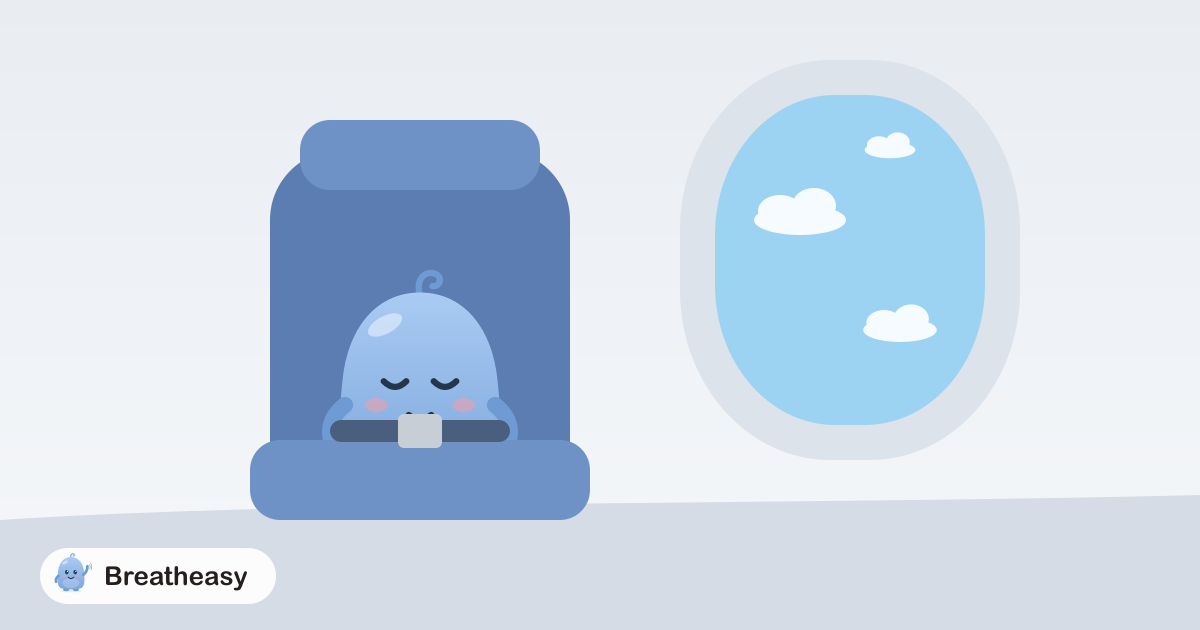
The seatbelt sign pings on. The plane drops, then shudders. Your hands grip the armrests, your heart pounds, and every bump feels like proof that something is going wrong.
Turbulence is one of the most common triggers for fear of flying. Understanding what’s actually happening, and having a plan for the bumpy bits, can make a big difference.
What turbulence actually is
Turbulence is simply uneven air. Air flows like water, and just as a boat bumps over waves, a plane bumps as it moves through air that’s moving at different speeds. It can be caused by:
- jet streams, fast-moving rivers of air high up
- air flowing over mountains
- weather fronts, where warm and cold air meet
- rising warm air on sunny afternoons
- thunderstorms, which pilots plan their routes around
It can even happen in clear skies. That’s why it sometimes seems to come from nowhere.
The US Federal Aviation Administration (FAA) describes turbulence as normal and says it happens often. Its main safety advice is simple: keep your seatbelt fastened whenever you’re in your seat, because the people most at risk of injury are those who aren’t buckled in.
Why turbulence feels so frightening
- You can’t see it. Without a reason you can see, your brain fills the gap with the worst explanation.
- You’re not in control. Someone else is flying, and you can’t get off.
- It hits your body’s balance system. Drops and jolts set off the same alarm as falling, which can trigger a rush of adrenaline even if your thinking brain knows you’re safe.
- It feels bigger than it is. Your inner ear is very sensitive to sudden movement, so drops often feel much bigger than they really are.
- You may already be on edge. Early starts, airports, crowds and caffeine leave many people primed for anxiety before the plane even takes off.
What pilots do about it
Pilots get turbulence forecasts before the flight and reports from other planes along the way. They can change altitude or route to find smoother air, and they slow the plane down when it’s bumpy. Switching on the seatbelt sign is a routine precaution, not a sign of danger. If flight attendants are told to sit down, that’s also routine: it’s to keep them safe while they’re not strapped in.
Airliners are designed and tested to handle forces far stronger than normal turbulence. The wings are meant to flex, which is part of what makes them strong.
Before you fly
- Learn the normal noises. Engine sounds changing, a thud as the landing gear goes up or down, whirring as the wing flaps move, and chimes between the crew are all routine.
- Choose your seat. Seats over the wings usually feel the bumps least. An aisle seat can help if you like to be able to get up.
- Fly earlier in the day if you can. Afternoon flights over land are more often bumpy, because the sun has warmed the ground and stirred up the air.
- Go easy on caffeine and alcohol. Caffeine adds jitters. Alcohol may calm you briefly, but it can make anxiety worse later and dehydrates you.
- Eat something. Flying on an empty stomach can leave you shaky and queasy.
- Pack your calm. Headphones, something absorbing to watch or read, a cold drink and anything that helps you feel grounded.
- Tell the crew. Letting a flight attendant know you’re a nervous flyer is completely normal. Many will check on you.
During turbulence
- Check your seatbelt is fastened, low and snug across your hips. This is the most important safety step, and it gives you something useful to do.
- Relax into the seat. Gripping and bracing makes every bump feel bigger. Let your body move with the plane, the way you would on a bus on a bumpy road.
- Breathe out slowly. In for 4, out for 6. Feel your shoulders drop on each out-breath.
- Ground yourself. Press your feet into the floor and your back into the seat. Name 5 things you can see, 4 you can feel, 3 you can hear.
- Name it. “This is turbulence. It’s uncomfortable, not dangerous. The plane is built for this.”
- Ride the wave. Turbulence comes in patches. Instead of waiting for it to stop, notice each bump come and go.
- Keep your mind busy. Count backwards from 100 in 7s, describe the cabin in detail in your head, or get absorbed in a film or game.
If you have a panic attack on a plane
Feeling trapped is what makes panic on a plane so hard. Remind yourself that a panic attack peaks within minutes and passes, wherever you are. Use slow breathing and grounding, sip cold water, and press the call button if you’d like a flight attendant to sit with you for a moment. They’re used to it. Our post on how to stop a panic attack has more steps.
What about medicine for flying?
Some people are prescribed a sedative, such as a benzodiazepine, for flights. Talk to your doctor before taking anything, and never mix sedatives with alcohol.
It’s worth knowing about one study of people with a fear of flying. On their first flight, those given alprazolam (a benzodiazepine) felt less anxious than those given a placebo. But a week later, on a second flight without the medicine, they were much more anxious, and far more of them had panic attacks. The medicine seemed to stop them learning that they could cope.
On long flights, being very drowsy also means moving less, which raises the risk of blood clots. Get up, walk and stretch your legs when it’s safe.
Treatment that helps for good
Fear of flying is one of the most treatable fears. Cognitive behavioural therapy (CBT) with gradual exposure, either on real flights or using virtual reality, helps most people. In one study, people treated with CBT for fear of flying kept their progress more than two years later, even after the September 11 attacks. Some airlines and airports also run fear-of-flying courses with pilots who explain how flying works.
If flying is stopping you from travelling for work, seeing family or going on holiday, it’s worth getting help.
Frequently asked questions
Can turbulence make a plane crash?
Turbulence on its own almost never brings down an airliner. Planes are built to handle forces far stronger than normal turbulence. The real risk is to people who aren’t wearing seatbelts, who can be thrown around in sudden bumps. That’s why the FAA advises keeping your seatbelt on whenever you’re seated.
Where is the best seat for turbulence?
Over the wings, near the middle of the plane, usually feels the least movement. Seats at the back tend to feel the most.
Do pilots worry about turbulence?
Pilots see turbulence as a comfort and safety-on-board issue, not a danger to the plane. They switch on the seatbelt sign and look for smoother air mostly to keep everyone comfortable and in their seats.
How can I stop being scared of turbulence?
In the moment: seatbelt on, relax into the seat, breathe out slowly and ground yourself. Long term: learning how flying works and CBT with gradual exposure help most people. Flying more, with the right support, usually makes it easier.
How Breatheasy can help
Breatheasy works without internet, so it’s there in airplane mode. When the bumps start, tap “I’m feeling anxious” and Luma walks you through it: rate how strong it feels, breathe slowly as your phone pulses gently in your hand, ground yourself with 5-4-3-2-1, then see how far the anxiety came down. Practising the breathing exercises in the days before you fly makes them easier to use at 35,000 feet. Breatheasy is coming soon to iPhone and Android.
Sources
- Turbulence: staying safe, Federal Aviation Administration
- Acute and delayed effects of alprazolam on flight phobics during exposure, Wilhelm and Roth, Behaviour Research and Therapy, 1997
- Cognitive behavior therapy for fear of flying: sustainability of treatment gains after September 11, Anderson and others, Behavior Therapy, 2006
- Panic disorder, NHS
- Breathing exercises for stress, NHS