Breatheasy
Morning anxiety: why you wake up anxious, and how to ease it
Why anxiety often peaks in the first hour after waking, the habits that make it worse, a gentle 10-minute morning plan, and when morning dread is a sign to get help.
 Breatheasy team27 October 2026 · 6 min read
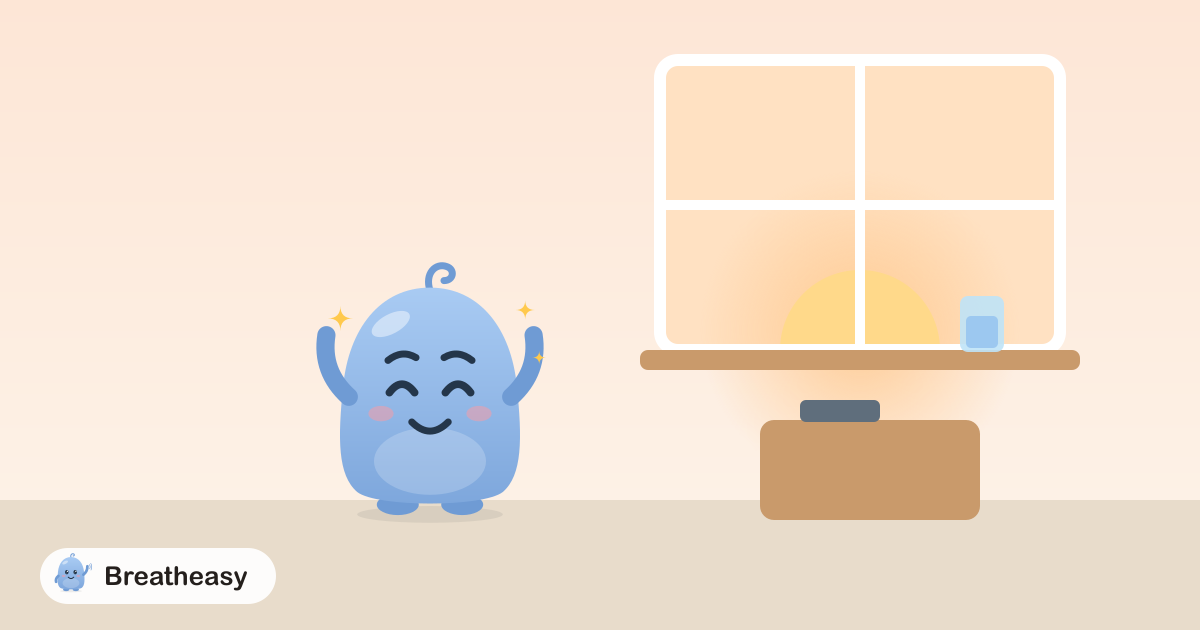
You open your eyes, and before you’ve even sat up, it’s there: a churning stomach, a racing heart, a sense that something is wrong. Nothing has happened yet, but you already feel like the day is too much.
Morning anxiety is very common. There are real reasons it hits hardest in the first hour of the day, and there are simple things that help.
Why anxiety is often worse in the morning
Your body’s wake-up surge
In the 30 to 45 minutes after you wake, your body releases a burst of the stress hormone cortisol. This is called the cortisol awakening response, and everyone has it. It helps you feel alert and ready for the day.
Cortisol is at its lowest around the middle of the night, then starts rising in the early hours, peaking soon after you wake. If you already feel anxious, that natural surge of alertness can feel like a jolt of dread.
Research suggests this surge is linked to what’s going on in your life. In one study of older adults, people who felt threatened, lonely, sad or out of control on one day had a bigger cortisol rise the next morning.
The day’s worries arrive all at once
As soon as you wake, your brain starts scanning the day ahead: the meeting, the bills, the difficult conversation. There’s nothing to distract you yet, so the worries get your full attention.
Your stomach is empty
After a night without food, you might feel shaky or queasy, especially if you go straight to coffee. Those body feelings can easily tip into anxiety.
How you slept
A bad night leaves your brain more reactive to stress. And if you lay awake worrying, you may wake up already tense.
What happened the night before
- Alcohol can leave you anxious and jumpy the next morning as it wears off.
- Late caffeine disrupts your sleep.
- Nicotine wears off overnight, and withdrawal can make you restless and irritable on waking.
Things that can make mornings worse
- Checking your phone in bed. News, emails and messages pour the day’s demands into your brain before you’re ready.
- Lying there worrying. The longer you stay in bed thinking, the bigger the worries feel.
- Coffee on an empty stomach, which can add jitters and a racing heart.
- Rushing. Waking up late and starting the day in a panic keeps your stress response running.
A gentle 10-minute morning plan
You don’t need an elaborate routine. Try this for a week:
- Minute 1: breathe before your phone. Sit up and take ten slow breaths, in for 4 and out for 6. Leave your phone face-down.
- Minutes 2 to 3: get up and let light in. Open the curtains or step outside. Daylight helps set your body clock.
- Minute 4: drink a glass of water.
- Minutes 5 to 6: move. Stretch, roll your shoulders, walk around. Moving uses up some of that morning adrenaline.
- Minutes 7 to 8: name your worries, then pick one step. Jot down what’s on your mind. Then choose just one small thing to do first.
- Minutes 9 to 10: eat something. Even a small breakfast helps if your stomach is unsettled. If coffee makes you jittery, have it with food rather than instead of food.
Set up tomorrow, tonight
Mornings often go better when the night before helps:
- Have a short “worry time” in the early evening. Write down what’s on your mind and one next step for each worry, so they don’t ambush you at dawn.
- Lay out what you need for the morning: clothes, bag, keys.
- Keep caffeine to the morning and early afternoon, and go easy on alcohol.
- Keep regular sleep and wake times, even at weekends.
- Charge your phone outside the bedroom if you can, or at least out of reach.
What about delaying your coffee?
You may have seen advice to wait 90 minutes before your first coffee to “work with” your cortisol. There’s little good evidence for that specific rule. What does help many anxious people is having caffeine with food, having less of it, and not having it late in the day. If coffee makes your mornings worse, try halving it for a week and see.
When morning anxiety is a sign to get help
Talk to a doctor if:
- you wake up anxious most days, for weeks
- morning dread stops you getting up, going to work or seeing people
- you’re waking very early and can’t get back to sleep
- mornings come with low mood, hopelessness or losing interest in things you enjoy
Mood that’s worst in the morning, along with early waking, can be a sign of depression as well as anxiety. Both are very treatable, often with talking therapy, medicine or both.
Waking up with a headache, a dry mouth and feeling unrefreshed despite a full night’s sleep can be a sign of sleep apnea, especially if you snore. That’s worth checking too.
If you’re having thoughts of ending your life, please call or text 988 (US) now.
Frequently asked questions
Why do I wake up with anxiety for no reason?
Often the reason is your body’s natural cortisol rise, combined with stress you’re carrying, a poor night’s sleep or something you had the night before, like alcohol. The anxiety can arrive before your mind has caught up with what it’s about, which is why it feels like it comes from nowhere.
Why does my anxiety get better as the day goes on?
Cortisol is highest soon after waking and falls through the day. Once you’re up, busy and distracted, worries also have less space. For many people, getting started is the hardest part.
Can morning anxiety make you feel sick?
Yes. An empty stomach, stress hormones and a tense gut can all cause morning nausea. Our post on whether anxiety can cause nausea explains what helps.
Is morning anxiety a sign of depression?
Not necessarily. Morning anxiety is common on its own. But if mornings also bring low mood, hopelessness and early waking, it’s worth talking to a doctor, because depression and anxiety often go together.
How Breatheasy can help
Breatheasy can be the first thing you open, instead of your email. A one-minute breathing exercise pulses your phone as you breathe in, so you can do it sitting on the edge of your bed with your eyes closed. If waking up brings panic, tap “I’m feeling anxious” and Luma walks you through it. A ten-second check-in each morning helps you notice what makes some mornings easier than others. Breatheasy is coming soon to iPhone and Android.
Sources
- Assessment of the cortisol awakening response: expert consensus guidelines, Stalder and others, Psychoneuroendocrinology, 2016
- Day-to-day dynamics of experience–cortisol associations, Adam and others, Proceedings of the National Academy of Sciences, 2006
- Generalised anxiety disorder in adults, NHS
- Insomnia, NHS
- Sleep apnoea, NHS
- Hangovers, National Institute on Alcohol Abuse and Alcoholism
- Breathing exercises for stress, NHS