Breatheasy
The panic attack hangover: why you’re exhausted afterwards
Drained, achy, foggy and on edge after a panic attack? Why the “panic attack hangover” happens, how long it lasts and what helps you recover.
 Breatheasy team27 October 2026 · 5 min read
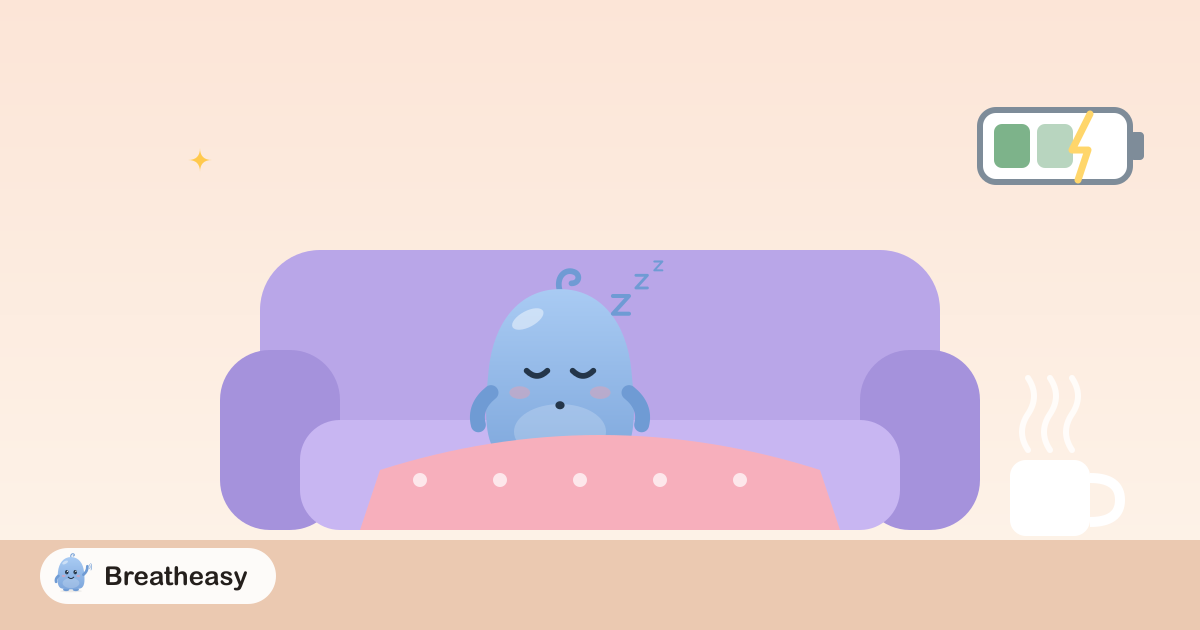
The panic attack is over. Your heart has slowed and the terror has faded. But instead of feeling relieved, you feel wiped out: heavy, achy, foggy and fragile, as if you’ve run a marathon or been hit by a truck.
Many people call this the panic attack hangover. It isn’t a medical term, but it’s a very real and very common experience. Here’s why it happens, how long it lasts and what helps.
What a panic attack hangover feels like
After a panic attack, you might have:
- exhaustion, sometimes overwhelming, as if you need to sleep for hours
- aching muscles, especially in your shoulders, neck, jaw or chest
- a headache
- brain fog: trouble concentrating, thinking clearly or finding words
- an upset stomach or no appetite
- feeling shaky, jumpy or on edge, and easily startled
- feeling low, tearful or flat
- embarrassment or worry about what happened, or about the next attack
Why it happens
The adrenaline crash
During a panic attack, your body floods with adrenaline to get you ready to fight or run. Your heart pounds, your muscles tense and your body burns energy fast. When the alarm switches off, your body has to come down from that high, which often leaves you drained.
Your muscles worked hard
Panic makes your muscles tense up and stay tense, sometimes for the whole attack. That’s why many people feel achy and sore afterwards, especially in the chest, shoulders and jaw.
Fast breathing
Breathing fast during panic can leave you feeling light-headed, tired and headachy for a while afterwards, as your breathing settles back into its usual rhythm.
It’s emotionally exhausting
A panic attack is one of the most frightening experiences a person can have. Being that scared, even for a few minutes, takes a lot out of you. If you hid the attack from people around you, as many people do, that adds to the strain.
Watching for the next one
After an attack, many people stay on high alert, scanning their body for signs of another. That watchfulness keeps your body slightly revved up, which can make the jumpiness last longer.
How long does it last?
For most people, a panic attack hangover lasts a few hours. After a severe attack, or several in a row, you may feel tired and fragile for the rest of the day, and a good night’s sleep usually helps a lot.
What helps
- Rest. Lie down, nap if you can, or simply take things slowly. Your body has done something intense.
- Drink some water, and eat something gentle and nourishing, especially if you haven’t eaten for a while.
- Move gently. A slow walk, some stretching or a warm shower helps loosen tense muscles and settle your body.
- Breathe slowly for a few minutes, with a longer out-breath. It helps your body finish switching off its alarm.
- Skip the caffeine and alcohol for now. Caffeine can bring back jittery feelings, and alcohol can make anxiety rebound later.
- Be kind to yourself. There’s nothing to be ashamed of. Talk to yourself the way you would to a friend who’d just been through something scary.
- Gently let go of body-checking. Notice when you’re scanning for the next attack, and bring your attention back to what you’re doing.
- Do something soothing, like a favourite show, music, a sleep story or time with a pet.
- Don’t cancel everything. Rest is good, but if you feel up to it, carrying on with small parts of your day reminds your brain that you’re okay.
Headache after a panic attack
A headache is one of the most common parts of the hangover. It usually comes from:
- tense muscles in your neck, shoulders, jaw and scalp, which tighten during panic and can stay tight for hours
- breathing fast, which changes the balance of gases in your blood and can leave your head feeling heavy or achy
- not drinking or eating for a while, especially if the attack came on when you were already tired or hungry
Water, something to eat, rest in a quiet, dim room, gentle neck and shoulder stretches and a warm compress on your neck usually help. Over-the-counter painkillers can too, if they’re suitable for you and you follow the label.
Call 911 if a headache comes on suddenly and is extremely painful, or comes with weakness or numbness in your face or body, trouble speaking, confusion, a seizure, loss of vision, or a high temperature with a stiff neck. These aren’t signs of a panic hangover, and need checking straight away.
How Breatheasy can help
Breatheasy can help you recover. Rest with calming sleep sounds or a bedtime story read by Luma, or try a few minutes of gentle guided breathing. Seeing how far your anxiety came down during an attack, in your journal, can also be a reassuring reminder that panic always passes. Breatheasy is coming soon to iPhone and Android.
When to get help
Talk to a doctor if:
- you feel exhausted or unwell for days after panic attacks
- panic attacks are happening often
- you’re worrying a lot about the next one, or avoiding things because of them
- you’re feeling low most of the time
Panic attacks are very treatable, and fewer attacks means fewer hangovers. Our guide to anxiety and panic attacks explains what helps, and What does a panic attack feel like? covers the whole experience, from start to finish.
If you’re feeling hopeless or having thoughts of ending your life, call or text 988 in the US, or 911 if you’re in danger.
Sources
- Panic disorder, NHS
- Panic Disorder: When Fear Overwhelms, National Institute of Mental Health
- Panic attacks and panic disorder, Cleveland Clinic
- Headaches, NHS