Breatheasy
Physical signs of stress: 20 ways stress shows up in your body
Stress doesn’t just live in your head. Headaches, tense muscles, a racing heart, stomach trouble, poor sleep and more: the physical signs of stress, why each happens, when to see a doctor, and what helps.
 Breatheasy team27 October 2026 · 5 min read
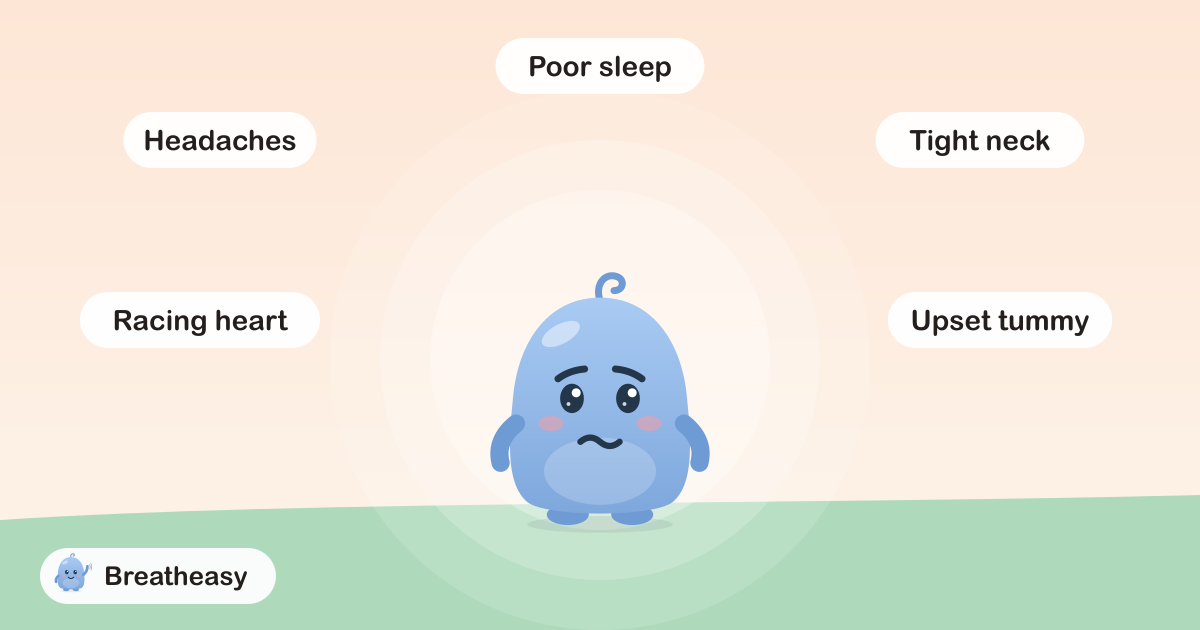
You might not feel “stressed”, exactly. But your shoulders are tight, you’ve had a headache for three days, your stomach is unsettled and you’re waking at 4am. Often, the body notices stress before the mind does.
Here are twenty common physical signs of stress, why they happen, and what helps.
Why stress affects your body
When you’re under pressure, your body releases stress hormones like adrenaline and cortisol. They get you ready to act: your heart speeds up, your muscles tense, your breathing quickens and digestion slows. That’s helpful in short bursts. When stress goes on and on, those changes don’t fully switch off, and you start to feel it physically.
The NHS lists headaches or dizziness, muscle tension or pain, stomach problems, chest pain or a faster heartbeat, and sexual problems among the physical symptoms of stress.
20 physical signs of stress
Head and mind
- Headaches, often tension headaches that feel like a tight band around your head
- Dizziness or light-headedness, sometimes from shallow breathing
- Brain fog and trouble concentrating
- Jaw clenching or teeth grinding, especially at night
Muscles
- Tight neck and shoulders
- Back pain
- Muscle twitches, like an eyelid that won’t stop flickering
- Feeling shaky or trembly
Heart and breathing
- A racing or pounding heart
- Chest tightness or discomfort
- Shallow or fast breathing, or feeling you can’t take a full breath
Stomach and digestion
- Butterflies, knots or nausea
- Indigestion or heartburn
- Diarrhoea or constipation, and flare-ups of irritable bowel syndrome
- Changes in appetite: eating much more or much less
Sleep and energy
- Trouble falling or staying asleep
- Feeling tired all the time, even after rest
Skin, immunity and more
- Skin flare-ups, like eczema, acne or rashes
- Getting ill more often, or taking longer to recover
- Lower sex drive or other sexual problems
Behaviour changes to watch for
Stress also shows in what you do. The NHS mentions being irritable and snappy, sleeping too much or too little, eating too much or too little, avoiding places or people, and drinking or smoking more.
When to see a doctor
Many of these symptoms can also have other causes, so get them checked if they’re new, severe, keep coming back or don’t improve when stress eases.
Call 911 (or your local emergency number) if you have:
- chest pain or pressure, especially if it spreads to your arm, neck, jaw or back, or comes with breathlessness, sweating or nausea
- a sudden, severe headache, or a headache with weakness, confusion or trouble speaking
- fainting
See a doctor soon if you have:
- headaches that are getting worse or more frequent
- ongoing stomach problems, blood in your poo or weight loss you can’t explain
- tiredness that doesn’t improve with rest
- a racing heart at rest, or palpitations with dizziness
Our posts on whether stress can cause chest pain and what anxiety feels like in your chest go into more detail.
What helps
- Breathe out slowly a few times a day, in for 4 and out for 6, to switch on your body’s calming system.
- Move your body. Physical activity is one of the most effective ways to burn off stress hormones and ease tension.
- Release tension: stretch your neck and shoulders, use warmth on tight muscles, and try progressive muscle relaxation.
- Protect your sleep with regular sleep and wake times.
- Eat regularly and go easy on caffeine and alcohol.
- Tackle the source of stress where you can, and ask for help.
Our guide to stress reduction techniques has fifteen ideas, from 60 seconds to long term.
Frequently asked questions
Can stress make you physically sick?
Stress can cause real physical symptoms, like headaches, stomach problems and muscle pain, and long-term stress can make you more likely to pick up infections. It can also make existing conditions, like irritable bowel syndrome or eczema, flare up.
Can you have physical symptoms of stress without feeling stressed?
Yes. Many people notice tight shoulders, headaches, poor sleep or stomach trouble before they realise how stressed they are. Your body can be a useful early warning system.
How long do physical symptoms of stress last?
They often ease as the stress passes, sometimes within hours or days. Long-term stress can keep them going for weeks. If symptoms carry on after the stress has eased, see a doctor.
What are the first signs of stress?
Common early signs include tense shoulders or jaw, headaches, trouble sleeping, irritability, a racing mind and changes in appetite.
How Breatheasy can help
Breatheasy can help you catch stress early and ease it in your body. Ten-second check-ins let you notice patterns, like headaches after a bad night or a racing heart on busy days. One-minute breathing exercises pulse your phone gently as you breathe in, helping tense muscles relax. If stress tips into anxiety or panic, tap “I’m feeling anxious” and Luma walks you through it. Breatheasy is coming soon to iPhone and Android.
Sources
- Stress, NHS
- Stress effects on the body, American Psychological Association
- I’m so stressed out! Fact sheet, National Institute of Mental Health
- Effectiveness of physical activity interventions for improving depression, anxiety and distress, Singh and others, British Journal of Sports Medicine, 2023