Breatheasy
What does anxiety feel like in your chest? 10 common sensations, explained
Tightness, pressure, stabbing pain, fluttering, a warm rush or a heavy weight: what anxiety can feel like in your chest, why each sensation happens, where you might feel it, and which signs need a doctor.
 Breatheasy team27 October 2026 · 5 min read
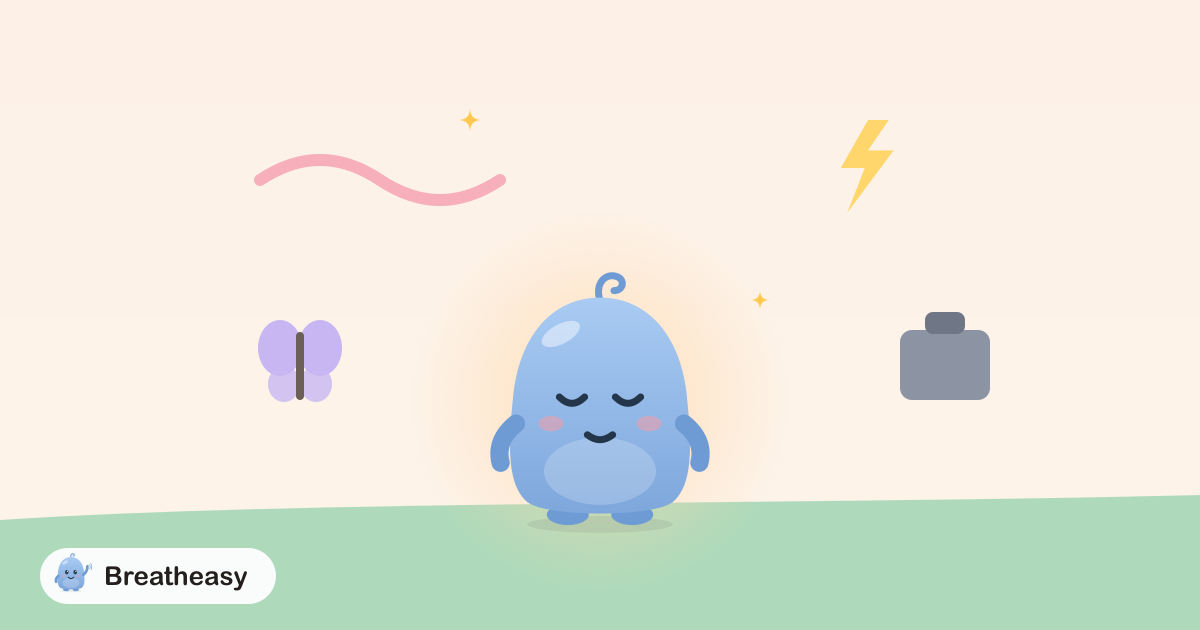
“It’s like a band around my chest.” “A weight sitting on me.” “A flutter, like a bird trapped inside.” “A warm rush spreading through me.”
People describe anxiety in their chest in many different ways. Understanding what each sensation is, and why it happens, can make it far less frightening. Here are ten of the most common.
If you have chest pain or tightness that’s new, sudden or severe, spreads to your arm, neck, jaw or back, or comes with breathlessness, sweating, nausea or feeling faint, call 911 (or your local emergency number).
10 ways anxiety can feel in your chest
1. Tightness, or a band around your chest
Why: your chest wall muscles brace for danger, and fast, high breathing overworks them. Our post on how to relieve chest tightness from anxiety explains what helps.
2. Pressure or a heavy weight
Why: the same tense muscles, plus a feeling that you can’t take a full breath. It can feel like something is sitting on your chest.
3. Sharp or stabbing twinges
Why: brief spasms in tense muscles between the ribs. They’re often in one small spot and last seconds. They’re common, but new sharp pain should still be checked.
4. Aching or soreness
Why: muscles that have been tense for hours or days, or after a panic attack, can ache like any overworked muscle. It may hurt more when you press on it.
5. A pounding or racing heart
Why: adrenaline makes your heart beat harder and faster. Our post on heart rate during a panic attack explains what’s normal.
6. Fluttering or skipped beats
Why: many people have harmless extra heartbeats now and then. Anxiety, caffeine and tiredness can make them more frequent, and anxiety makes you notice them. Frequent palpitations, or ones with dizziness or fainting, should be checked.
7. A warm rush or heat spreading through your chest
Why: adrenaline widens some blood vessels and can cause flushing and a wave of warmth, often spreading to your neck and face. A burning feeling behind your breastbone, especially after eating, is more likely to be acid reflux.
8. A hollow, sinking or knotted feeling
Why: the fight-or-flight response pulls blood away from your gut and tenses your upper belly and lower chest, which can feel like a pit or knot just under your breastbone.
9. A lump in your throat or upper chest
Why: tension in the muscles of your throat can make it feel tight or like something is stuck. It’s sometimes called globus. Trouble actually swallowing food should be checked by a doctor.
10. Not being able to take a full breath
Why: overbreathing and tense chest muscles make each breath feel unsatisfying, even when you’re getting plenty of air. This is called air hunger. Our post on how to tell if shortness of breath is from anxiety explains more.
Where can you feel anxiety in your chest?
Anywhere. People commonly feel it:
- in the centre, behind the breastbone
- on the left side, over the heart, which is especially frightening
- on the right side
- around the ribs or under the collarbones
- spreading into the shoulders, upper back or throat
Because anxiety can cause sensations in the same places as heart and lung problems, location alone can’t tell you the cause.
When it might be something else
Call 911 (or your local emergency number) if you have:
- chest pain, pressure or tightness that came on suddenly or lasts more than a few minutes
- pain spreading to your arm, back, neck, jaw or stomach
- chest symptoms with breathlessness, a cold sweat, nausea or light-headedness
- coughing up blood, or sudden tearing pain
- fainting
See a doctor soon if:
- it’s the first time you’ve had chest sensations like these
- they come on with exertion and ease with rest
- they feel different from your usual anxiety
- you have palpitations often, or with dizziness
Our post on anxiety vs heart attack explains the differences doctors look for.
What helps
- Breathe out slowly, in for 4 and out for 6. It eases tight muscles and slows your heart.
- Drop your shoulders and open your chest.
- Ground yourself with your senses, to pull your attention away from your chest.
- Name it: “This is anxiety in my chest. It feels strange, but it will pass.”
- Use warmth on aching muscles.
- Treat the anxiety. If chest sensations keep coming back, cognitive behavioural therapy (CBT) helps with the fear that drives them.
Frequently asked questions
Why do I feel anxiety in my chest?
Because anxiety’s fight-or-flight response acts on the muscles, breathing and heart, all of which are in or around your chest. Tense muscles, fast breathing and a pounding heart create the sensations.
What does a warm feeling in the chest from anxiety mean?
It’s often a rush of adrenaline causing flushing. It usually passes within minutes. A burning feeling after meals is more often acid reflux. If warmth comes with chest pain, breathlessness or sweating, get help.
Can anxiety make your chest feel heavy?
Yes. Tense chest muscles and shallow breathing can make your chest feel heavy, as if something is pressing on it. Because heaviness is also a heart attack symptom, new or severe heaviness should be checked straight away.
Is it normal to feel anxiety in your chest every day?
It’s common if you’re anxious most days, because your chest muscles stay tense. But daily chest symptoms should be checked by a doctor at least once. Our post on whether anxiety can cause chest pain covers this.
How Breatheasy can help
When anxiety settles in your chest, Breatheasy can help it loosen. Its breathing exercises pulse your phone gently as you breathe in, guiding a long out-breath that helps tight chest muscles relax and your heart slow down. If chest sensations tip into panic, tap “I’m feeling anxious” and Luma walks you through it, step by step. Breatheasy can’t tell what’s causing chest symptoms, so if anything feels new, severe or different, call 911 first. Breatheasy is coming soon to iPhone and Android.
Sources
- Chest pain, NHS
- Heart palpitations, NHS
- Heartburn and acid reflux, NHS
- Panic disorder, NHS
- Heart attack symptoms, National Heart, Lung, and Blood Institute