Breatheasy
Relationship OCD (ROCD): when doubts about love won’t leave you alone
Relationship OCD involves constant, distressing doubts about whether you love your partner, whether they’re “the one”, or whether the relationship is right. The signs, common compulsions, how it differs from normal doubts, and the treatment that helps.
 Breatheasy team27 October 2026 · 4 min read
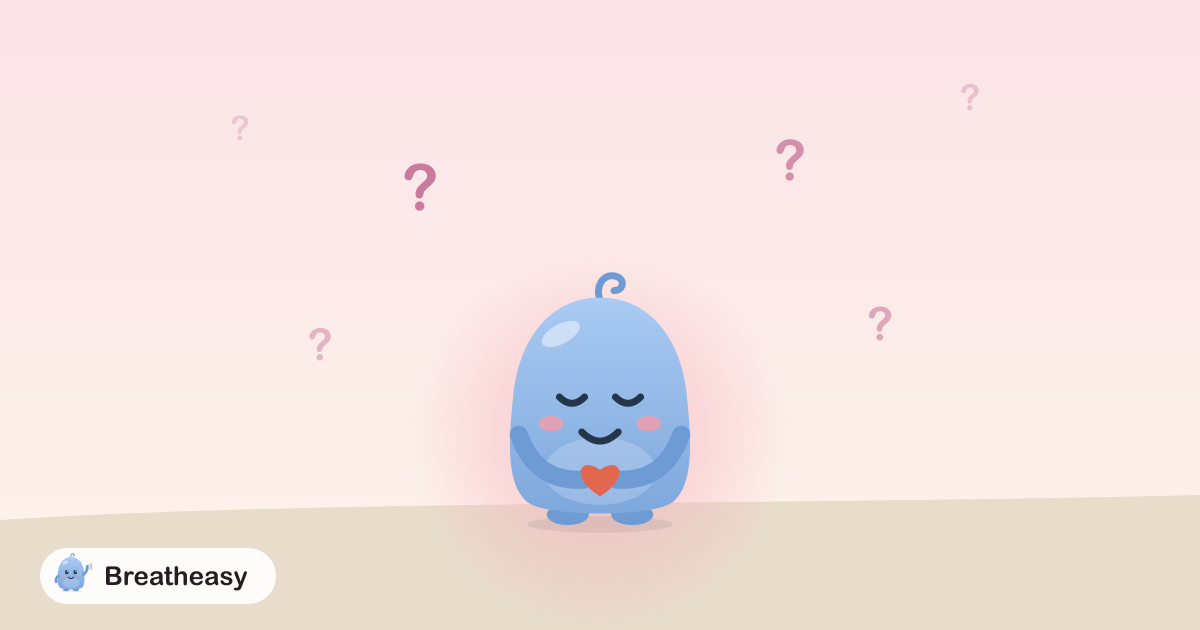
You love your partner. At least, you think you do. But the doubt keeps coming back: What if I don’t really love them? What if there’s someone better? What if I’m making a terrible mistake? You check your feelings constantly, compare your relationship with others, and ask friends for reassurance. Nothing settles it for long.
If that sounds familiar, you may be experiencing relationship OCD, often called ROCD.
What is relationship OCD?
ROCD isn’t a separate diagnosis. It’s a theme of obsessive-compulsive disorder in which obsessions focus on a romantic relationship. Researchers describe two main forms, which often overlap:
- Relationship-centred: doubts about your feelings for your partner, their feelings for you, or whether the relationship is “right”.
- Partner-focused: preoccupation with a partner’s perceived flaws, like their looks, intelligence, social skills or personality.
Signs of ROCD
- intrusive doubts about whether you love your partner, or they love you
- needing to feel “sure” before you can relax
- constantly checking your feelings, like how you feel when you kiss or look at them
- comparing your partner or relationship with others, including on social media or TV
- seeking reassurance from friends, family or online
- analysing past moments for “evidence”
- feeling intense anxiety or guilt about the doubts
- sometimes avoiding intimacy, or the relationship ending because of the doubt
ROCD or normal relationship doubts?
Everyone has doubts sometimes. Signs it may be ROCD rather than useful reflection:
- the doubts feel intrusive, unwanted and distressing
- they keep coming back, even when nothing has changed
- you feel driven to resolve them through checking, comparing or reassurance
- reassurance helps briefly, then the doubt returns
- they take up a lot of time and energy
ROCD can also target good, loving relationships. The doubt isn’t evidence that something is wrong. And if you’re in a relationship where you feel unsafe or controlled, that’s different from OCD and deserves support.
Why the compulsions backfire
Checking your feelings, comparing and seeking reassurance all bring brief relief, which teaches your brain the doubt was urgent and needed solving. So it comes back louder. And feelings naturally rise and fall, so the more you check, the more “evidence” you’ll find for doubt.
Treatment that works
- Exposure and response prevention (ERP): gradually facing the doubts and triggers while resisting checking, comparing and reassurance-seeking. You learn to live with uncertainty rather than solve it.
- CBT to work with unhelpful beliefs about relationships, like the idea you should always feel certain or “in love”.
- Medicine, usually an SSRI, can help too.
A therapist experienced in OCD can help. The International OCD Foundation (iocdf.org) has a directory.
When to get help
Talk to a therapist if relationship doubts are causing distress, taking up a lot of your time or harming your relationship. If you’re in a relationship that feels unsafe, the National Domestic Violence Hotline is free and confidential: 1-800-799-7233, or text START to 88788.
If you’re having thoughts of ending your life, call or text 988 (US) now.
Frequently asked questions
How do I know if it’s ROCD or I’m just not in love?
ROCD doubts tend to be intrusive, distressing and repetitive, and come with a strong urge to check and resolve them. A therapist experienced in OCD can help you tell the difference. It’s usually best not to make big relationship decisions in the middle of an OCD spike.
Can ROCD go away?
Yes. With ERP and sometimes medicine, many people find the doubts lose their grip and they can enjoy their relationship again.
Can ROCD happen in a happy relationship?
Yes, often. OCD tends to target what matters most, which is why it can latch onto loving, healthy relationships.
Should I tell my partner about ROCD?
Many people find it helps for a partner to understand what ROCD is, ideally with a therapist’s guidance. Repeatedly asking them for reassurance can become a compulsion, though, so it helps to agree together how to respond.
How Breatheasy can help
When a relationship doubt brings a strong urge to check your feelings or ask for reassurance, Breatheasy can help you ride it out. Open “Ride out an urge” and Luma helps you watch the urge rise and fall without acting on it. Luma is designed not to give endless reassurance about OCD doubts, because reassurance keeps them going. Breatheasy is coming soon to iPhone and Android.
Sources
- Obsessive compulsive disorder (OCD), NHS
- Obsessive-compulsive disorder, National Institute of Mental Health
- International OCD Foundation
- National Domestic Violence Hotline