Breatheasy
How to stop a panic attack: 8 steps that work
You can’t switch panic off instantly, but you can help it pass faster. Eight steps to stop a panic attack, what not to do, and how to have fewer of them.
 Breatheasy team27 October 2026 · 4 min read
When a panic attack hits, all you want is for it to stop, right now. The honest answer is that there’s no switch that turns panic off instantly. But there’s a lot you can do to help it peak and pass faster, and feel less frightening while it does.
Here are eight steps that work.
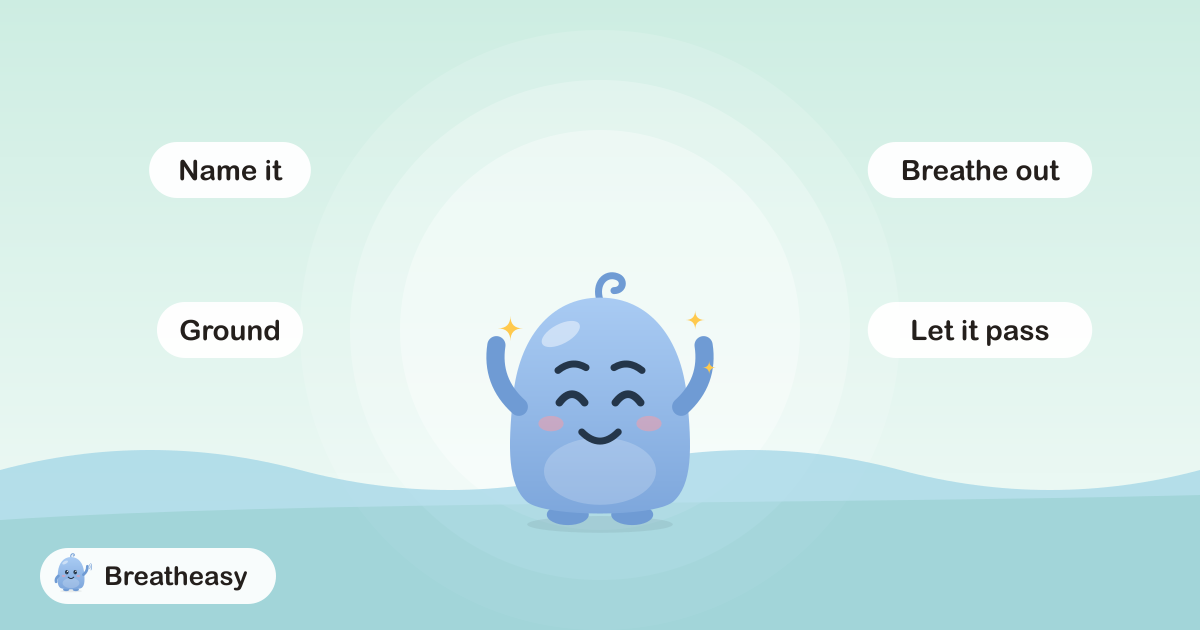
1. Name it
Say to yourself, or out loud: “This is a panic attack.” Naming it moves you from “something is terribly wrong” to “I know what this is”. Add: “It feels awful, but it can’t hurt me. It will peak and pass.”
2. Don’t fight it
Panic feeds on fighting. Trying to force the feelings away tells your brain they’re dangerous, which releases more adrenaline. Instead, let the feelings be there. Picture panic as a wave: it rises, peaks and falls, and you can float on it.
3. Slow your out-breath
Breathe in gently through your nose for a count of 4, then out slowly through your mouth for 6. A long out-breath is like pressing your body’s brake pedal: your heart slows a little with every breath out. Keep going for a few minutes.
Our breathing exercises for panic attacks go through six ways to do this.
4. Ground yourself
Bring your attention out of your body and into the room. Find:
- 5 things you can see
- 4 things you can touch
- 3 things you can hear
- 2 things you can smell
- 1 thing you can taste
5. Try something cold
Splash cold water on your face, hold an ice cube, or press a cold drink to your wrists or the back of your neck. Many people find the sudden cold interrupts panic and helps them feel calmer quickly.
6. Relax your muscles
Panic tenses your whole body. Drop your shoulders, unclench your jaw and hands, and let your belly soften. Or tense your fists for five seconds, then let go.
7. Stay where you are, if you can
Leaving brings quick relief, but it teaches your brain that the place was dangerous, which makes the next attack there more likely. If it’s safe, try to stay, even for a few minutes, while the wave passes.
8. Be kind to yourself afterwards
When it’s over, rest, drink water and eat something. Remind yourself: “I got through that.” Feeling tired or shaky afterwards is normal. The panic attack hangover explains why.
What not to do
- Don’t gulp air or take big, deep breaths. It makes breathlessness and dizziness worse.
- Don’t google your symptoms mid-attack. It feeds the fear.
- Don’t keep checking your pulse or smartwatch.
- Don’t reach for alcohol. Anxiety often rebounds later.
- Don’t tell yourself you’re being silly. Panic is real, and you’re doing your best.
How to have fewer panic attacks
Stopping one attack is helpful. Having fewer attacks is even better:
- Practise slow breathing daily, when you’re calm, so it’s automatic when you need it.
- Cut back on caffeine and alcohol, and look after your sleep.
- Stop avoiding. Gently return to places and activities you’ve been avoiding.
- Get support. Cognitive behavioural therapy (CBT) is the most effective treatment for panic, and helps most people. Read Panic disorder therapy to find out what it involves.
How Breatheasy can help
Breatheasy puts these steps in your pocket. Tap “I’m feeling anxious” and Luma walks you through it: rate how strong it feels from 1 to 10, breathe slowly as your phone pulses gently, ground yourself with 5-4-3-2-1, then see how far the anxiety came down. You don’t need to remember anything in the moment. It works without internet, and it’s always free. Breatheasy is coming soon to iPhone and Android.
When to get help
Talk to a doctor if panic attacks keep happening, if you’re worrying about the next one, or if you’re avoiding things because of them. Our guide to anxiety and panic attacks covers the treatments that work.
If this is your first panic attack, or you have chest pain that spreads to your arm, jaw, neck or back, or you’re struggling to breathe, call 911 in case it’s something else.
Sources
- Panic disorder, NHS
- Breathing exercises for stress, NHS
- Panic Disorder: When Fear Overwhelms, National Institute of Mental Health
- Pompoli et al. (2018). Dismantling cognitive-behaviour therapy for panic disorder. Psychological Medicine.