Breatheasy
Anhedonia: when nothing feels enjoyable anymore, and what helps
Anhedonia means losing the ability to feel pleasure or interest in things you used to enjoy. What it feels like, why it happens, how it links to depression, stress and emotional numbness, and the steps that help bring feeling back.
 Breatheasy team27 October 2026 · 5 min read
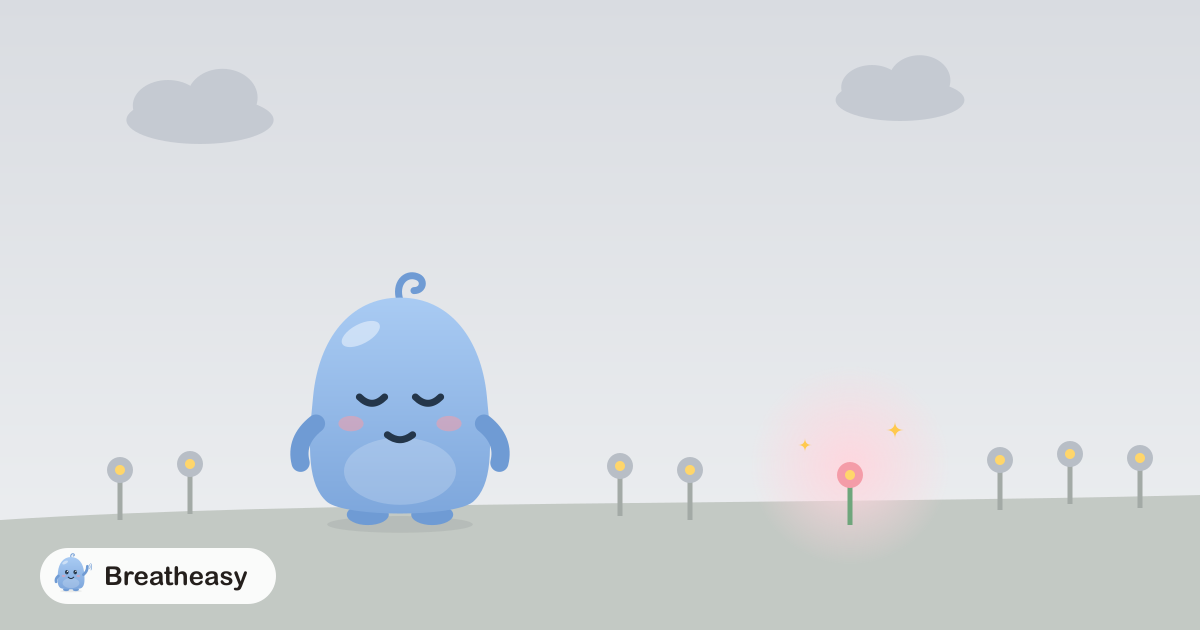
Your favourite music sounds flat. Seeing friends feels like effort. Food, hobbies, even good news barely register. You’re not exactly sad. It’s more like the colour has drained out of life.
That’s anhedonia. It’s more common than people realise, and while it can feel permanent, it usually isn’t. Here’s what it is and what helps.
If you’re having thoughts of ending your life, please call or text 988 (US) now, or call 911 in an emergency.
What is anhedonia?
Anhedonia means a reduced ability to feel pleasure or interest. It can affect:
- Enjoyment in the moment: things that should feel good don’t.
- Looking forward to things: you can’t feel excited or motivated by plans.
- Social pleasure: time with people feels flat, or like a chore.
- Physical pleasure: food, touch, music or nature don’t give the lift they used to.
Many people describe it as feeling numb, empty or “switched off”.
Signs of anhedonia
- losing interest in hobbies you used to love
- pulling away from friends and family
- feeling flat about good news or events
- low motivation, or struggling to get started on anything
- not looking forward to anything
- reduced interest in sex
- feeling emotionally numb or detached
What causes anhedonia?
Depression
Loss of interest or pleasure is one of the two core symptoms of depression, alongside low mood. Many people with depression describe anhedonia as the hardest part. Our post on major depressive disorder explains more.
Chronic stress and burnout
When you’ve been stressed or exhausted for a long time, your capacity to enjoy things can shut down. Our post on the signs of emotional exhaustion explains this.
Other conditions
Anhedonia can also come with anxiety, PTSD, schizophrenia, Parkinson’s disease and some other health conditions.
Alcohol and drugs
Regular use of alcohol, cannabis and other drugs, and stopping them, can blunt pleasure for a while.
Medicines
Some medicines, including some antidepressants, can make some people feel emotionally numb. The NHS lists this among possible side effects of antidepressants. If you think a medicine is affecting you, talk to your doctor rather than stopping it suddenly.
Why “just do things you enjoy” doesn’t work
When you have anhedonia, waiting until you feel like doing something means waiting forever. The motivation and the enjoyment have both gone quiet.
What helps is reversing the order: act first, and let feeling follow. This is the idea behind behavioural activation, a well-studied treatment for depression. A review of 26 trials found it worked better than control conditions.
What helps
Schedule small activities
Each day, plan one small thing that used to bring pleasure, and one that gives a sense of achievement. Keep them tiny: a five-minute walk, one song, making a cup of tea, replying to one message. Do them whether or not you feel like it.
Notice small shifts
After each activity, rate your mood or enjoyment from 0 to 10. Even a move from 1 to 2 counts. Anhedonia often lifts gradually, and it’s easy to miss early progress.
Savour on purpose
When something is slightly pleasant, like warm sunlight or a good taste, slow down and pay attention to it for 20 seconds. It helps your brain register small rewards again.
Move your body
Physical activity has good evidence for improving mood. Start small and build up.
Stay connected
Even when it feels flat, time with people helps more than isolation. Tell someone close to you what you’re going through.
Look after the basics
Regular sleep, meals, daylight and less alcohol all help your brain’s reward system work better.
When to get help
See a doctor if:
- anhedonia has lasted more than two weeks
- it comes with low mood, hopelessness, changes in sleep or appetite, or trouble concentrating
- you think a medicine might be causing it
- you’re using alcohol or drugs to feel something
Depression is very treatable with talking therapy, medicine or both. Get help right away if you’re having thoughts of ending your life: call or text 988 (US).
Frequently asked questions
Why do I feel numb emotionally?
Emotional numbness can come from depression, long-term stress or burnout, trauma, exhaustion, alcohol or drug use, or some medicines. It can also be the mind’s way of coping with overwhelming feelings. If it lasts more than a couple of weeks, talk to a doctor.
Is anhedonia the same as depression?
Not exactly. Anhedonia is a symptom, and it’s one of the core symptoms of depression. But it can also happen with stress, burnout, trauma and other conditions.
Can anhedonia go away?
Yes. It usually improves as the cause is treated, whether that’s depression, stress or a medicine. Behavioural activation, therapy, medicine and lifestyle changes all help.
How long does anhedonia last?
It varies. It can last weeks or months, especially if the underlying cause isn’t treated. Many people notice it lifting gradually once they start treatment and small daily activities.
How Breatheasy can help
Breatheasy can help you take small steps and notice small changes. Ten-second check-ins let you rate how you feel each day, so you can spot the tiny improvements anhedonia makes easy to miss. Gentle daily steps and a kind streak, with a free rest day each week, help you keep going without pressure, and the journal asks “What went well today, big or small?”. Breatheasy is coming soon to iPhone and Android.
Sources
- Depression, National Institute of Mental Health
- Depression in adults, NHS
- Behavioural activation for depression: an update of meta-analysis, Ekers and others, PLoS One, 2014
- Side effects of antidepressants, NHS
- Effectiveness of physical activity interventions for improving depression, anxiety and distress, Singh and others, British Journal of Sports Medicine, 2023