Breatheasy
Signs of emotional exhaustion, and how to recover
Emotional exhaustion is feeling drained, overwhelmed and empty after long-term stress. The signs to look for, common causes like work, caring and chronic anxiety, how it relates to burnout and depression, and practical steps to recover.
 Breatheasy team27 October 2026 · 4 min read
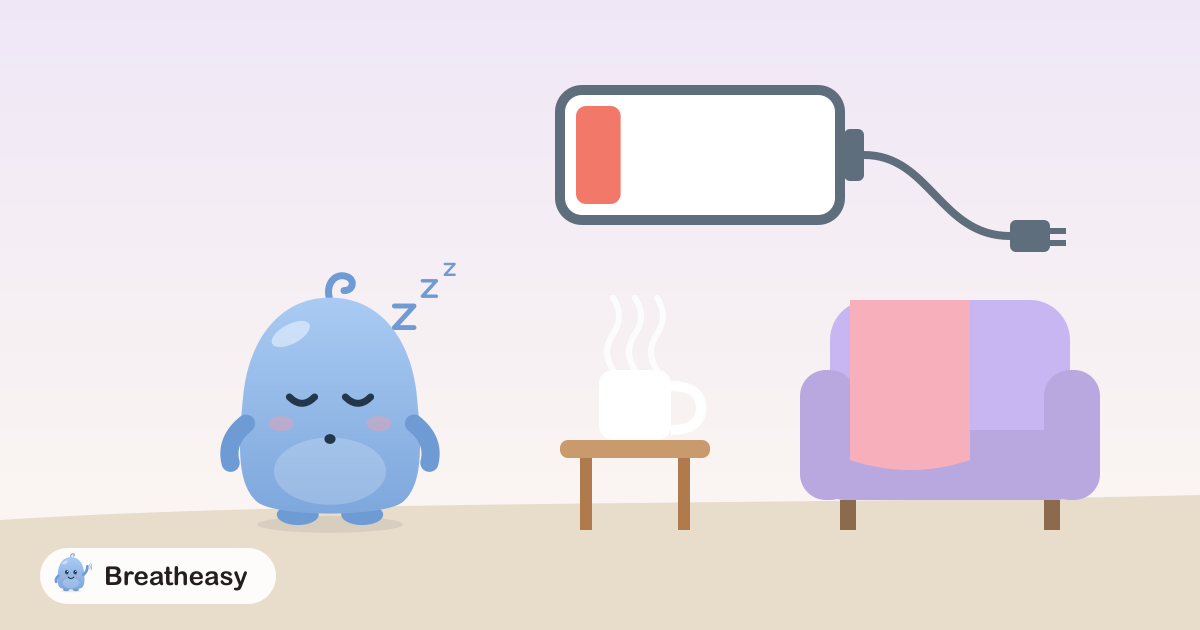
You wake up tired and go to bed tired. Small things feel overwhelming. You snap at people you love, feel numb about things that used to matter, and can’t remember the last time you felt like yourself.
That may be emotional exhaustion. Here are the signs, the causes, and how to start recovering.
What is emotional exhaustion?
Emotional exhaustion is a state of feeling emotionally drained and depleted after long-term stress. It’s what happens when the demands on you have outweighed your resources for too long. It’s a core part of burnout, which the World Health Organization describes as the result of chronic workplace stress that hasn’t been successfully managed.
Signs of emotional exhaustion
How you feel
- drained, empty or “running on fumes”
- overwhelmed by small things
- irritable, short-tempered or tearful
- numb, detached or not caring as much
- hopeless or trapped
- dread about work, caring or everyday demands
In your body
- tiredness that doesn’t improve with rest
- poor sleep, even when exhausted
- headaches, tense muscles, stomach problems
- getting ill more often
In your thinking
- trouble concentrating or remembering things
- finding decisions harder
- negative or cynical thoughts
In what you do
- withdrawing from people
- procrastinating, or struggling to start tasks
- relying more on caffeine, alcohol or food
- less effective at work or home
Our post on the physical signs of stress lists more.
Common causes
- work: heavy workloads, long hours, little control or recognition
- caring: looking after children, a partner or a parent, especially without support
- health: chronic illness or pain, yours or someone else’s
- money worries
- relationship problems or loss
- chronic anxiety or trauma, which keep your stress system switched on
- jobs with a lot of emotional demands, like health care, teaching and social work
Emotional exhaustion, burnout or depression?
- Emotional exhaustion is the drained, depleted feeling itself.
- Burnout includes exhaustion plus feeling cynical or detached from work and feeling less effective. It’s tied to work.
- Depression involves low mood or loss of interest most of the day, nearly every day, for at least two weeks, affecting all areas of life.
They often overlap. If exhaustion comes with persistent low mood, hopelessness or loss of interest, talk to a doctor.
How to recover
- Name it. Recognising you’re exhausted, not weak or lazy, is the first step.
- Reduce demands. What can you drop, delegate, postpone or say no to?
- Rest for real. Rest isn’t scrolling. Try time outdoors, gentle movement, a bath, music or simply doing nothing.
- Protect your sleep with regular bed and wake times.
- Set boundaries, like a firm end to the working day and turning off notifications.
- Do one small thing you enjoy each day, even when you don’t feel like it.
- Ask for help from family, friends, your manager or your doctor.
- Look at the source. If work or caring is causing it, changes there are part of the solution, not just self-care.
When to get help
See a doctor if exhaustion lasts more than a couple of weeks, affects your daily life, or comes with low mood, hopelessness or loss of interest. A doctor can also check for physical causes of tiredness, like anaemia or thyroid problems. If you’re having thoughts of ending your life, call or text 988 (US) now.
Frequently asked questions
What are the first signs of emotional exhaustion?
Often tiredness that rest doesn’t fix, irritability, poor sleep, feeling overwhelmed by small things and starting to feel detached or numb.
How long does it take to recover from emotional exhaustion?
It varies. Some people feel better within weeks once demands ease and they rest properly. Burnout can take months, especially if the situation causing it doesn’t change.
Is emotional exhaustion a mental illness?
Not on its own, but it can lead to or overlap with depression and anxiety, which are treatable conditions.
Can emotional exhaustion cause physical symptoms?
Yes. It can cause tiredness, headaches, muscle tension, stomach problems, poor sleep and getting ill more often.
How Breatheasy can help
Breatheasy can help you notice when you’re running low and take small steps to recharge. Ten-second check-ins help you track energy and mood over time, so you can spot exhaustion early. One-minute breathing exercises, calming games and sleep sounds and stories give you small moments of real rest. Breatheasy is coming soon to iPhone and Android.
Sources
- Burn-out an “occupational phenomenon”, World Health Organization
- Stress, NHS
- Why am I tired all the time?, NHS
- Depression, National Institute of Mental Health