Breatheasy
The best breathing apps for anxiety in 2026
Our pick of the best breathing apps for anxiety and panic, from haptic pulses you can follow with your eyes closed to Apple Watch, what the research says about breathwork, and what to look for.
 Breatheasy team27 October 2026 · 6 min read
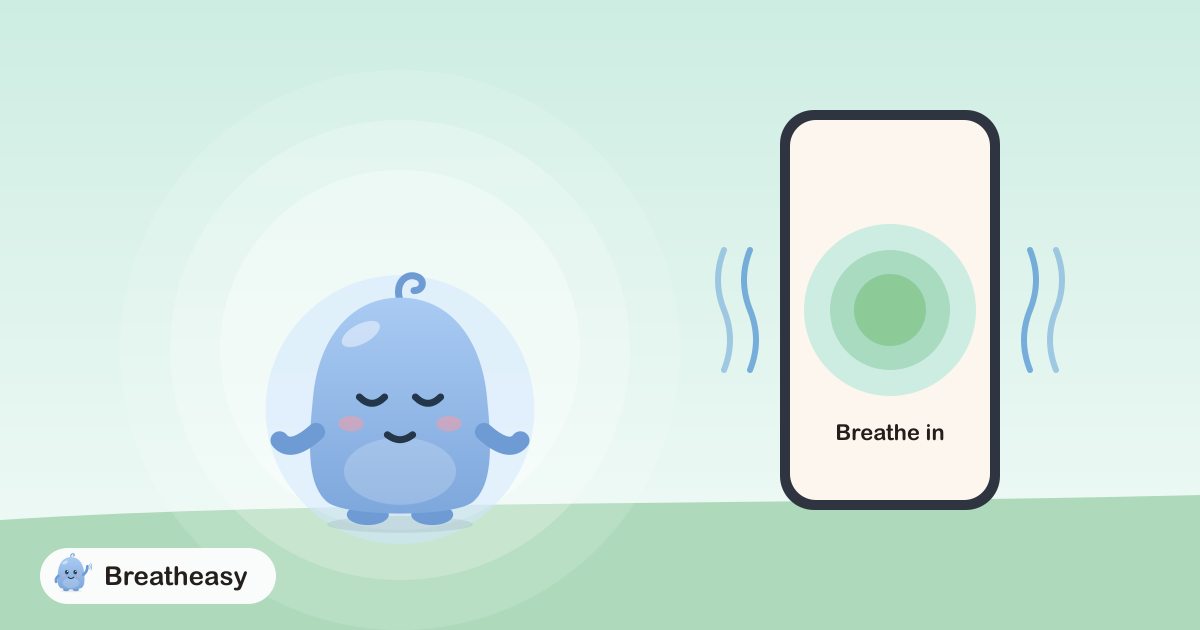
When anxiety hits, slowing your breathing is one of the quickest ways to calm your body. But counting in the middle of panic is hard. A good breathing app does the counting for you.
Here’s our guide to the best breathing apps for anxiety in 2026, and what to look for.
Full disclosure: we make Breatheasy, so we’re not neutral. We’ve put it first because we designed its breathing exercises specifically for anxiety and panic. We’ve tried to describe the other apps fairly. Features and prices change, so check the app store before you decide.
Does breathwork help anxiety?
The evidence is encouraging. A 2023 review of 12 randomised trials found that breathwork was linked to lower stress than control conditions, with a small-to-medium effect. The authors noted the studies varied in quality and called for more careful research.
Another 2023 study compared different five-minute daily practices. Cyclic sighing, which focuses on long, slow out-breaths, improved mood and slowed breathing more than mindfulness meditation did.
The common thread: a longer out-breath seems to be the key ingredient. Our post on breathing exercises for panic attacks explains why.
What makes a good breathing app for anxiety
- Guidance you can feel. Vibrations let you follow along with your eyes closed, or without looking at your phone.
- Simple, proven rhythms, especially ones with a long out-breath.
- Short sessions. One to five minutes is enough to help.
- Free core exercises. Breathing shouldn’t need a subscription.
- Works offline.
- Help for panic, not just relaxation, if that’s what you need.
1. Breatheasy: best for anxiety and panic
Breatheasy offers three breathing rhythms, each for 1, 3 or 5 minutes:
- Calm: in for 4, out for 6, built around the long out-breath that eases anxiety
- Box: in for 4, hold for 4, out for 4, hold for 4
- 4-7-8: in for 4, hold for 7, out for 8, often used to wind down for sleep
Your phone pulses gently as you breathe in, so you can close your eyes and just follow. Luma, a friendly blue character, breathes alongside you, and there are optional spoken cues. Breathing is also built into the free panic button, which goes on to guide you through grounding.
Price: the breathing exercises and panic button are free forever. Premium ($4.99 a month or $39.99 a year, after a 3-day trial that needs no card and never charges automatically) adds things like sleep stories and chats with Luma.
Best for: anxiety and panic, especially if you like to close your eyes.
Worth knowing: Breatheasy is coming soon to iPhone and Android, so it isn’t in the app stores yet.
2. Apple Watch Mindfulness app: built in
If you have an Apple Watch, the built-in Mindfulness app includes Breathe sessions, guided by an animation and gentle taps on your wrist. It’s simple, free and always with you.
Best for: Apple Watch owners who want a quick, discreet breathing break.
3. Breathwrk: the biggest library
Breathwrk has a large library of breathing exercises for calm, sleep and energy, with visual, audio and vibration guidance.
Price: free to download with a limited set of exercises, and a Pro subscription for the full library.
Best for: people who want lots of different exercises and like variety.
4. Calm: breathing inside a meditation app
Calm includes breathing exercises alongside its meditations, music and Sleep Stories.
Price: some free content, with a subscription for full access.
Best for: people who also want meditation and sleep content.
5. Headspace: breathing as part of mindfulness
Headspace includes short breathing exercises within its guided meditations and courses.
Price: subscription.
Best for: people building a regular mindfulness habit.
6. Insight Timer: free guided breathing
Insight Timer has many free guided breathing tracks from different teachers, alongside its large meditation library.
Price: most content is free, with an optional paid tier.
Best for: trying lots of different voices and styles for free.
7. Rootd: breathing within a panic app
Rootd includes guided breathing alongside its panic button, lessons and journal.
Price: when we looked in October 2026, Premium was $49.99 a year after a 3-day trial that charges automatically unless you cancel.
Best for: people who want breathing as part of a panic-focused app.
Which breathing app is right for you?
| If you want… | Try |
|---|---|
| Vibrations to follow with your eyes closed | Breatheasy, Apple Watch, Breathwrk |
| Help in the middle of a panic attack | Breatheasy, Rootd |
| Lots of different exercises | Breathwrk |
| Breathing plus meditation and sleep | Calm, Headspace, Insight Timer |
| Completely free breathing exercises | Breatheasy, Apple Watch, Insight Timer |
Tips for using any breathing app
- Practise when you’re calm, a few minutes a day, so it’s automatic when you need it.
- Make the out-breath longer than the in-breath.
- Don’t force big breaths. Gentle and slow is better than deep and dramatic.
- If holding your breath makes you dizzy or panicky, choose a rhythm without holds, like Calm.
- If focusing on breathing makes you more anxious, switch to grounding instead. Our post on grounding techniques for anxiety has twenty ideas.
When breathing isn’t enough
Breathing exercises help in the moment. If anxiety is there most days or panic attacks keep happening, talk to a doctor. CBT helps most people. If you have chest pain that spreads, severe breathlessness or you faint, call 911.
Frequently asked questions
What is the best breathing exercise for anxiety?
For most people, a simple long out-breath: in through your nose for 4, out through your mouth for 6. It’s easy to remember, has no holds, and slows your heart.
Do breathing apps really work for anxiety?
Breathing exercises themselves have good evidence for reducing stress, and an app makes them easier to follow, especially when panic makes counting hard. They’re a tool, not a cure for an anxiety disorder.
Is there a free breathing app for anxiety?
Yes. Breatheasy’s breathing exercises are free forever, the Apple Watch Mindfulness app is built in, and Insight Timer has many free guided breathing tracks.
Is 4-7-8 or box breathing better for anxiety?
Both can help. 4-7-8 is often used for sleep, and box breathing for focus. If breath holds make you uncomfortable, a simple in-for-4, out-for-6 rhythm is gentler. Our post comparing calm, box and 4-7-8 breathing explains each.
Sources
- Effect of breathwork on stress and mental health: a meta-analysis of randomised-controlled trials, Fincham and others, Scientific Reports, 2023
- Brief structured respiration practices enhance mood and reduce physiological arousal, Balban and others, Cell Reports Medicine, 2023
- Start a Reflect or Breathe session on Apple Watch, Apple Support
- Breathing exercises for stress, NHS