Breatheasy
Crying during a panic attack: why it happens, and why it’s okay
Tears during or after a panic attack are common. Why panic makes you cry, what it means, and how to look after yourself.
 Breatheasy team27 October 2026 · 3 min read
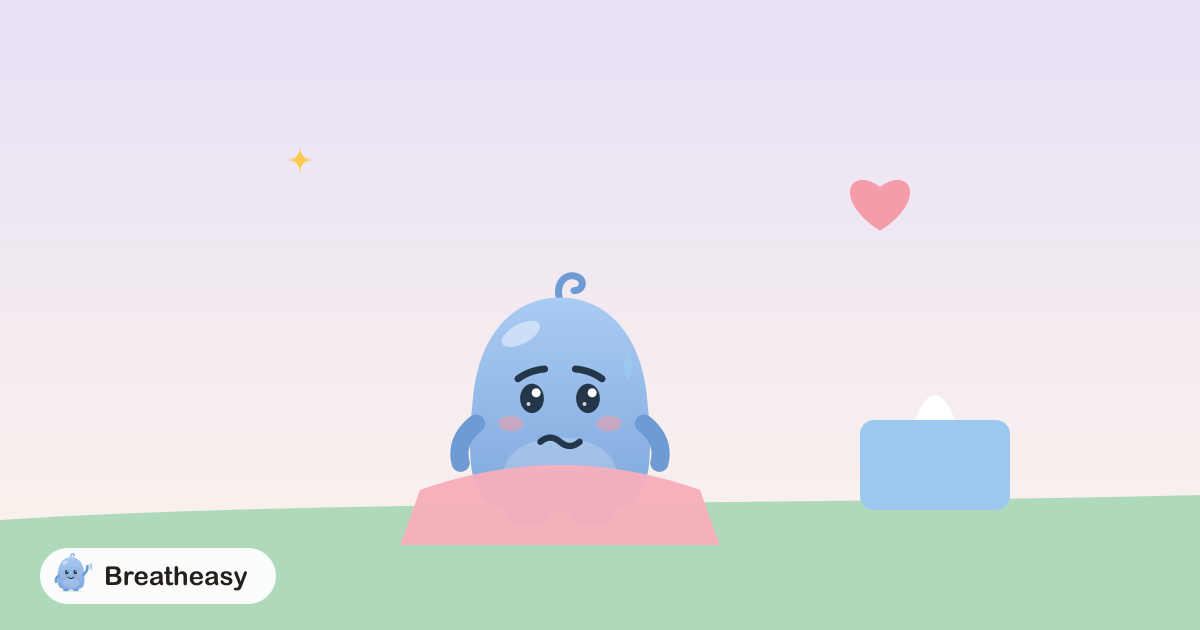
Panic hits, and before you know it, you’re in tears. Maybe sobbing so hard it’s difficult to breathe, or quietly crying as the fear finally fades. Afterwards, you might feel embarrassed, or worried that crying means something is very wrong.
It doesn’t. Crying during or after a panic attack is very common, and it makes a lot of sense.
Why panic attacks make you cry
It’s a response to intense fear
A panic attack is one of the most frightening experiences a person can have. Crying is a natural human response to overwhelming fear, distress and helplessness. Your body is reacting to how scary it felt, even if there was no real danger.
Your body is coming down
Many people cry as the panic starts to ease. After the adrenaline rush, your body’s calming system takes over, and tears can be part of that release, like crying with relief after a scare.
Built-up stress
Panic attacks often happen during stressful times. Sometimes a panic attack opens the floodgates for feelings you’ve been holding in for a while.
Exhaustion
Panic is draining. Feeling tired and wrung out afterwards makes tears more likely. We explain more in The panic attack hangover.
Is crying a bad sign?
No. Crying doesn’t mean you’re weak, losing control, or that the attack is getting worse. For many people, it’s part of how panic passes.
The one thing to watch is breathing. Hard sobbing can make you breathe fast, which can bring back dizziness or tingling. If that happens, gently slow your out-breath.
What to do if you cry during a panic attack
- Let it happen. Trying to hold back tears adds tension. Crying is allowed.
- Slow your breathing as best you can. In through your nose, a long breath out through your mouth.
- Ground yourself. Feel your feet on the floor, or hold something comforting.
- Find a quiet space if you want one, but you don’t have to hide.
- Talk to yourself kindly: “I’m scared, and that’s okay. This will pass.”
Afterwards
- Drink some water, and eat something if you can.
- Rest, wrap up somewhere cosy, or have a warm shower.
- Talk to someone you trust, if that helps.
- Try not to judge yourself. You’ve just been through something hard.
When crying might mean something more
If you’re crying a lot, most days, not just during panic attacks, or feeling low, hopeless or numb for two weeks or more, it could be depression, which often comes alongside anxiety. Please talk to a doctor. Depression is very treatable.
How Breatheasy can help
Breatheasy can be there with you, tears and all. Tap “I’m feeling anxious” and Luma walks you through it: rate how strong it feels, breathe slowly as your phone pulses gently, ground yourself with 5-4-3-2-1, then see how far the anxiety came down. Luma’s kind words and gentle check-ins afterwards help you be a little kinder to yourself. The panic button works without internet and is always free. Breatheasy is coming soon to iPhone and Android.
When to get help
Talk to a doctor if panic attacks keep happening, or if you’re feeling low or tearful most days. Cognitive behavioural therapy (CBT) helps with both panic and depression. Our guide to anxiety and panic attacks explains more.
If you’re feeling hopeless or having thoughts of ending your life, call or text 988 in the US, or call 911 if you’re in danger.
Sources
- Panic disorder, NHS
- Panic Disorder: When Fear Overwhelms, National Institute of Mental Health
- Panic attacks and panic disorder, Cleveland Clinic