Breatheasy
Does stress make you hungry? Why stress eating happens, and how to stop
Stress can make you hungrier, especially for sugary and fatty comfort foods, but it can also kill your appetite. Why it happens, how to tell stress hunger from real hunger, and gentle ways to cope without dieting harder.
 Breatheasy team27 October 2026 · 4 min read
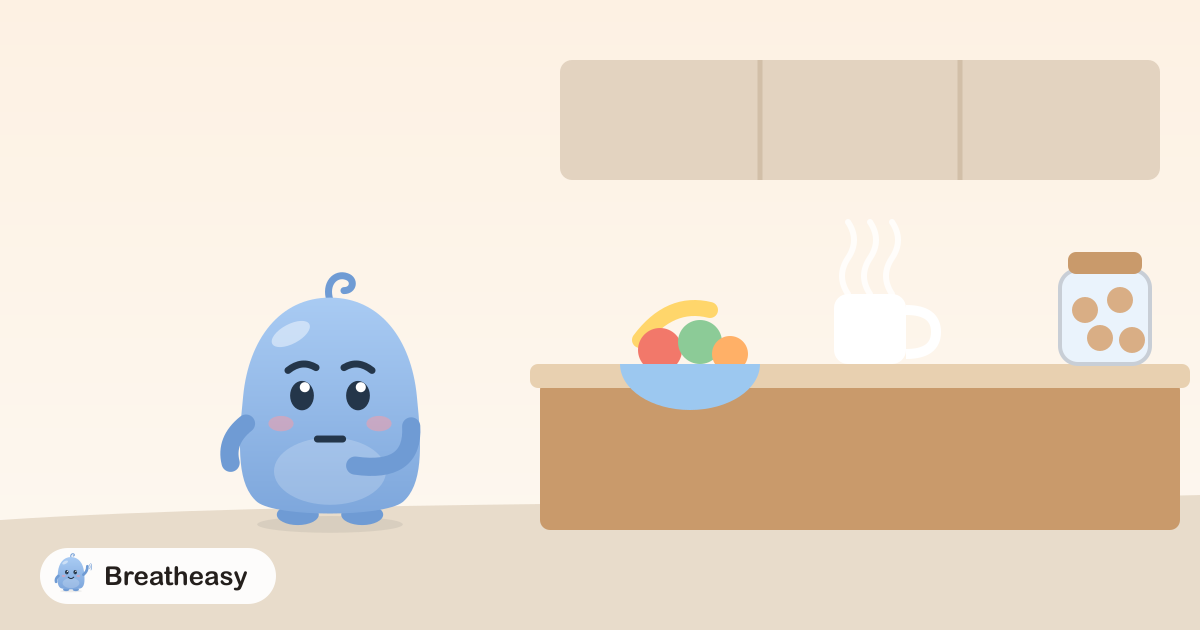
A stressful day, and suddenly you’re standing at the fridge, or working through a packet of biscuits without really tasting them. Or the opposite: you’re so stressed you forget to eat at all.
Both are normal stress responses. Here’s why stress affects your appetite, and how to cope.
Does stress make you hungry?
It depends on the kind of stress.
- Short-term stress often switches off your appetite. Your body releases adrenaline, which triggers the fight-or-flight response and temporarily puts eating on hold.
- Ongoing stress can make you hungrier. Your body releases the stress hormone cortisol, which can increase appetite and motivation, including the motivation to eat. If the stress doesn’t go away, cortisol may stay high.
That’s why some people lose their appetite during a crisis, then find themselves eating more during weeks of steady pressure.
Why stress makes you crave comfort food
Stress seems to change what you want to eat, not just how much. Harvard Health notes that many studies, though many of them in animals, have found that physical or emotional distress increases the intake of foods high in fat, sugar or both.
Researchers think this is linked to the brain’s reward system. Stress and tasty food can both trigger the release of natural opioids, which seem to dampen the stress response. In other words, comfort foods may genuinely comfort you, for a while. Over time, that relief can turn stress eating into a habit.
Stress also affects eating indirectly. Stressed people tend to sleep less, exercise less and drink more alcohol, which can all affect appetite and weight.
Stress hunger or real hunger?
| Physical hunger | Stress hunger |
|---|---|
| Builds gradually | Comes on suddenly |
| Many foods sound good | Craving for something specific, often sweet or salty |
| You stop when you’re full | Hard to stop, even when full |
| Leaves you satisfied | Often followed by guilt |
How to stop stress eating
- Pause before you eat. Ask: Am I hungry, or am I stressed, tired, bored or lonely? There’s no wrong answer, but noticing gives you a choice.
- Breathe first. A minute of slow breathing can take the edge off the urge.
- Eat regular meals. Skipping meals during stress often leads to grazing or overeating later.
- Don’t diet harder. Researchers suggest that repeated, unsuccessful attempts to restrict food may add to the problem rather than solve it.
- Have other ways to calm down, like a short walk, a shower, music, a call with a friend or a calming game.
- Make comfort foods less convenient, like keeping them out of sight, and keep easy, filling foods nearby.
- Eat without screens when you can, so you notice what you’re eating and when you’re full.
- Protect your sleep. Tiredness makes cravings stronger.
- Be kind to yourself. Guilt after eating is stressful too, which can restart the cycle.
When stress makes you lose your appetite
If stress stops you eating, try small, regular snacks rather than full meals, keep easy foods nearby, and drink enough water. Our post on nervous stomach anxiety has more on how stress affects your gut.
When to get help
Talk to a doctor if you regularly eat large amounts of food and feel out of control while doing it, if you feel ashamed or distressed about eating, if your weight is changing a lot, or if you’ve lost your appetite for more than a couple of weeks. These can be signs of an eating disorder or depression, which are treatable. If you’re having thoughts of ending your life, call or text 988 (US) now.
Frequently asked questions
Why does stress make me hungry?
Ongoing stress raises the hormone cortisol, which can increase appetite. Stress also seems to make sugary and fatty foods more rewarding, so you crave them more.
Why does stress make me not hungry?
Short bursts of stress release adrenaline, which triggers fight-or-flight and puts eating on hold. Anxiety can also cause nausea and a churning stomach.
What foods help with stress?
Regular, balanced meals help keep your energy and mood steady. No single food cures stress, but eating regularly, drinking enough water and limiting caffeine and alcohol help.
Is stress eating bad?
Occasional comfort eating is normal. It becomes a problem when it’s your main way of coping, feels out of control, or leaves you feeling guilty or unwell.
How Breatheasy can help
When stress sends you to the kitchen, Breatheasy gives you something else to try first. Open a one-minute breathing exercise or a calming game to take the edge off the urge, or use the “Ride out an urge” tool to wait it out. Ten-second check-ins and the journal help you spot patterns, like eating more on stressful days, without judgement. Breatheasy is coming soon to iPhone and Android.
Sources
- Why stress causes people to overeat, Harvard Health Publishing
- Stress, eating and the reward system, Adam and Epel, Physiology & Behavior, 2007
- Stress, NHS