Breatheasy
Exposure therapy: how it works, what it’s like, and why it helps anxiety
Exposure therapy helps you face fears gradually and safely until they lose their power. How it works, the different types, what a session is like, the conditions it helps, common myths and how to start.
 Breatheasy team27 October 2026 · 5 min read
When something frightens you, avoiding it feels like the obvious answer. But avoidance is exactly what keeps fear going. Exposure therapy works the other way round: you face your fears gradually, with support, until they lose their power.
It’s one of the most effective treatments for anxiety. Here’s how it works and what it’s really like.
What is exposure therapy?
Exposure therapy is a type of cognitive behavioural therapy (CBT) in which you gradually face situations, objects, thoughts, memories or body sensations that you fear and avoid, in a planned and safe way.
Why it works
When you avoid something you fear, you feel relief. That relief teaches your brain: “That was dangerous, and avoiding it kept me safe.” So next time, the fear is just as strong, or stronger, and avoidance can spread.
Exposure breaks the cycle. By staying with the fear instead of escaping, you learn that:
- the feared outcome usually doesn’t happen
- anxiety rises, peaks and falls on its own
- you can cope, even when you feel anxious
Over time, the fear gets smaller and your life gets bigger.
Types of exposure
- In real life (in vivo): facing real situations, like riding a lift, going to a busy shop or touching a door handle.
- In your imagination (imaginal): vividly imagining feared situations or memories, often used for PTSD and some OCD fears.
- Body sensations (interoceptive): deliberately bringing on harmless sensations, like a racing heart from running on the spot or dizziness from spinning, to show they aren’t dangerous. This is a key part of CBT for panic.
- Virtual reality: using a headset to face situations like heights or flying. In one trial, automated virtual reality therapy greatly reduced fear of heights after about two hours of treatment.
How it’s done
Most exposure therapy is graded:
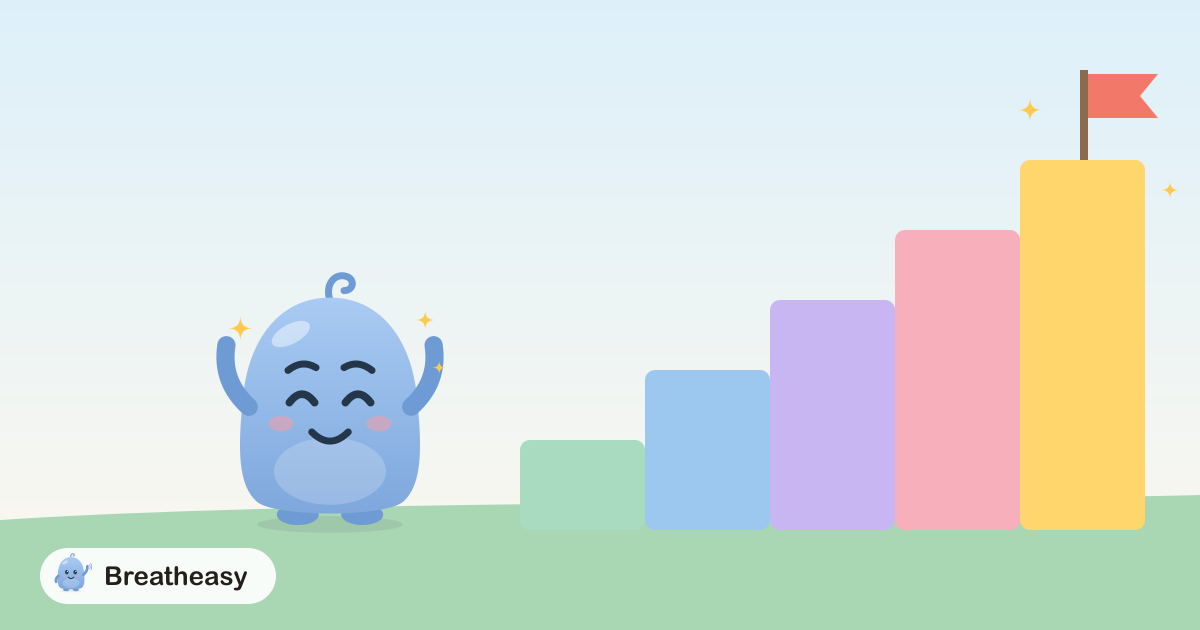
- Build a ladder. List feared situations from easiest to hardest, rating how anxious each would make you from 0 to 100.
- Start low. Begin with something challenging but manageable.
- Stay with it. Remain in the situation without escaping or using safety behaviours, until you’ve learned something new, like that the anxiety passes or you can cope.
- Repeat. Practise each step several times, often between sessions too.
- Move up. Gradually work towards the harder steps.
Your therapist plans each step with you. You’re always in control of the pace.
What it helps
- Specific phobias, like fear of heights, flying, spiders or needles. A review of 33 trials found exposure-based treatments worked better than other approaches.
- Panic disorder and agoraphobia, including exposure to body sensations. A large review found facing body sensations was one of the most helpful parts of CBT for panic.
- Social anxiety, through behavioural experiments in real social situations.
- OCD, through exposure and response prevention (ERP): facing triggers while resisting compulsions.
- PTSD, through therapies like prolonged exposure, which help people process traumatic memories safely.
- Health anxiety, by reducing checking and reassurance-seeking.
Common myths
- “It means being thrown in at the deep end.” Most exposure is gradual and agreed with you. There’s a faster approach called flooding, but it’s less commonly used.
- “It will make me more anxious forever.” Anxiety usually rises during exposure, then falls, and gets lower with practice.
- “I have to feel calm for it to work.” No. Learning that you can cope while anxious is part of how it works.
- “I can just do it on my own.” For simple fears, self-guided exposure can help. For trauma, OCD or severe anxiety, it’s best done with a trained therapist.
How to start
- Ask your doctor or therapist about CBT that includes exposure for your specific problem.
- For OCD, look for a therapist trained in ERP. The International OCD Foundation (iocdf.org) has a directory.
- For a simple fear, you can try building a gentle ladder yourself, starting small and repeating each step.
- Use calming skills to help you stay in the situation, but don’t use them to escape the feeling entirely.
Our posts on agoraphobia, claustrophobia and panic attacks while driving include example ladders.
Frequently asked questions
Does exposure therapy really work?
Yes. It’s one of the most researched and effective treatments for anxiety, especially phobias, panic, social anxiety, OCD and PTSD.
Is exposure therapy scary?
It can feel challenging, but it’s done gradually and you agree each step. Most people find the anticipation is worse than the exposure itself, and it gets easier quickly.
How long does exposure therapy take?
It depends. Some specific phobias improve in very few sessions. Panic, OCD and PTSD usually take longer, often a few months of weekly sessions with practice in between.
Can I do exposure therapy on my own?
For mild fears, gradual self-guided exposure can help. For OCD, trauma or severe anxiety, it’s safer and more effective with a trained therapist.
How Breatheasy can help
Breatheasy can support you through each step of your ladder. Before a step, a one-minute breathing exercise helps you settle. During it, tap “I’m feeling anxious” and Luma walks you through slow breathing and grounding, then shows how far your anxiety came down, which is exactly the lesson exposure teaches: it rises, then falls. For OCD, the “Ride out an urge” tool helps you resist compulsions while the urge passes. Breatheasy is coming soon to iPhone and Android.
Sources
- What is exposure therapy?, American Psychological Association
- Psychological approaches in the treatment of specific phobias: a meta-analysis, Wolitzky-Taylor and others, Clinical Psychology Review, 2008
- Dismantling cognitive-behaviour therapy for panic disorder, Pompoli and others, Psychological Medicine, 2018
- Automated psychological therapy using immersive virtual reality for treatment of fear of heights, Freeman and others, Lancet Psychiatry, 2018
- Obsessive compulsive disorder (OCD), NHS