Breatheasy
Fear of the dark (nyctophobia): why it happens and how to feel safer at night
Fear of the dark is common in children and more common in adults than people admit. Why it happens, how it affects sleep, when it becomes a phobia, and gentle steps that help children and adults.
 Breatheasy team27 October 2026 · 4 min read
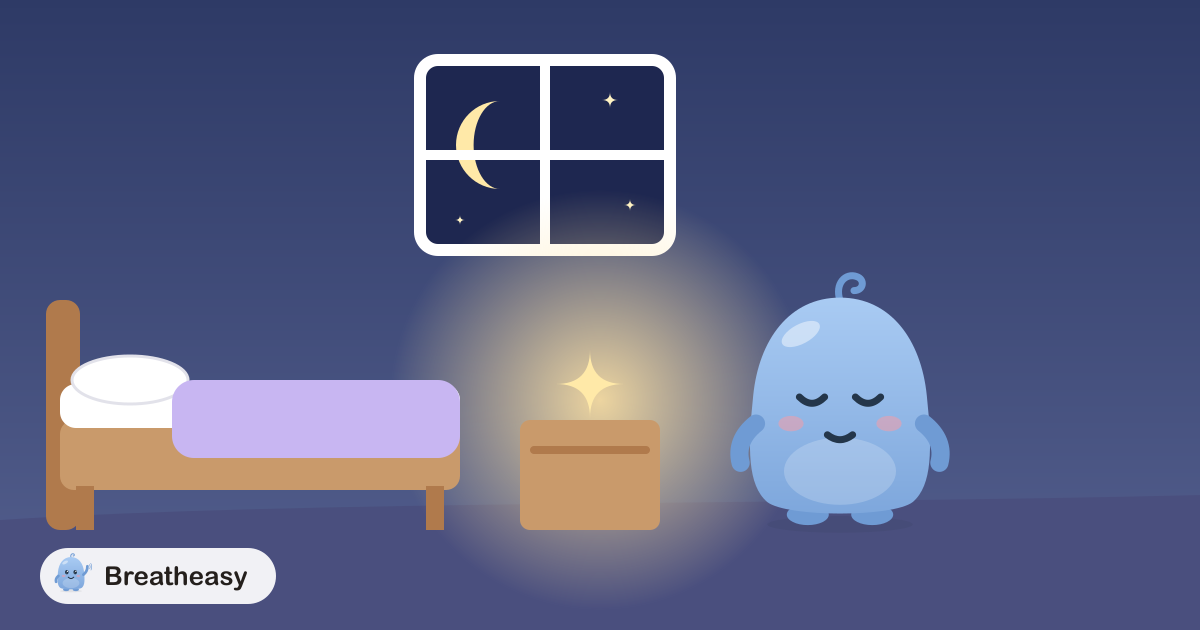
You switch off the light and your heart starts to race. Every creak sounds like a footstep. Shapes in the corner seem to move. You leave a light on, or can’t sleep at all.
Fear of the dark is one of the most common fears, and it isn’t just for children. Here’s why it happens and how to feel safer at night.
Why are we afraid of the dark?
- The unknown: in the dark, your brain can’t see what’s around you, so it fills in the gaps, often with threats.
- Evolution: for our ancestors, darkness meant more danger and less ability to see predators.
- Feeling vulnerable: at night you’re alone, tired and lying down.
- Past experiences: a frightening event at night, or a scary film or story.
- Anxiety: if you’re anxious generally, night-time can amplify it. Our post on why anxiety is worse at night explains more.
In children
Fear of the dark is very common in young children, often starting as imagination develops. Most children grow out of it. Helpful steps:
- acknowledge the fear without dismissing it or feeding it
- a nightlight or a door left slightly open
- a calm bedtime routine
- gradual steps, like dimming the light a little more each week
- praise for brave steps
Avoid checking under the bed for monsters, which can suggest there might really be something to check for. Our post on helping kids with anxiety has more ideas.
In adults
Many adults feel uneasy in the dark, but feel embarrassed to say so. It can be linked to anxiety, past trauma, or sleep problems. Fear of the dark and poor sleep can feed each other: dread makes it harder to fall asleep, and lying awake gives the fear more time.
When it becomes a phobia
Fear of the dark may be a phobia, sometimes called nyctophobia, when:
- the fear is intense and lasts for months
- you avoid darkness, for example sleeping with lights on or avoiding going out at night
- it causes panic attacks or significant distress
- it affects your sleep or daily life
What helps
- A soft nightlight is fine. There’s nothing wrong with a dim light if it helps you sleep.
- Wind down calmly before bed, without scary films or news.
- Breathe out slowly if you feel anxious in the dark.
- Ground yourself: feel the bed under you, name sounds you recognise.
- Gradual exposure: dim the light a little more every few nights, or spend a few minutes in a dark room while breathing slowly, building up over time.
- Calming sounds, like rain or a gentle story, can make the dark feel less empty.
When to get help
Talk to a doctor if fear of the dark is stopping you from sleeping, going out or living normally, or comes with nightmares or flashbacks of a past event, which can be part of PTSD.
Frequently asked questions
Is it normal for adults to be afraid of the dark?
Yes. Many adults feel uneasy in the dark. It becomes a problem only when it’s intense and affects your sleep or life.
What is the fear of the dark called?
It’s sometimes called nyctophobia or achluophobia. Doctors would usually classify an intense fear of the dark as a specific phobia.
Can fear of the dark be cured?
Yes. Gradual exposure, along with calming skills, helps most people feel comfortable in the dark again.
Is it okay to sleep with a light on?
A dim light is fine if it helps. Bright light can disrupt sleep, so keep it soft and warm.
How Breatheasy can help
Breatheasy can make the dark feel less lonely. Fall asleep to calming sleep sounds like rain and waves, or a bedtime story read by Luma. If fear turns into panic, tap “I’m feeling anxious” and Luma walks you through slow breathing with your phone pulsing gently, so you can keep your eyes closed. Breatheasy is coming soon to iPhone and Android.
Sources
- Phobias, NHS
- Anxiety in children, NHS
- Insomnia, NHS
- Specific phobia statistics, National Institute of Mental Health