Breatheasy
Fearful avoidant attachment: signs, causes and how to feel safer in relationships
Fearful avoidant attachment means wanting closeness but fearing it at the same time. What it is, signs in relationships, where it comes from, how it differs from anxious and avoidant styles, and how people move towards secure attachment.
 Breatheasy team27 October 2026 · 5 min read
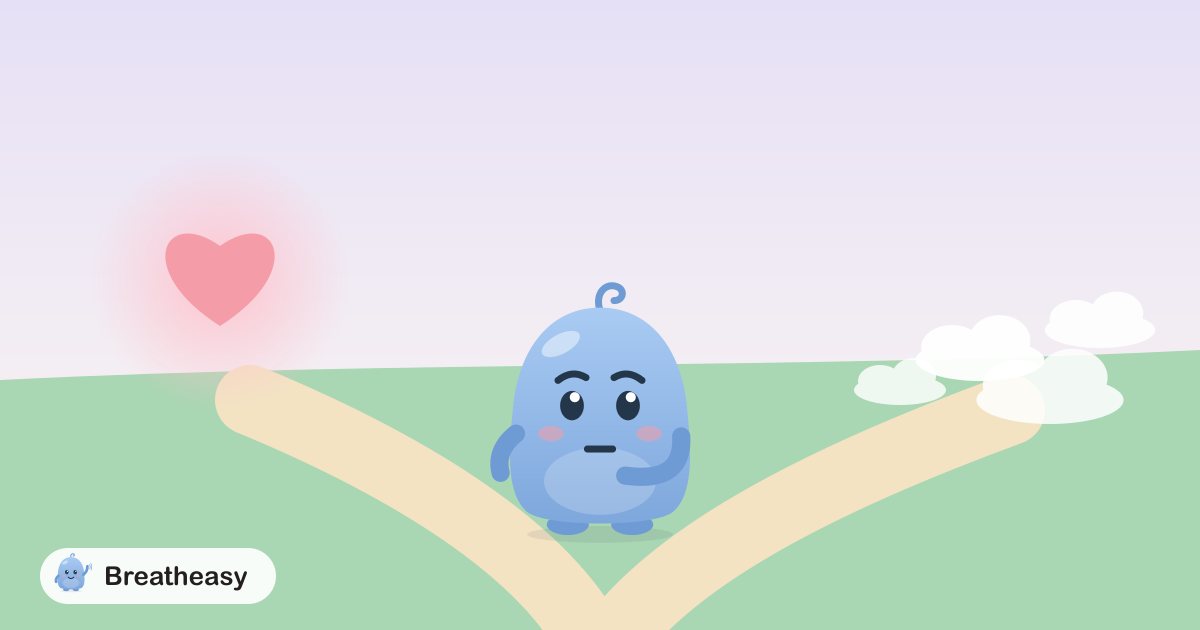
You want to be close to someone. But when they get close, something in you pulls away. You might crave reassurance and then push it off, swing between clinging and withdrawing, or end things just as they start to feel serious.
If that sounds familiar, you may have heard of fearful avoidant attachment. Here’s what it means, where it comes from and how people learn to feel safer in relationships.
What is fearful avoidant attachment?
Attachment theory describes the patterns we develop for connecting with people we’re close to, shaped largely by early relationships. In 1991, researchers Kim Bartholomew and Leonard Horowitz described four adult attachment styles, based on how people see themselves and others:
| Style | View of self | View of others | In short |
|---|---|---|---|
| Secure | Positive | Positive | Comfortable with closeness and independence |
| Anxious (preoccupied) | Negative | Positive | Craves closeness, fears rejection |
| Dismissive avoidant | Positive | Negative | Values independence, uncomfortable with closeness |
| Fearful avoidant | Negative | Negative | Wants closeness but fears getting hurt |
Fearful avoidant attachment sits where anxious and avoidant meet: a strong desire for connection, combined with a strong fear of being hurt, rejected or let down.
Attachment styles aren’t diagnoses. They’re patterns, and most people show a mix depending on the relationship.
Signs of fearful avoidant attachment
- wanting closeness, then pulling away when someone gets close
- difficulty trusting partners, even caring ones
- fearing rejection, and sometimes rejecting first
- mixed signals: warm one day, distant the next
- strong emotional reactions to conflict, or shutting down completely
- worrying you’re not good enough to be loved
- feeling overwhelmed by intimacy, or numb when things get serious
- relationships that feel intense and unstable
Where does it come from?
Fearful avoidant attachment is often linked to early relationships where caregivers were a source of both comfort and fear: unpredictable, frightening, neglectful or sometimes abusive. A child in that situation needs closeness but also feels unsafe with it, and that conflict can carry into adult relationships. Later experiences, like hurtful relationships or trauma, can shape it too.
Not everyone with this pattern had a difficult childhood, and having it says nothing about your worth.
How it affects relationships
- The push-pull cycle: closeness feels good, then frightening, so you withdraw; distance feels lonely, so you seek closeness again.
- Reading threat into small things: a delayed reply or a change in tone can feel like rejection.
- Struggling to ask for needs directly, because needing someone feels risky.
- Conflict feeling unsafe, leading to either big reactions or shutting down.
Anxiety is often part of it, especially fear of abandonment and overthinking in relationships.
Can attachment styles change?
Yes. Researchers describe people moving towards security over time, sometimes called earned security, through supportive relationships, self-understanding and therapy. Things that help:
- Notice your pattern. Name it when it happens: “I’m pulling away because I’m feeling close and that scares me.”
- Slow down your reactions. When you feel the urge to withdraw or test someone, pause, breathe and wait before acting.
- Communicate what’s happening, even simply: “I need a bit of space, but I’m not going anywhere.”
- Choose consistent, kind people, and let yourself notice when someone is reliable.
- Calm your body when you feel threatened. Slow breathing and grounding help you respond rather than react.
- Consider therapy, especially if your pattern is linked to trauma. Trauma-focused therapy, individual therapy or couples therapy can all help.
When to get help
If relationships repeatedly feel painful or unsafe, if you have a history of trauma, or if anxiety, low mood or self-criticism are affecting your life, talk to a therapist. If you’re in a relationship where you feel unsafe or controlled, the National Domestic Violence Hotline is free and confidential: 1-800-799-7233, or text START to 88788.
If you’re having thoughts of ending your life, call or text 988 (US) now.
Frequently asked questions
What is a fearful avoidant person like in a relationship?
They often want closeness but feel unsafe with it, so they may swing between seeking connection and pulling away, struggle to trust, and react strongly to signs of rejection.
What’s the difference between fearful avoidant and anxious attachment?
Anxious attachment involves craving closeness and fearing abandonment, while still seeing others as trustworthy. Fearful avoidant attachment combines that fear of rejection with a wariness of others, so closeness itself feels risky. Our post on anxious attachment explains more.
Is fearful avoidant attachment caused by trauma?
It’s often linked to early experiences where caregivers were frightening or unpredictable, but not always. Later relationships and experiences can shape it too.
Can a fearful avoidant person have a healthy relationship?
Yes. With self-awareness, a patient partner and sometimes therapy, many people with this pattern build secure, loving relationships.
How Breatheasy can help
When a relationship moment sets off panic or the urge to pull away, Breatheasy can help you pause. Tap “I’m feeling anxious” and Luma walks you through slow breathing and grounding, so you can respond instead of react. The journal helps you notice patterns, like what tends to set off the push-pull cycle, which is useful to bring to therapy. Breatheasy is coming soon to iPhone and Android.
Sources
- Attachment styles among young adults: a test of a four-category model, Bartholomew and Horowitz, Journal of Personality and Social Psychology, 1991
- Post-traumatic stress disorder (PTSD), NHS
- National Domestic Violence Hotline