Breatheasy
Anxious attachment: what it is, signs in relationships, and how to feel more secure
Anxious attachment means craving closeness while fearing rejection or abandonment. What it is, the signs, where it comes from, how it links to anxiety and overthinking, and practical ways to feel more secure.
 Breatheasy team27 October 2026 · 4 min read
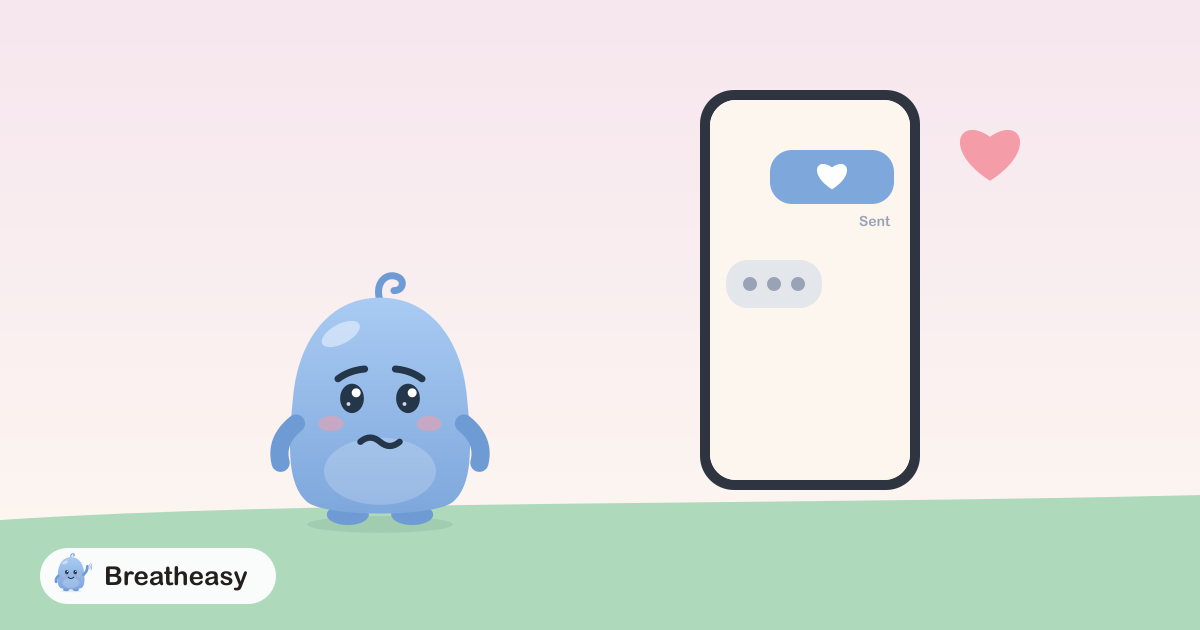
They haven’t replied for three hours, and your mind is spinning. Are they angry? Losing interest? You reread the last message, draft three versions of a reply, and feel a knot of panic in your chest.
If relationships often feel like this, you may relate to anxious attachment. Here’s what it is, where it comes from and how to feel more secure.
What is anxious attachment?
Attachment theory describes the patterns we develop for connecting with people we’re close to. In a well-known model of adult attachment, people with an anxious (also called preoccupied) style tend to see others positively but themselves negatively. They value closeness highly and worry that they’re not enough to keep it.
It’s a pattern, not a diagnosis. “Anxious attachment disorder” isn’t an official diagnosis in adults, although the pattern is very real.
Signs of anxious attachment
- needing frequent reassurance that you’re loved
- overthinking messages, tone and delays in replies
- feeling panicky or upset when a partner seems distant
- fearing rejection or abandonment, even in stable relationships
- trying hard to please people, and struggling to say no
- feeling your mood depends on how the relationship is going
- jealousy or difficulty trusting, even when nothing is wrong
- staying in relationships that aren’t good for you, because being alone feels worse
Where does it come from?
Anxious attachment is often linked to early relationships where care was loving but inconsistent: sometimes warm and available, sometimes distracted or unavailable. A child learns to stay alert to signs of connection and to work hard to keep it. Later experiences, like painful break-ups or rejection, can strengthen the pattern.
Anxious attachment and anxiety
Anxious attachment isn’t the same as an anxiety disorder, but they often overlap. Both involve:
- scanning for threat, in this case signs of rejection
- overthinking and replaying conversations
- seeking reassurance, which brings brief relief but keeps the worry going
- physical anxiety: a racing heart, a tight chest, trouble sleeping
Our post on how to stop overthinking has practical tools that help here too.
How to feel more secure
- Calm your body first. When you feel that jolt of panic, breathe out slowly before you do anything. Decisions made in panic are rarely the ones you want.
- Pause before reassurance-seeking. Instead of sending another message, wait 20 minutes and see if the urge passes. Each time you sit with uncertainty, it gets easier.
- Check the facts. “They haven’t replied” is a fact. “They’re losing interest” is a guess. What else could explain it?
- Communicate needs calmly and directly: “I feel more settled when we check in during the day. Could we do that?”
- Build a life beyond the relationship: friends, interests and goals that are yours.
- Work on self-worth. Notice self-critical thoughts and ask what you’d say to a friend.
- Choose consistent people. Secure, reliable partners and friends help the pattern soften over time.
- Consider therapy. Individual therapy, and couples therapy if you’re in a relationship, can help you understand the pattern and change it.
When to get help
Talk to a therapist if relationship anxiety is affecting your wellbeing, sleep or work, or if you keep ending up in relationships that hurt you. If you feel unsafe or controlled in a relationship, the National Domestic Violence Hotline is free and confidential: 1-800-799-7233, or text START to 88788.
Frequently asked questions
What triggers anxious attachment?
Common triggers include delayed replies, a partner seeming distant or busy, conflict, plans being cancelled and signs of change in a relationship. Anything that feels like possible rejection can set it off.
Can anxious attachment be fixed?
Attachment patterns can change. Many people become more secure through self-awareness, supportive relationships and therapy. It takes time, but it’s very possible.
Is anxious attachment the same as being clingy?
Not really. The behaviour can look clingy, but underneath it is fear of losing connection. Understanding the fear, rather than judging yourself, is the first step to changing it.
What’s the difference between anxious and fearful avoidant attachment?
Anxious attachment involves craving closeness and fearing abandonment. Fearful avoidant attachment adds a wariness of closeness itself, so people may swing between seeking connection and pulling away. Our post on fearful avoidant attachment explains more.
How Breatheasy can help
When relationship anxiety hits, Breatheasy helps you pause before you react. Tap “I’m feeling anxious” and Luma walks you through slow breathing and grounding until the wave settles. The “Ride out an urge” tool helps you sit with the urge to seek reassurance without acting on it straight away, and ten-second check-ins help you see what tends to set your anxiety off. Breatheasy is coming soon to iPhone and Android.
Sources
- Attachment styles among young adults: a test of a four-category model, Bartholomew and Horowitz, Journal of Personality and Social Psychology, 1991
- Generalised anxiety disorder in adults, NHS
- National Domestic Violence Hotline