Breatheasy
How to help someone having a panic attack
What to say, what to do, and what to avoid when someone you care about is having a panic attack, plus how to support them afterwards.
 Breatheasy team27 October 2026 · 4 min read
Watching someone you love have a panic attack can be frightening. They might be gasping, shaking, crying or saying they think they’re dying, and you may feel helpless.
The good news is that you don’t need to do anything complicated. Your calm presence is one of the most helpful things in the room. Here’s what to say, what to do, and what to avoid.
First: is it a panic attack?
If this is their first panic attack, if they have chest pain that spreads to their arm, jaw, neck or back, if they’re struggling to breathe, faint, become confused, or you’re simply not sure, call 911 (or your local emergency number). It’s always better to check.
If they’ve had panic attacks before and this feels familiar to them, the steps below can help.
What to do
1. Stay calm and stay with them
Panic is catching, but so is calm. Speak slowly, keep your voice low and steady, and keep your body relaxed. Don’t leave them alone unless they ask you to.
2. Tell them what’s happening
Use short, simple words. A panicking brain can’t take in much.
- “You’re having a panic attack.”
- “It feels awful, but it can’t hurt you.”
- “It will pass. It always does.”
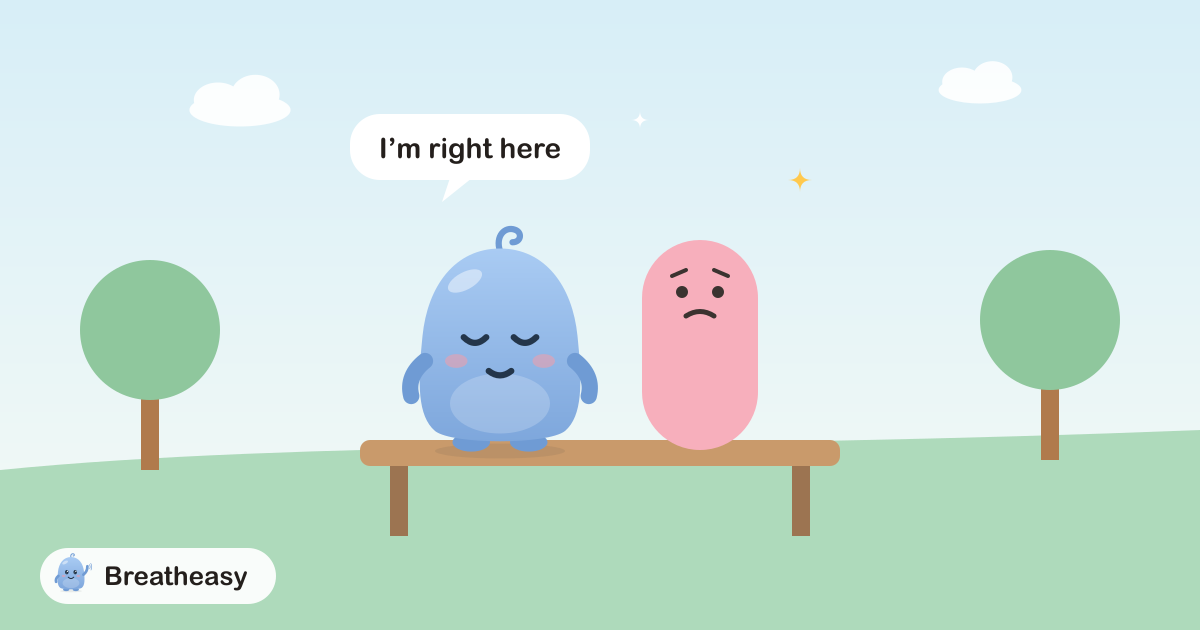
- “I’m right here.”
3. Breathe with them
Breathe slowly yourself, and invite them to follow: “Breathe in with me… and out, slowly.” Aim for in for 4 and out for 6. Don’t ask them to take big deep breaths, which can make them feel more breathless. A long, slow out-breath matters most.
4. Help them come back to the room
Grounding helps bring attention away from scary body feelings. Gently ask:
- “Can you tell me five things you can see?”
- “What can you feel under your feet?”
- “Can you hold this?” (something cold, like a can or ice in a cloth)
5. Ask, don’t assume
Everyone is different. Ask simple yes-or-no questions: “Do you want me to stay?” “Would you like some space?” “Do you want to sit down?” Some people want to be held; others don’t want to be touched at all.
6. Let it pass
Most panic attacks peak within about 10 minutes and ease within 20. You don’t need to fix it. Your job is to be a steady presence while it moves through.
What not to say or do
- Don’t say “calm down” or “just relax”. If they could, they would.
- Don’t say “it’s all in your head”. The feelings are very real, even if the danger isn’t.
- Don’t crowd them. Give them space and fresh air, and keep onlookers away.
- Don’t ask lots of questions, or ask why it’s happening. That can come later.
- Don’t rush them to leave, or force them to stay somewhere they feel trapped. Let them set the pace.
- Don’t panic yourself. If you feel anxious, slow your own breathing first.
After the panic attack
When it’s over, many people feel exhausted, shaky, embarrassed or tearful. You can help by:
- offering water and somewhere quiet to sit
- letting them rest, without making a big deal of it
- reassuring them there’s nothing to be embarrassed about
- asking, later and gently, if there’s anything that helps when it happens
Our post on the panic attack hangover explains how people often feel in the hours afterwards.
Plan ahead together
If someone you love gets panic attacks regularly, talk about it on a calm day. Ask:
- What do the first signs look like for you?
- What helps? What makes it worse?
- Do you want me to talk, or just be there?
- Is there a word or signal you could use to let me know?
Supporting someone long term
It’s natural to want to protect someone from panic, for example by driving them everywhere or helping them avoid places that scare them. But avoiding things, and lots of reassurance, can make panic stronger over time, because they never get to learn that they can cope.
Instead, encourage them, gently, to keep doing the things that matter to them, and to get support if panic attacks keep happening. Cognitive behavioural therapy (CBT) helps most people with panic. Our guide to anxiety and panic attacks is a good place for you both to start.
Look after yourself too
Supporting someone with panic attacks can be tiring and worrying. It’s okay to have your own feelings about it, to take breaks, and to talk to someone yourself.
How Breatheasy can help
If someone you love has panic attacks, Breatheasy can help you both. Its panic button walks them through slow breathing and grounding, step by step, so they always have help in their pocket, and you can breathe along with Luma together. The panic button works without internet and is always free. Breatheasy is coming soon to iPhone and Android.
Sources
- Panic disorder, NHS
- Panic Disorder: When Fear Overwhelms, National Institute of Mental Health
- Panic attacks and panic disorder, Cleveland Clinic