Breatheasy
Insomnia: causes, signs and what to do when you’re tired but can’t sleep
How to know if you have insomnia, what can cause it (from stress and anxiety to caffeine, pain and medical conditions), why you can feel exhausted but wide awake, and the habits and CBT-I treatment that help most.
 Breatheasy team27 October 2026 · 5 min read
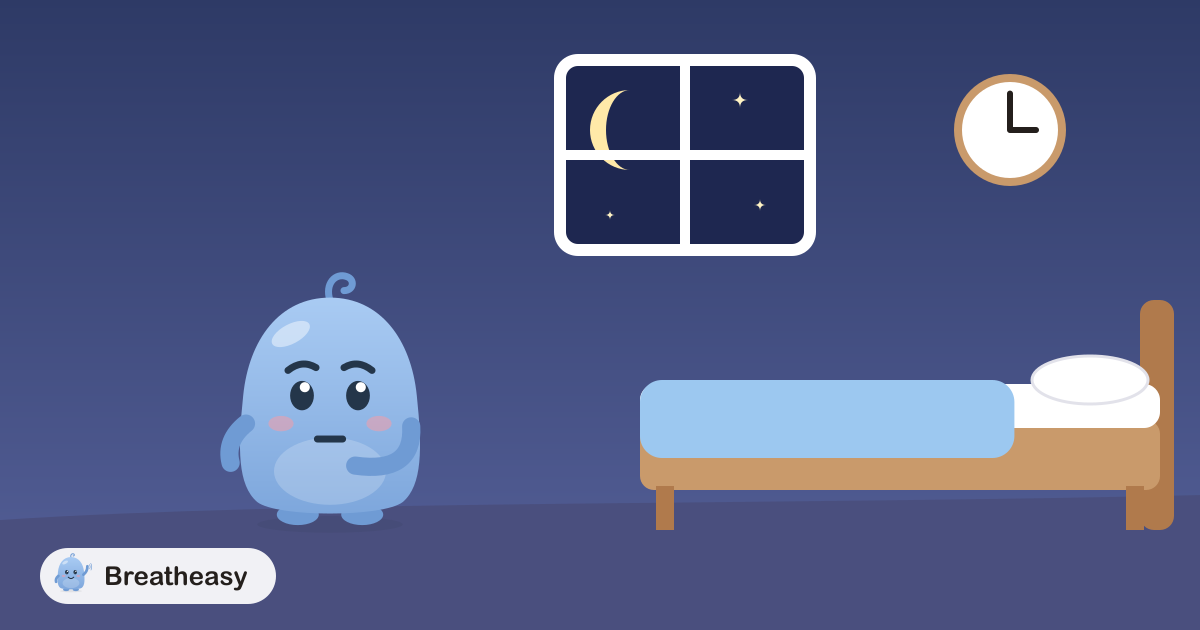
You’re exhausted all day, then the moment your head hits the pillow, your brain switches on. Or you fall asleep fine but wake at 3am and stare at the ceiling.
Insomnia is very common, and it’s very treatable. Here’s how to know if you have it, what causes it, and what helps.
How to know if you have insomnia
The NHS says you have insomnia if you regularly:
- find it hard to go to sleep
- wake up several times during the night
- lie awake at night
- wake up early and can’t go back to sleep
- still feel tired after waking up
- find it hard to nap during the day even though you’re tired
- feel tired and irritable during the day
- find it difficult to concentrate during the day because you’re tired
Insomnia that lasts less than 3 months is called short-term insomnia. If it lasts 3 months or longer, it’s called long-term insomnia.
What can cause insomnia?
According to the NHS, the most common causes are:
- stress, anxiety or depression
- noise
- a room that’s too hot or cold
- an uncomfortable bed
- alcohol, caffeine or nicotine
- recreational drugs
- jet lag
- shift work
Other things can cause it too, including long-term pain, sleep apnoea, restless legs syndrome, an overactive thyroid, menopause and some medicines.
Why am I tired but can’t sleep?
Being sleepy and being able to fall asleep aren’t the same thing. If stress or anxiety has your body’s alarm system switched on, you can feel exhausted and wired at the same time. Racing thoughts, a fast heartbeat and tense muscles all keep you awake.
Over time, the bed itself can become linked with frustration and worry. You start dreading bedtime, which makes it even harder to drop off. Our post on why anxiety gets worse at night explains more.
What helps
The NHS recommends:
- Only go to bed when you’re sleepy.
- Get up at the same time every day, even after a bad night.
- Relax for at least an hour before bed, for example with a bath or a book.
- Keep your bedroom dark and quiet, using curtains, an eye mask or ear plugs if you need to.
- Exercise regularly during the day.
- Avoid caffeine, alcohol and smoking for at least 6 hours before bed.
- Avoid big meals late at night.
- Avoid screens right before bed.
- Avoid napping during the day.
If you can’t sleep, many sleep specialists suggest getting up after about 20 minutes and doing something calm in dim light until you feel sleepy, so that your bed stays linked with sleep rather than frustration.
If anxiety is keeping you awake
- Write down your worries earlier in the evening, with one next step for each.
- Breathe out slowly, making each out-breath longer than the in-breath.
- Relax your muscles one group at a time.
- Listen to something calm, like rain or a gentle story, to give your mind something soft to focus on.
Our post on how to sleep with anxiety has more.
Treatment for long-term insomnia
Cognitive behavioural therapy for insomnia (CBT-I) is the recommended first treatment for long-term insomnia. The American College of Physicians recommends that all adults with chronic insomnia are offered CBT-I first, and a review of 20 trials found it was effective, with clinically meaningful improvements. CBT-I helps you change the habits and thoughts that keep you awake, and can be done with a therapist or through an online programme.
Sleeping pills are now rarely prescribed for insomnia, and only for a few days or weeks at most, because they can have serious side effects and you can become dependent on them. Talk to a doctor before taking anything for sleep.
When to get help
See a doctor if changing your sleep habits hasn’t helped, you’ve had trouble sleeping for months, or insomnia is making it hard to cope with daily life. Also see a doctor if you snore loudly or make gasping or choking noises at night, which can be signs of sleep apnoea. If you’re having thoughts of ending your life, call or text 988 (US) now.
Frequently asked questions
How do I know if I have insomnia?
If you regularly struggle to fall asleep or stay asleep, or wake too early, and feel tired or irritable during the day, you may have insomnia.
What is the most common cause of insomnia?
Stress, anxiety and depression are among the most common causes, along with things like noise, caffeine, alcohol and an uncomfortable bedroom.
Why am I so tired but can’t fall asleep?
Usually because stress or anxiety has switched on your body’s alarm system, so you feel exhausted but wired. Worry about not sleeping can make it worse.
Can insomnia be cured?
Yes, for many people. Short-term insomnia often improves on its own or with better sleep habits. For long-term insomnia, CBT-I is effective for most people.
How Breatheasy can help
Breatheasy can help you wind down and drift off. Listen to calming sleep sounds like rain and waves, or a gentle bedtime story read by Luma. If anxiety wakes you in the night, tap “I’m feeling anxious” and Luma guides slow breathing as your phone pulses gently, so you can keep your eyes closed. Ten-second check-ins help you spot how sleep and mood affect each other. Breatheasy is coming soon to iPhone and Android.
Sources
- Insomnia, NHS
- Management of chronic insomnia disorder in adults: a clinical practice guideline from the American College of Physicians, Qaseem and others, Annals of Internal Medicine, 2016
- Cognitive behavioral therapy for chronic insomnia: a systematic review and meta-analysis, Trauer and others, Annals of Internal Medicine, 2015