Breatheasy
Silent panic attacks: when no one can tell
Inside, your heart is racing and your mind is screaming. Outside, you look completely fine. What silent panic attacks are, why they happen and what helps.
 Breatheasy team27 October 2026 · 4 min read
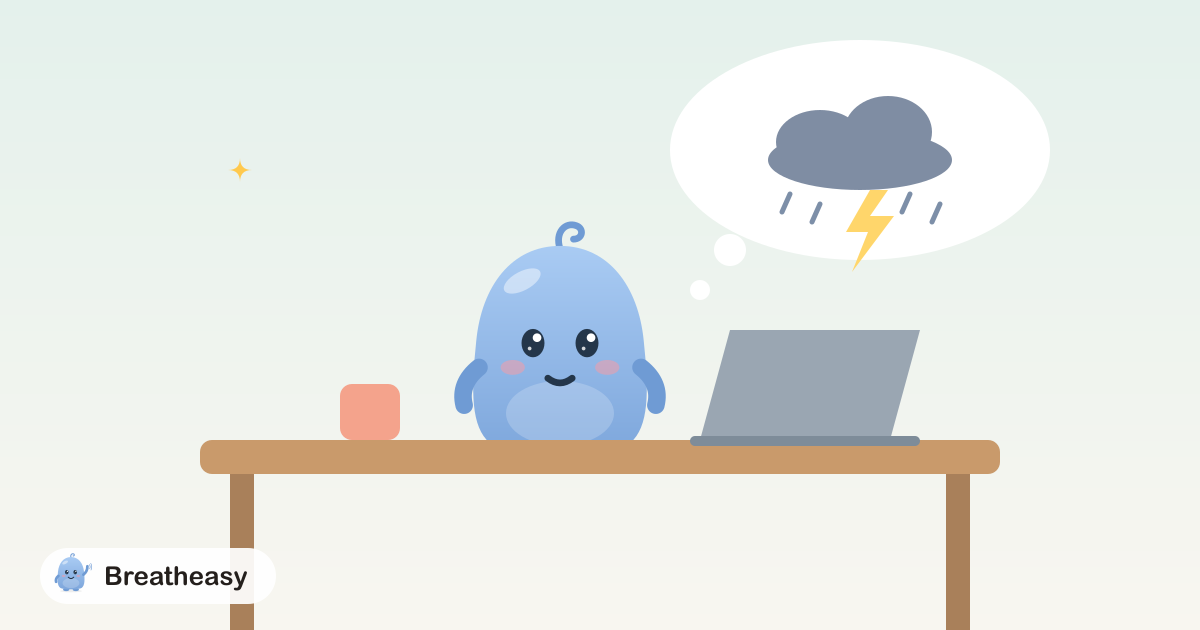
You’re in a meeting, at dinner with friends, or standing in line. On the outside, you’re nodding, smiling, maybe even talking. On the inside, your heart is pounding, your chest is tight, and you’re sure something terrible is about to happen.
That’s a silent panic attack. It’s more common than you might think, and the fact that no one can see it can make it feel even lonelier.
What is a silent panic attack?
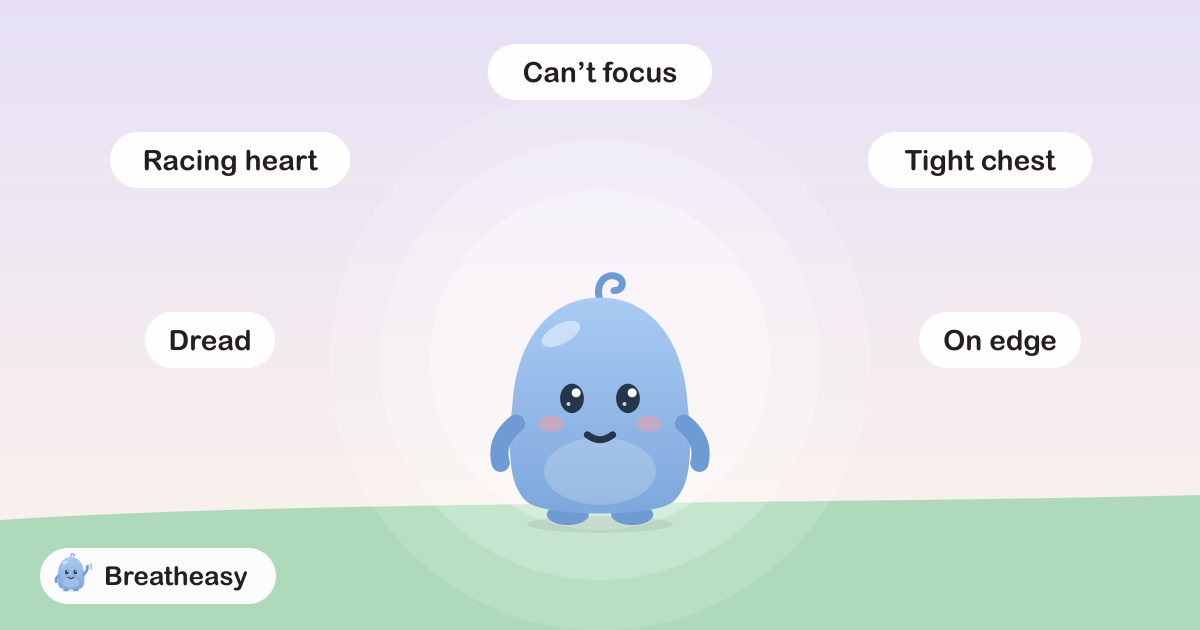
“Silent panic attack” isn’t a medical term, but it describes a real experience: a panic attack with few or no outward signs. You might not cry, gasp, shake visibly or need to leave. People around you may have no idea.
Inside, it’s the same alarm system as any panic attack: a sudden surge of fear, along with body feelings like a racing heart and a sense of dread. It can be just as intense. Doctors use the term limited-symptom panic attack for attacks with fewer symptoms, and some silent attacks fit that description, but others have all the usual symptoms, just hidden.
Signs of a silent panic attack
You might feel:
- a sudden rush of fear or doom, out of nowhere
- your heart pounding, racing or skipping
- tightness in your chest or throat
- feeling short of breath, or like you can’t take a full breath
- dizziness or light-headedness
- hot flushes, chills or sweaty palms
- tingling or numbness
- feeling unreal, or detached from what’s going on
- a strong urge to escape, while staying where you are
On the outside, you might look a little quiet, distracted or pale, or seem completely normal.
Why some panic attacks are silent
- You’ve learned to hide it. Many people get very good at masking panic, especially at work or school, or if they’ve felt judged before.
- Social pressure. In places where leaving or showing distress feels impossible, like meetings, classes, weddings or flights, people often push through.
- Your body’s signs are internal. A racing heart, tight chest and dread aren’t visible to others.
- Smaller attacks. Some panic attacks have fewer symptoms, which are easier to hide.
Silent panic attacks are common in people who seem calm and capable to everyone else, sometimes described as having “high-functioning anxiety”.
The hidden cost
Hiding panic takes a lot of energy. Many people feel completely drained afterwards, and some feel lonely or misunderstood, because nobody knew what they were going through. Others start avoiding situations where an attack might happen, which can quietly shrink their lives.
Our post on the panic attack hangover explains why panic leaves you so tired, and what helps.
Quiet tools you can use anywhere
These work without anyone noticing:
- A slow out-breath. Breathe in gently through your nose for 4 and out for 6. Nobody can see you doing it.
- Ground through your feet. Press your feet into the floor and notice the feeling. Wiggle your toes inside your shoes.
- Hold something. A cold drink, a pen, or your hands pressed together under the table.
- Name five things you can see, silently, in detail: “Blue mug. Grey laptop. Window. Plant. Clock.”
- Talk to yourself kindly, silently: “This is a panic attack. It will peak and pass. I can stay right here.”
- Take a short break if you need one. Going to get water or stepping out to the restroom is completely normal.
You don’t have to get rid of the feelings to cope. Letting them rise and fall, without fighting them, is what helps them pass.
Should I tell someone?
You don’t have to tell everyone. But telling one person you trust, at work or at home, can take a lot of pressure off. Knowing someone understands, and that you could signal them if you needed to, often makes panic less likely to build.
How Breatheasy can help
Breatheasy can help, quietly. Its breathing exercises pulse your phone as you breathe in, so you can follow the rhythm with your eyes closed or your phone in your hand, without anyone noticing. The panic button walks you through a panic attack step by step, and works without internet. Breatheasy is coming soon to iPhone and Android.
When to get help
Talk to a doctor if panic attacks, silent or not, keep happening, if you’re worrying about the next one, or if you’re starting to avoid things. Cognitive behavioural therapy (CBT) helps most people with panic. Our guide to anxiety and panic attacks explains what it involves.
If you have chest pain that spreads to your arm, jaw, neck or back, or you’re struggling to breathe, call 911.
Sources
- Panic disorder, NHS
- Panic Disorder: When Fear Overwhelms, National Institute of Mental Health
- Panic attacks and panic disorder, Cleveland Clinic