Breatheasy
Social anxiety disorder symptoms
More than shyness. The thoughts, body feelings and habits of social anxiety disorder, how it differs from being shy, and what helps.
 Breatheasy team27 October 2026 · 5 min read
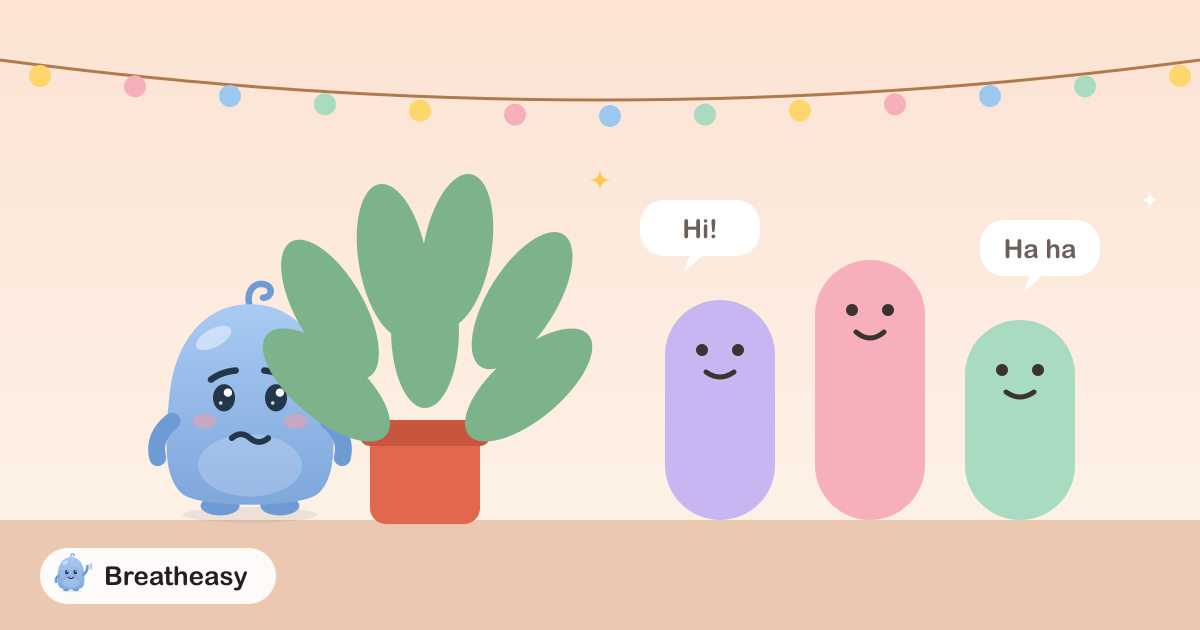
Lots of people feel nervous before a presentation or a party full of strangers. Social anxiety disorder is different. It’s an intense, lasting fear of being watched, judged or embarrassed, strong enough to shape your days: what you say, where you go and who you see.
It’s also one of the most common anxiety problems. The US National Institute of Mental Health estimates that about 12% of adults have social anxiety disorder at some point in their lives, and about 7% have it in any given year. It usually starts in the teenage years.
Here are the symptoms to look out for, and what helps.
Social anxiety vs shyness
Shyness is a personality trait. Shy people may take a while to warm up, but they usually settle in, and shyness doesn’t stop them living the life they want.
Social anxiety disorder is more intense and more disruptive. The fear is out of proportion to the situation, lasts six months or more, and leads you to avoid things, or get through them in real distress. It often affects work, school, friendships and dating.
Thoughts: what goes on in your head
Much of social anxiety happens in your mind, before, during and after social situations. You might:
- Worry for days or weeks before an event, imagining everything that could go wrong.
- Fear being judged as boring, stupid, awkward or weird.
- Fear others will notice your anxiety: that you’re blushing, shaking or sweating.
- Watch yourself from the outside during conversations, checking how you look and sound, which makes it hard to follow what people are saying.
- Assume the worst about other people’s reactions: a glance, a pause or a laugh.
- Replay conversations afterwards for hours or days, picking apart everything you said. This is sometimes called the “post-mortem”.
Body: what you feel
When you’re anxious in a social situation, your body’s fight-or-flight response kicks in. Common physical symptoms include:
- blushing
- sweating
- trembling or a shaky voice
- a pounding heart
- feeling sick or a churning stomach
- your mind going blank
- trouble making eye contact
- feeling dizzy or short of breath
Some people have panic attacks in social situations. Blushing, sweating and shaking can feel especially scary, because they’re the very things you fear others will notice.
Behaviour: what you do
Social anxiety often changes what people do, in ways that bring relief in the moment but keep the fear going:
- Avoiding situations, like parties, phone calls, eating in front of others, speaking up in meetings or using public restrooms.
- Using “safety behaviours” to get through, like staying quiet, rehearsing what to say, avoiding eye contact, holding a drink to hide shaking, wearing make-up to hide blushing, or staying near the door.
- Leaving early, or arriving late to skip small talk.
- Relying on alcohol to cope with social events.
Safety behaviours make sense, but they stop you finding out that things would have been fine without them. Some, like rehearsing or watching yourself closely, can even make you come across as less relaxed, which feeds the fear.
Situations that often trigger social anxiety
- meeting new people, or making small talk
- speaking in front of others, or in meetings
- being the centre of attention, including on your birthday
- phone or video calls
- eating, drinking or writing while others watch
- dating
- job interviews
- shopping, or asking staff for help
- going into a room where people are already sitting
Signs in children and teenagers
In children, social anxiety can look like crying, tantrums, clinging to a parent or freezing in social situations. Children may refuse to speak in class or at school, or avoid birthday parties and play dates. Teenagers may withdraw, avoid school or spend more time alone. If you’re worried about a child, talk to their doctor or school.
What helps
Cognitive behavioural therapy (CBT) is generally considered the best treatment for social anxiety disorder. CBT designed for social anxiety helps you notice the thoughts that fuel the fear, drop your safety behaviours, shift your attention away from yourself and onto the conversation, and gradually face the situations you’ve been avoiding. It can be done one to one, in a group, or as guided self-help with a workbook or online course and support from a therapist.
Medicine, usually an antidepressant called an SSRI, can also help. A doctor can talk through whether it’s right for you. Some people need a combination of treatments.
Things you can try now:
- Shift your focus outward. In conversations, get curious about the other person instead of watching yourself.
- Drop one safety behaviour at a time, and notice what really happens.
- Take small steps. Make a list of situations from least to most scary, and start at the bottom.
- Notice the post-mortem, and gently cut it short. Ask: “What would I say to a friend who said that?”
- Breathe slowly before you walk in. Our breathing exercises for panic attacks work for social nerves too.
How Breatheasy can help
Breatheasy can help you steady yourself before and after social situations. A one-minute breathing exercise before you walk in eases blushing, shaking and a racing heart, and the panic button is there if anxiety spikes. Ten-second check-ins help you notice which situations get easier over time. Breatheasy is coming soon to iPhone and Android.
When to get help
Talk to a doctor or therapist if social anxiety is stopping you doing things you want or need to do, like work, studying or seeing friends, or if you’re using alcohol to cope. Social anxiety is very treatable, and you don’t have to wait until it’s severe.
Sources
- Social anxiety (social phobia), NHS
- Social Anxiety Disorder: More Than Just Shyness, National Institute of Mental Health
- Social anxiety disorder statistics, National Institute of Mental Health
- Social anxiety disorder: recognition, assessment and treatment, NICE guideline CG159