Breatheasy
Anxiety and holding your breath: why you do it, and how to stop
Many people hold their breath without realising when they’re anxious, focused or stressed. Why breath holding happens with anxiety, and how to break the habit.
 Breatheasy team27 October 2026 · 3 min read
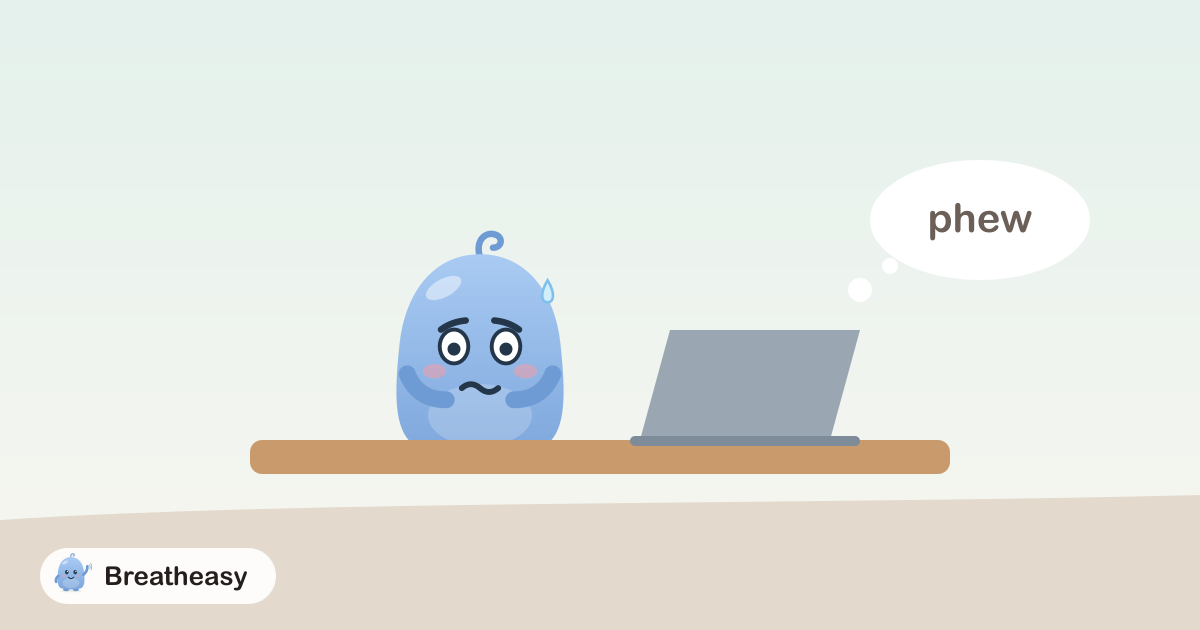
You’re reading a stressful email, waiting for news, or lying awake worrying, and suddenly you realise you haven’t breathed for a while. Then comes a big gasp or a deep sigh.
Holding your breath when anxious is very common, and most people don’t notice they do it. Here’s why it happens, why it can make anxiety worse, and how to stop.
Why do I hold my breath when I’m anxious?
The freeze response
Most people know about fight or flight, but your body has a third threat response: freeze. When something startles or worries you, your body can go still for a moment, including your breathing, while your brain works out what’s happening. That’s why you might catch your breath at a sudden noise, or hold it while waiting for bad news.
Concentration and tension
People often hold their breath while concentrating hard, like typing, reading emails, scrolling their phone or doing something fiddly. Some people call it “email apnea” or “screen apnea”. When you’re already tense, your chest and stomach muscles tighten, making shallow, held breathing more likely.
Bracing
When you expect something difficult, like a hard conversation or a scary sensation, your body braces itself, and breath holding is part of that bracing.
Why breath holding can make anxiety worse
After holding your breath, your body wants to catch up, often with a big gasp or a few quick, deep breaths. That sudden overbreathing can leave you light-headed, tingly or short of breath, which can feel like the start of panic.
For people prone to panic, the feeling of not having enough air can itself be a trigger, because the brain is very sensitive to anything that might be suffocation.
How to stop holding your breath
- Notice it. Simply catching yourself is the first and most important step. Each time you notice, you’re retraining the habit.
- Breathe out first. When you catch yourself, don’t gasp in. Breathe out gently and slowly, then let the next in-breath come naturally.
- Drop your shoulders and soften your belly. Tension in your chest and stomach makes breath holding more likely.
- Set breathing reminders. A gentle reminder on your phone or a sticky note on your screen can prompt you to check in with your breath a few times a day.
- Take regular breathing breaks. A minute of slow breathing, in for 4 and out for 6, every hour or two, helps your body find a calmer rhythm.
- Look up from your screen. Every so often, look away, roll your shoulders and take an easy breath.
Holding your breath at night
Some people notice they hold their breath while lying awake worrying. But if you or someone else notices you stop breathing while asleep, often with loud snoring, gasping or choking, and you feel very tired in the day, that may be sleep apnoea, which is different from anxiety. See a doctor about it.
How Breatheasy can help
Breatheasy can help you retrain the habit. Its guided breathing exercises pulse your phone as you breathe in, so a one-minute breathing break during the day is easy, and gentle daily reminders can nudge you to take a moment for yourself. If held breath tips into panic, tap “I’m feeling anxious” and Luma walks you through it, step by step. Breatheasy is coming soon to iPhone and Android.
When to get help
Talk to a doctor if you often feel short of breath, if breath holding leads to panic attacks, or if anxiety is affecting your daily life. Our posts on anxiety and shallow breathing and how to tell if shortness of breath is from anxiety may help too.
If you’re struggling to breathe, have chest pain, or your lips turn blue or grey, call 911.
Sources
- Klein, D. F. (1993). False suffocation alarms, spontaneous panics, and related conditions: an integrative hypothesis. Archives of General Psychiatry.
- Breathing exercises for stress, NHS
- Russo, Santarelli and O’Rourke (2017). The physiological effects of slow breathing in the healthy human. Breathe.