Breatheasy
How to stop overthinking: 12 ways to get out of your head
Why your mind replays the past and rehearses the future, why thinking harder doesn’t help, and twelve practical ways to stop overthinking, including at night and in relationships.
 Breatheasy team27 October 2026 · 5 min read
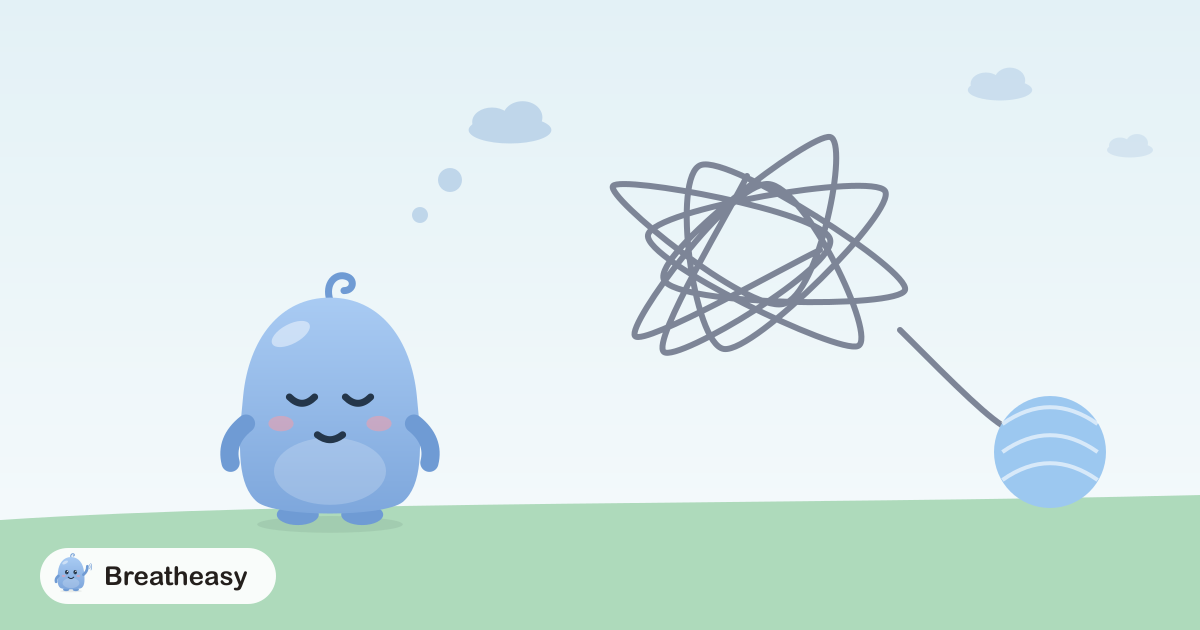
You replay a conversation from three days ago. You run through every way tomorrow could go wrong. You turn a decision over and over until you’re exhausted, and you still haven’t decided.
Overthinking is something almost everyone does, but for some people it takes over. Here’s why it happens, and twelve ways to get out of your head.
What is overthinking?
Overthinking usually takes two forms:
- Rumination: going over the past again and again. “Why did I say that?” “What if I’d done it differently?”
- Worry: rehearsing the future. “What if it goes wrong?” “What if they’re angry?”
Both feel like you’re working something out. But usually you’re going round in circles.
Why we overthink
- It feels productive. Your brain treats thinking as a way to stay safe or prepared.
- Uncertainty is uncomfortable. Overthinking is an attempt to feel certain, which is rarely possible.
- Anxiety and low mood fuel it. Anxiety pushes you to prepare for threats; low mood pulls you back to mistakes.
- It brings brief relief, which keeps you coming back to it.
Why thinking harder doesn’t help
Real problem-solving leads to a decision or an action. Overthinking doesn’t. It tends to make problems seem bigger, makes you more anxious and tired, and makes decisions harder, not easier.
12 ways to stop overthinking
1. Notice and name it
Say to yourself: “I’m overthinking.” Simply noticing the loop creates a bit of distance from it.
2. Ask: can I act on this right now?
If yes, choose one small action and do it. If no, it’s a “what if”, and more thinking won’t help. Write it down and move on.
3. Set a worry time
Choose 15 minutes a day for worrying. When thoughts arrive at other times, jot them down and save them for later. Research on this kind of “stimulus control” suggests it can help people who worry a lot.
4. Write it out
Getting thoughts onto paper slows them down and helps you see them more clearly. Many feel smaller in writing.
5. Give decisions a deadline
For decisions you keep circling, set a time limit: “I’ll decide by 5pm.” Gather what you need, decide, and accept that no choice is perfect.
6. Try “I’m having the thought that…”
Add these words to the front of a looping thought: “I’m having the thought that I messed up.” It reminds you that thoughts are just thoughts, not facts.
7. Ask what a friend would say
Imagine a friend telling you this worry. What would you say to them? Then say it to yourself.
8. Change the channel
Do something that needs your full attention: a puzzle, a game, cooking, a conversation, a hobby. You can’t think your way out of a loop, but you can absorb yourself in something else.
9. Get into your body
Walk, stretch, exercise or try 5-4-3-2-1 grounding: name 5 things you can see, 4 you can feel, 3 you can hear, 2 you can smell and 1 you can taste.
10. Breathe out slowly
In for 4, out for 6. Overthinking and a revved-up body feed each other. Calming your body quietens your mind.
11. Stop the reassurance and research loop
Asking others again, searching online and rereading messages bring brief relief, then more doubt. Try to do a little less each day.
12. Be kind to yourself
Overthinking often comes with harsh self-criticism. Speak to yourself as you would to someone you care about.
Overthinking at night
Night is when overthinking often gets loudest. Try:
- writing your worries down in the early evening, with one next step for each
- keeping a notepad by the bed for anything that pops up
- listening to something gentle, like sleep sounds or a story
- getting up after about 20 minutes if you’re wide awake, and going back to bed when you feel sleepy
Our post on how to sleep with anxiety has more.
Overthinking in relationships
Rereading messages, analysing tone and imagining rejection are common, especially if you have an anxious attachment style. Pause before reacting, check the facts and communicate needs directly. Our post on anxious attachment explains more.
When to get help
Talk to a doctor or therapist if overthinking is constant, affects your sleep or work, or comes with:
- anxiety most days, or panic attacks
- low mood or loss of interest
- unwanted, distressing thoughts and urges to check or seek reassurance, which can be part of OCD
Cognitive behavioural therapy (CBT) helps many people break the loop. If you’re having thoughts of ending your life, call or text 988 (US) now.
Frequently asked questions
Why do I overthink everything?
Often because anxiety, uncertainty or self-criticism make your brain try to prepare for every possibility. Stress, tiredness and low mood make it worse. It’s a habit, and habits can change.
Is overthinking a mental illness?
Not on its own. But constant overthinking can be part of anxiety disorders, depression or OCD. If it’s affecting your life, it’s worth talking to a professional.
How do I stop overthinking in the moment?
Name it, ask whether you can act on it now, then either take one small action or shift your attention into something absorbing or physical. Slow breathing helps your body settle too.
Can overthinking cause physical symptoms?
Yes. Constant worry keeps your stress response switched on, which can cause tension, headaches, poor sleep, tiredness and stomach problems.
How Breatheasy can help
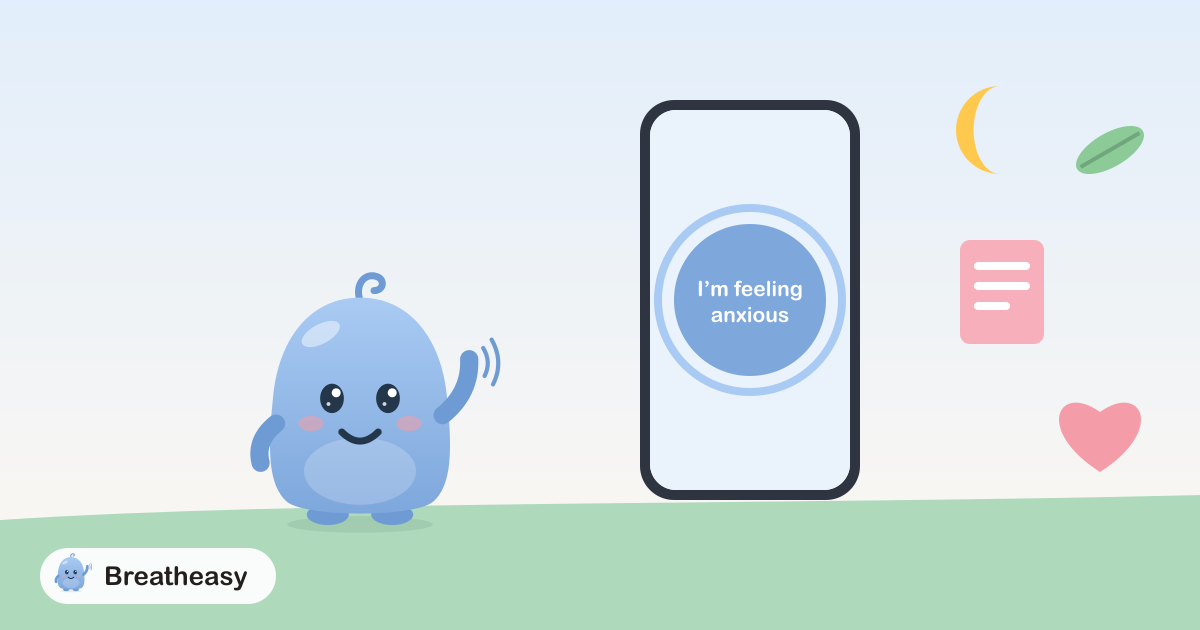
Breatheasy can help you step out of the loop. A one-minute breathing exercise pulses your phone gently as you breathe in, calming the body that keeps the thoughts spinning. The journal gives worries somewhere to go, with questions like “Is something weighing on you? Write it down and let it go.” And if overthinking tips into anxiety, tap “I’m feeling anxious” and Luma walks you through it. Breatheasy is coming soon to iPhone and Android.
Sources
- A preliminary investigation of stimulus control training for worry, McGowan and Behar, Behavior Modification, 2013
- Generalised anxiety disorder in adults, NHS
- Cognitive behavioural therapy (CBT), NHS
- Insomnia, NHS