Breatheasy
Depersonalization-derealization disorder, explained
Feeling like you’re watching yourself from outside, or that the world isn’t real? What depersonalization and derealization are, why they happen, and how people recover.
 Breatheasy team27 October 2026 · 5 min read
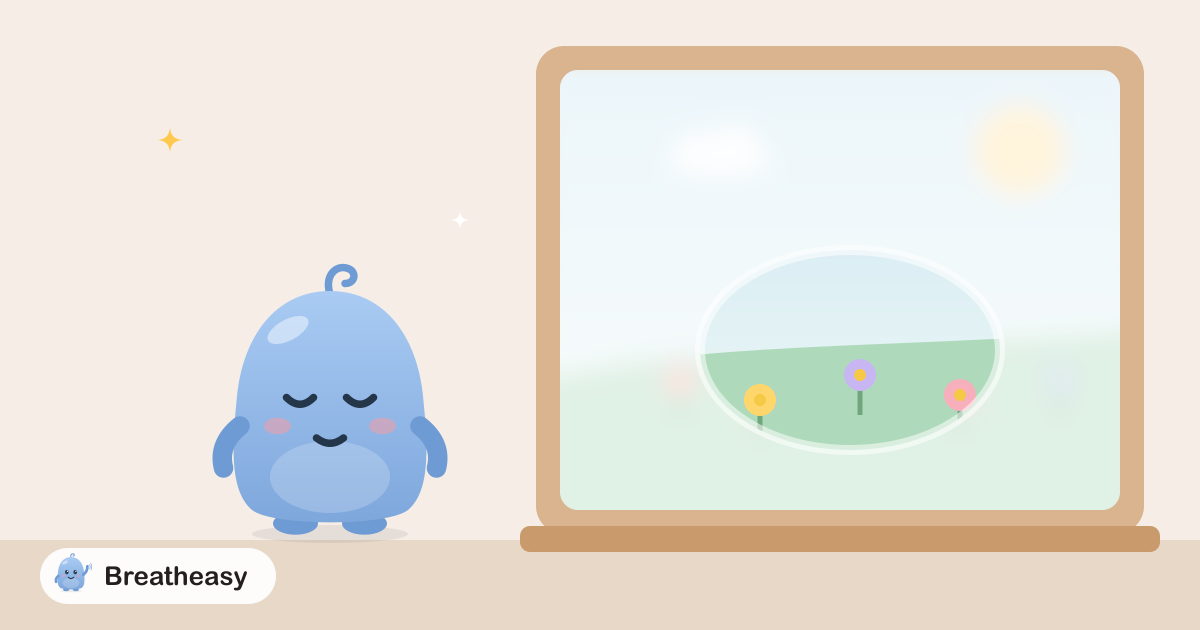
“It’s like I’m watching my life through glass.” “I look in the mirror and it doesn’t feel like me.” “Everything looks flat, like a film set.”
If those words sound familiar, you may have experienced depersonalization or derealization. These feelings can be deeply unsettling, and hard to put into words, which can make them feel lonely too. They’re more common than most people realise, and they’re not a sign that you’re losing your mind.
What depersonalization and derealization feel like
Depersonalization is feeling detached from yourself: your thoughts, feelings, body or actions. You might feel:
- like you’re watching yourself from outside, or in a film
- like a robot, or on autopilot
- emotionally numb, even with people you love
- that your body, hands or voice don’t belong to you
- that your memories don’t feel like your own
Derealization is feeling detached from the world around you. You might notice:
- things looking flat, foggy, dreamlike or washed out
- people seeming like actors, or the world like a stage set
- objects looking further away, closer, bigger or smaller than they are
- sounds seeming muffled, or too loud
- time feeling strange, as if it’s sped up or slowed down
Many people have both at the same time. We compare them in Depersonalization vs derealization, and describe derealization in more detail in What does derealization feel like?
Brief episodes vs the disorder
Brief moments of feeling unreal are very common. They often happen during or after a panic attack, when you’re exhausted or jet-lagged, after a big shock, or after using cannabis. For most people, they pass within minutes or hours.
Depersonalization-derealization disorder is when these feelings keep coming back or don’t go away, and cause real distress or get in the way of life. According to Cleveland Clinic, about 1 to 2% of people have it. It’s more common in teenagers and young adults.
It isn’t psychosis
This is one of the biggest fears, so it’s worth saying clearly: depersonalization and derealization are not psychosis. In psychosis, people lose touch with what’s real. With depersonalization and derealization, you know the world is real and you are you. It just doesn’t feel that way. That gap between knowing and feeling is exactly what makes it so frustrating and frightening.
What causes it
The exact cause isn’t known, but depersonalization and derealization are often linked to:
- Intense stress or anxiety. They’re common alongside panic attacks, anxiety and depression.
- Trauma, including difficult experiences in childhood. Detaching can be the mind’s way of protecting itself from overwhelming feelings.
- Drugs, especially cannabis and hallucinogens. For some people, a single bad experience can set off feelings that last.
- Exhaustion and lack of sleep.
Many experts see it as a protective switch: when your brain senses overwhelming threat, it dials down feelings to help you cope. The trouble is that the switch can get stuck.
Why it can keep going
In a cognitive-behavioural model of the condition, a team of UK researchers described how the feelings can become self-sustaining, in a loop similar to panic:
- You notice feeling unreal.
- You interpret it as a sign of something terrible: “I’m going crazy” or “I’ll never feel normal again.”
- That fear raises your anxiety.
- Anxiety makes the detachment stronger.
- So you check constantly: looking in mirrors, testing whether things feel real, searching your symptoms online.
All that checking keeps your attention locked on the feelings, which makes them more noticeable. Breaking the loop usually means less checking and less fighting, and turning your attention back towards your life.
What helps
Talking therapy. Cognitive behavioural therapy (CBT) adapted for depersonalization helps you understand the feelings, reduce checking and avoidance, and re-engage with life. If trauma is involved, trauma-focused therapy, such as EMDR, may help. Treating any panic, anxiety or depression alongside it is important too.
Medicine. There’s no medicine specifically for depersonalization, but a doctor may suggest treatment for anxiety or depression if you have them.
Things you can try now:
- Ground yourself through your senses. Hold something cold, smell something strong like mint or coffee, or name 5 things you can see, 4 you can touch, 3 you can hear, 2 you can smell and 1 you can taste.
- Breathe slowly, with a longer out-breath, to bring your anxiety level down.
- Notice the checking, and gently do less of it: fewer mirror checks, fewer symptom searches.
- Label it: “This is derealization. It’s my brain protecting me. It’s uncomfortable, but it isn’t dangerous.”
- Keep living your life, even when it feels unreal. Engaging with people and activities, instead of waiting to feel normal first, is often what helps the feeling fade.
- Look after the basics: sleep, regular meals, movement, and avoiding cannabis and alcohol.
Will it go away?
For many people, yes. Brief episodes usually pass on their own. Even when it’s been going on for a long time, many people get better, sometimes on their own and often with treatment. Cleveland Clinic notes that with treatment, people commonly see improvement within a few months.
How Breatheasy can help
When derealization comes with panic, Breatheasy can help bring you back. Tap “I’m feeling anxious” and Luma walks you through it: rate how strong it feels from 1 to 10, breathe slowly as your phone pulses gently, ground yourself with 5-4-3-2-1, then see how far the anxiety came down. It works without internet, and it’s always free. Grounding through your senses is one of the most useful tools for feeling present again. Breatheasy is coming soon to iPhone and Android.
When to get help
See a doctor if feelings of unreality keep coming back, last a long time, or are making it hard to work, study or enjoy life. It’s also worth getting checked if they started after a head injury, or come with other new symptoms, so other causes can be ruled out.
If you’re feeling hopeless or having thoughts of ending your life, call or text 988 in the US, or call 911 if you’re in danger.
Sources
- Depersonalization-derealization disorder, Cleveland Clinic
- Dissociative disorders, NHS
- Hunter, Phillips, Chalder, Sierra and David (2003). Depersonalisation disorder: a cognitive–behavioural conceptualisation. Behaviour Research and Therapy.