Breatheasy
What does derealization feel like?
Like a dream, a film set or a world behind glass. How people describe derealization, why it happens, and what helps you feel present again.
 Breatheasy team27 October 2026 · 4 min read
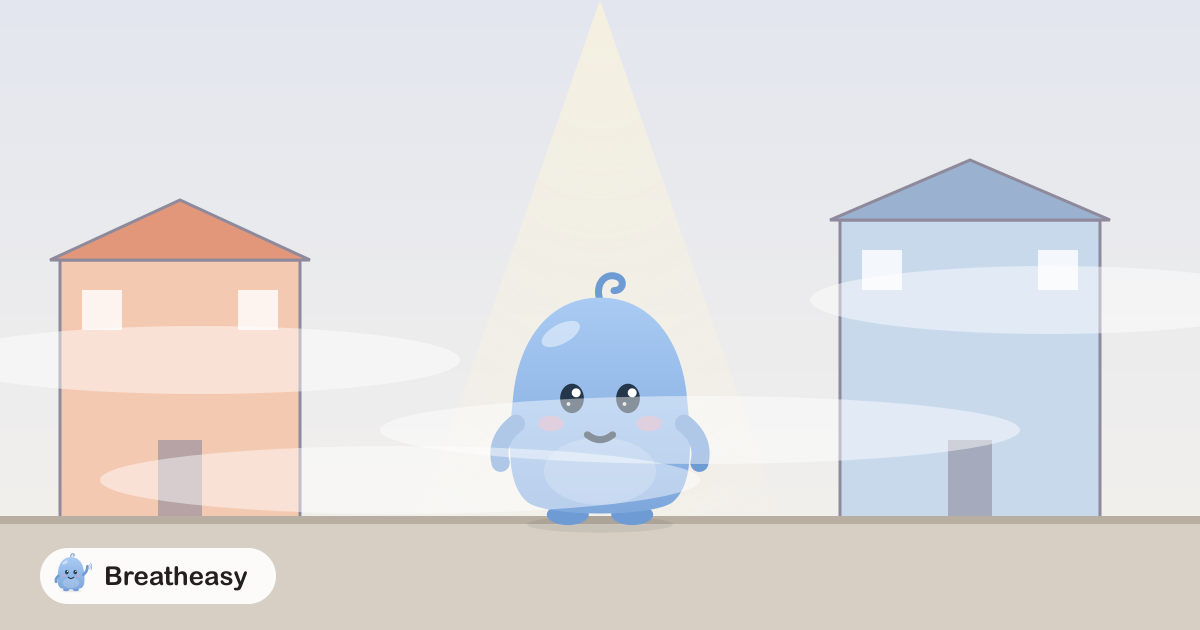
“It’s like I’m in a dream I can’t wake up from.” “Everything looks fake, like a film set.” “I can see my living room, but it doesn’t feel like mine.”
Derealization is hard to describe, and that can make it feel isolating. If you’re trying to work out whether what you’re feeling is derealization, here’s how other people describe it, why it happens, and what helps.
Derealization in a sentence
Derealization is feeling detached from the world around you: as if places, objects and people aren’t quite real, even though you know they are. It’s different from depersonalization, which is feeling detached from yourself. Many people have both. You can compare them in Depersonalization vs derealization.
How people describe derealization
Like a dream
Many people say the world feels dreamlike or hazy, as if they’re half asleep, or watching life happen rather than living it.
Like a film set or a video game
Things can look flat, staged or two-dimensional, like scenery or a computer game. People may seem like actors playing parts.
Behind glass, fog or a veil
There’s a sense of a barrier between you and the world, so that everything feels slightly out of reach.
Familiar places feel strange
Your own home, street or workplace can suddenly look unfamiliar, as if you’re seeing it for the first time, or it’s been subtly changed.
Your senses feel different
- Sight: colours may look dull or too bright, things may look too sharp or blurry, or further away, closer, bigger or smaller than they are.
- Sound: noises can seem muffled, echoey or distant, or suddenly too loud.
- Time: time can feel like it’s speeding up, slowing down, or jumping.
Emotionally distant
The world can feel emotionally flat, so that things you’d usually enjoy or care about don’t reach you in the same way.
What it feels like to live with it
Many people find derealization frightening, mostly because of what they fear it means: that they’re going crazy, losing their mind, or will never feel normal again. Some feel frustrated, because it’s hard to explain to anyone else. Others start checking constantly: looking around to test whether things feel real, or searching their symptoms online.
Here’s the reassuring part: knowing that things are real, even when they don’t feel real, is exactly what makes derealization different from psychosis. The worry itself is a sign that you’re still fully in touch with reality.
How long does derealization last?
It varies. Many people have brief episodes, lasting seconds, minutes or hours, often during or after a panic attack, or when they’re exhausted. For some, it comes and goes, or lasts for longer. When it keeps coming back or won’t go away, and causes distress, it may be depersonalization-derealization disorder, which we explain in Depersonalization-derealization disorder, explained.
What brings it on
Derealization is a kind of dissociation: your brain turning down the volume when it senses overwhelming stress or threat. Common triggers include:
- panic attacks and anxiety
- intense stress or a shock
- trauma, including difficult experiences in childhood
- lack of sleep and exhaustion
- cannabis and some other drugs
- depression
What helps
- Ground yourself through your senses. Hold something cold, smell something strong like mint or coffee, or name 5 things you can see, 4 you can touch, 3 you can hear, 2 you can smell and 1 you can taste.
- Breathe slowly, with a longer out-breath, to bring down the anxiety that often drives it.
- Name it: “This is derealization. It’s my brain protecting me. It’s uncomfortable, but it isn’t dangerous, and it will fade.”
- Check less. Testing whether things feel real keeps your attention on the feeling. Gently turn your attention to what you’re doing instead.
- Keep doing things, even if they feel unreal. Talking to people, being active and doing things you enjoy help the feeling fade.
- Look after the basics: sleep, regular meals and steering clear of cannabis.
- Treat the anxiety behind it. If panic or anxiety is the driver, getting help with that often eases derealization too.
How Breatheasy can help
Breatheasy can help you come back to the present. Tap “I’m feeling anxious” and Luma walks you through it: rate how strong it feels from 1 to 10, breathe slowly as your phone pulses gently, ground yourself with 5-4-3-2-1, then see how far the anxiety came down. It works without internet, and it’s always free. Breatheasy is coming soon to iPhone and Android.
When to get help
See a doctor if derealization keeps coming back, lasts a long time, or is getting in the way of your life. Talking therapy, including CBT, helps many people.
Get checked straight away if the feelings started suddenly after a head injury, or come with other new symptoms, like severe headaches, confusion, seizures or changes in your vision.
Sources
- Depersonalization-derealization disorder, Cleveland Clinic
- Dissociative disorders, NHS
- Hunter, Phillips, Chalder, Sierra and David (2003). Depersonalisation disorder: a cognitive–behavioural conceptualisation. Behaviour Research and Therapy.