Breatheasy
Dissociative disorders: types, symptoms, causes and treatment
Dissociative disorders involve ongoing disconnection from your thoughts, feelings, memories, surroundings or sense of identity. The three main types, what they feel like, how they link to trauma, common myths, and the treatments that help.
 Breatheasy team27 October 2026 · 5 min read
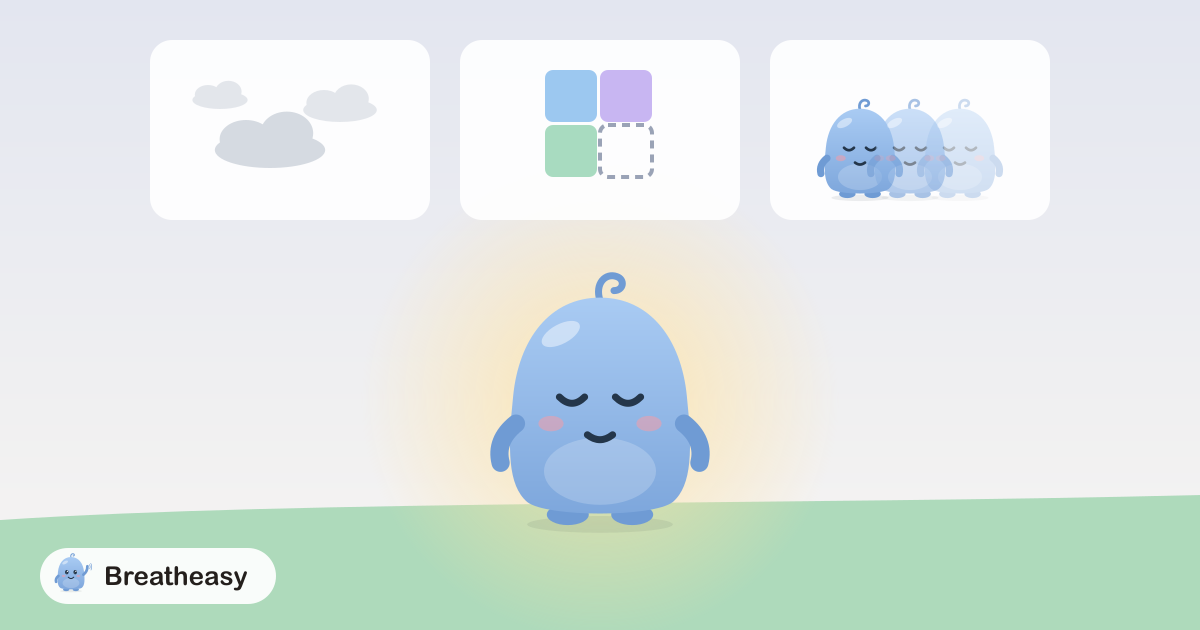
Everyone zones out sometimes. But for some people, disconnection goes much further: feeling unreal for months, losing chunks of time, or feeling that parts of themselves act separately. When dissociation is frequent and disruptive, it may be a dissociative disorder.
Here’s a clear guide to the types, what they feel like, and what helps.
What is dissociation?
Dissociation is a disconnection between things that are usually joined up, like your thoughts, feelings, memories, body, surroundings or sense of who you are. The NHS describes it as a way the mind copes with too much stress.
Mild dissociation, like daydreaming or driving on autopilot, is completely normal. Brief feelings of unreality during panic or exhaustion are very common too. Our post on dissociating explains everyday dissociation and how to ground yourself.
The main types of dissociative disorder
The NHS describes three main types:
Depersonalization-derealization disorder
Ongoing or repeated feelings of being detached from yourself (depersonalization), like watching yourself from outside, or from your surroundings (derealization), like the world is foggy, flat or dreamlike. People know these feelings aren’t real, which is part of what makes them so distressing. Our post on depersonalization-derealization disorder covers it in detail.
Dissociative amnesia
Periods where you can’t remember important information about yourself or events, often related to something stressful or traumatic, beyond ordinary forgetfulness. The NHS notes that some people find themselves in a strange place without knowing how they got there.
Dissociative identity disorder (DID)
A disrupted sense of identity, in which two or more distinct identity states, sometimes called parts or alters, may take control at different times, often with gaps in memory. It was once called multiple personality disorder. It’s strongly linked to severe, repeated trauma in early childhood.
There are also other specified and unspecified dissociative disorders, for people whose symptoms don’t fit neatly into these types.
Symptoms to look out for
- feeling detached from yourself, your body or your emotions
- the world feeling unreal, foggy or far away
- gaps in memory for everyday events or important personal information
- finding things you don’t remember buying or doing
- losing track of time
- feeling like different parts of you think or act differently
- a blurred sense of who you are
Many people with dissociative disorders also have depression, anxiety, PTSD or self-harm, which also need care.
What causes dissociative disorders?
Dissociative disorders are strongly linked to trauma, especially repeated trauma in childhood, like abuse or neglect. Dissociation can be a way the mind protects itself from overwhelming experiences when there’s no other escape. Later trauma, severe stress and some drugs can trigger or worsen dissociation too.
Myths
- “People with DID are dangerous.” People with dissociative disorders are far more likely to be hurt by others than to hurt anyone.
- “It’s just made up for attention.” Dissociative disorders are recognised conditions, and people often hide their symptoms rather than show them.
- “It’s the same as psychosis.” It isn’t. People who dissociate usually know something feels wrong, while psychosis involves losing touch with reality.
Treatment
Dissociative disorders are treatable, mainly with talking therapy. Therapy usually focuses first on safety and stability, including grounding skills and managing distress, then on processing trauma when the person is ready, and building a more connected sense of self. Medicine isn’t a direct treatment for dissociation, but it can help with depression or anxiety alongside it.
It can take time to find the right help. Look for a therapist experienced in trauma and dissociation.
When to get help
Talk to a doctor if:
- dissociation happens often, lasts a long time or causes distress
- you’re losing time or have memory gaps
- you’re finding things you don’t remember doing
- it’s affecting your work, relationships or safety
Get medical help straight away if dissociation comes on suddenly with confusion, a severe headache, weakness or a seizure, or after a head injury or taking a substance. If you’re having thoughts of harming yourself or ending your life, call or text 988 (US), or 911 in an emergency.
Frequently asked questions
What is the most common dissociative disorder?
Brief episodes of depersonalization and derealization are very common. As a disorder, depersonalization-derealization disorder is the one people are most likely to have heard of. All dissociative disorders are often missed or misdiagnosed.
Can dissociative disorders be cured?
Many people recover or improve a great deal with therapy. Some dissociative disorders resolve on their own within weeks or months after a traumatic event; others need longer-term treatment.
Is dissociation a symptom of PTSD?
It can be. Feeling numb, detached or unreal, and memory gaps, are common in PTSD, especially after repeated trauma.
How do I know if I have a dissociative disorder?
Only a qualified professional can diagnose one. If you often feel detached, lose time or have memory gaps that affect your life, talk to a doctor or therapist experienced in trauma.
How Breatheasy can help
When dissociation starts, Breatheasy can help you come back to the present. Tap “I’m feeling anxious” and Luma walks you through 5-4-3-2-1 grounding with your eyes open, one sense at a time, along with slow breathing and gentle vibrations in your hand. Ten-second check-ins help you notice what tends to set off dissociation, which is useful to share with a therapist. Breatheasy can support therapy but doesn’t replace it. Breatheasy is coming soon to iPhone and Android.
Sources
- Dissociative disorders, NHS
- Post-traumatic stress disorder (PTSD), NHS
- Post-traumatic stress disorder, National Institute of Mental Health