Breatheasy
Panic attack symptoms: the full list
Every symptom of a panic attack, from a racing heart to feeling unreal, what each one means, and which signs mean you should see a doctor.
 Breatheasy team27 October 2026 · 5 min read
When panic hits, it can feel like everything is going wrong at once. Knowing the symptoms of a panic attack, and why each one happens, can make them far less frightening the next time they come.
Here’s the full list.
What counts as a panic attack
Doctors describe a panic attack as a sudden surge of intense fear or discomfort that peaks within minutes, along with at least four of 13 symptoms. It can happen when you’re anxious, or when you’re completely calm, and even in your sleep.
Most panic attacks last between 5 and 20 minutes, according to the NHS. Every symptom comes from the same place: adrenaline, released by your body’s fight-or-flight response to get you ready for danger.
The 13 symptoms of a panic attack
We’ve grouped them by where you feel them, with a quick note on why each one happens.
Heart and chest
- A pounding, racing or fluttering heart. Your heart speeds up to send more blood to your muscles.
- Chest pain or discomfort. Tense chest muscles and fast breathing can cause tightness, aching or sharp pains.
Breathing
- Feeling short of breath or smothered. You breathe faster and higher in your chest, which can make it feel like you can’t get a full breath. Read more in How to tell if shortness of breath is from anxiety.
- Feeling like you’re choking, or that there’s a lump in your throat. The muscles in your throat tighten with fear.
Temperature and skin
- Sweating, to cool you down before you run.
- Chills or hot flushes, as blood moves away from your skin towards your muscles.
- Numbness or tingling, often in your hands, feet or around your mouth. Breathing fast lowers the carbon dioxide in your blood, which causes pins and needles.
Muscles and stomach
- Trembling or shaking, as your muscles tense up and get ready to move.
- Feeling sick, or stomach pain. Digestion pauses during fight-or-flight, which can cause nausea, butterflies or a sudden need for the toilet.
Head and senses
- Feeling dizzy, unsteady, light-headed or faint. Fast breathing and tense muscles can make you feel woozy. Fainting during panic is rare, because your blood pressure tends to rise.
- Feeling unreal or detached. The world may seem dreamlike or far away (derealization), or you might feel cut off from yourself (depersonalization). It’s a common, temporary effect of intense stress. If it lasts or keeps coming back, read Depersonalization-derealization disorder, explained.
Thoughts
- Fear of losing control or “going crazy”. It can feel as if you’re about to lose your mind, but panic doesn’t make people lose control.
- Fear of dying. Many people are sure they’re having a heart attack or stroke. This fear is one of the main things that makes panic feel so overwhelming.
Other common symptoms
These aren’t on the official list, but many people have them:
- a sense of doom, or that something terrible is about to happen
- a strong urge to escape, get outside or get home
- a dry mouth
- blurred vision, or bright and sharp-looking surroundings
- ringing in your ears
- crying, during or after the attack
- feeling weak or wobbly in your legs
Smaller panic attacks
Some attacks have only one, two or three symptoms. Doctors call these limited-symptom panic attacks. They’re still distressing, and they’re worth taking seriously: the same understanding and the same tools help.
Symptoms after a panic attack
Panic doesn’t always stop the moment the fear does. Afterwards, many people feel:
- exhausted, as if they’ve run a race
- shaky, achy or with a headache
- tearful, low or embarrassed
- on edge, and watchful for the next attack
These usually ease within a few hours. Rest, drink some water, eat something, and go gently on yourself.
A quick checklist
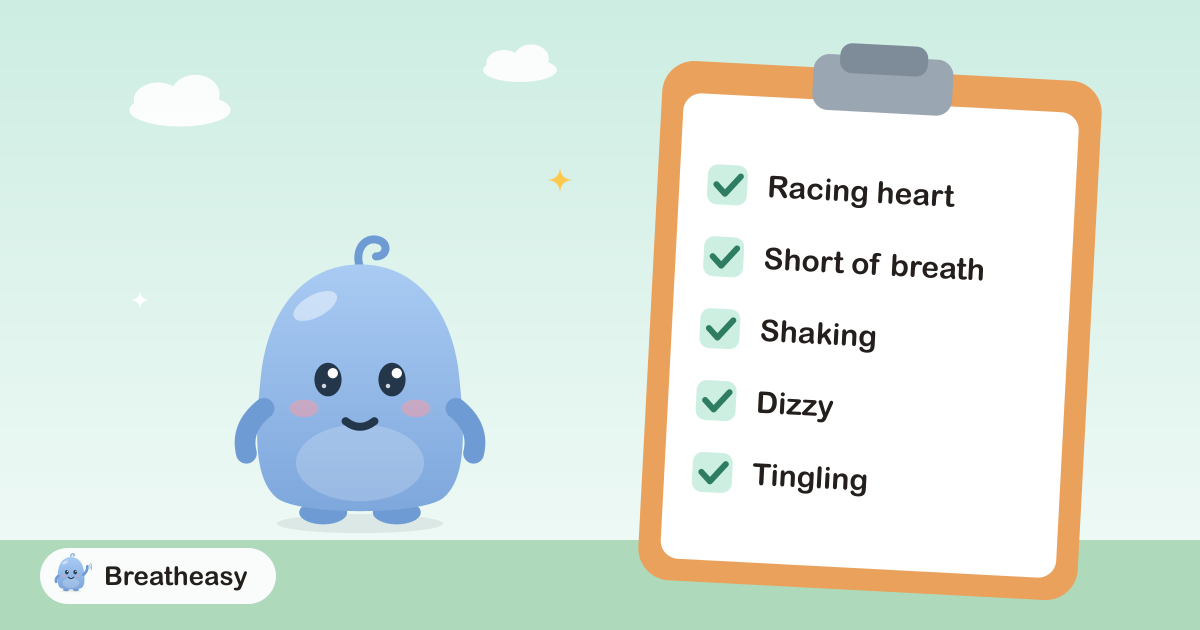
During or after an attack, it can help to notice what you felt, without judging it. Did you have:
- a racing or pounding heart?
- chest pain or tightness?
- shortness of breath, or a choking feeling?
- sweating, chills or hot flushes?
- tingling or numbness?
- shaking or trembling?
- nausea or stomach pain?
- dizziness or feeling faint?
- feeling unreal or detached?
- fear of losing control or dying?
Noticing your own pattern makes the next attack more familiar, and familiar is less frightening. If you share the list with a doctor, it helps them understand what’s happening too.
How Breatheasy can help
Breatheasy helps with the symptoms in the moment. Tap “I’m feeling anxious” and Luma walks you through it: rate how strong it feels from 1 to 10, breathe slowly as your phone pulses gently, ground yourself with 5-4-3-2-1, then see how far the anxiety came down. It works without internet, and it’s always free. Slow breathing eases many symptoms at once, from the racing heart to the tingling. Breatheasy is coming soon to iPhone and Android.
When symptoms need a doctor
Panic symptoms overlap with some other conditions, especially heart and lung problems. See a doctor:
- after your first panic attack
- if your symptoms change or feel different from usual
- if attacks keep coming back or you’re starting to avoid things
Call 911 (or your local emergency number) if you have chest pain that spreads to your arm, jaw, neck or back, you’re struggling to breathe or can’t speak, your lips or skin turn blue or grey, or you suddenly feel confused.
For what helps in the moment, and treatments that work, see our guide to anxiety and panic attacks. For how panic feels from start to finish, read What does a panic attack feel like?
Sources
- Panic disorder, NHS
- Panic Disorder: When Fear Overwhelms, National Institute of Mental Health
- Panic attacks and panic disorder, Cleveland Clinic
- Shortness of breath, NHS