Breatheasy
Stress vs anxiety: what’s the difference, and why it matters
Stress is a response to a pressure you can name; anxiety can linger without one. The key differences, what they share, how stress can turn into anxiety or burnout, what helps each, and when to get help.
 Breatheasy team27 October 2026 · 5 min read
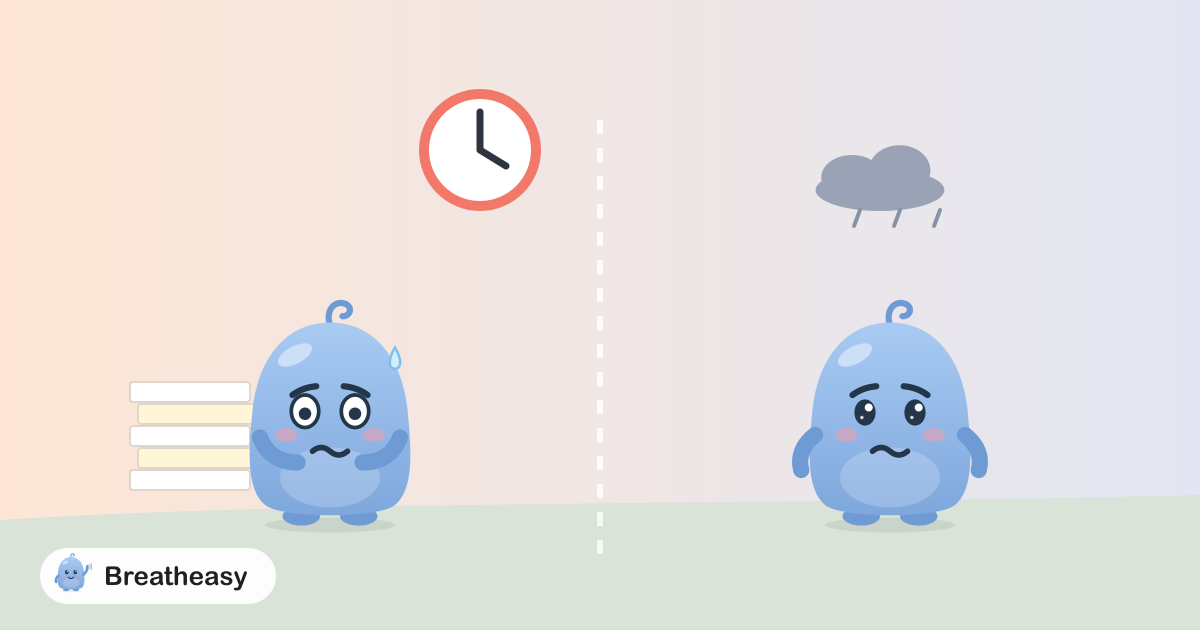
“I’m so stressed.” “I’m so anxious.” People often use the words interchangeably, and they do overlap. But they’re not quite the same thing, and knowing the difference can help you work out what will actually help.
The short answer
The US National Institute of Mental Health puts it simply:
- Stress is the physical or mental response to an external cause, like having a lot of work or being ill.
- Anxiety is your body’s reaction to stress, and it can happen even when there’s no current threat.
In other words, stress is about what’s happening; anxiety is about what might happen.
Stress and anxiety compared
| Stress | Anxiety | |
|---|---|---|
| Where it comes from | Usually an outside pressure you can name | Inside: worry, fear or dread, sometimes with no clear cause |
| Focus | The problem in front of you | What might go wrong |
| How long | Often eases when the pressure passes | Can linger long after, or keep coming back |
| Proportion | Usually matches the situation | Can feel bigger than the situation |
| Example | Tense the week before a big deadline | Still dreading work weeks after the deadline went fine |
What they have in common
Both switch on the same fight-or-flight system, so they can feel almost identical in your body:
- tense muscles, headaches or jaw clenching
- a racing heart
- trouble sleeping
- irritability
- trouble concentrating
- a churning stomach
- tiredness
How stress can turn into anxiety
Short bursts of stress are a normal part of life, and can even help you rise to a challenge. But when stress goes on for a long time, or comes from many directions at once, your alarm system can stay switched on. You may start feeling anxious even when the original stress has eased, or worrying about things that wouldn’t usually bother you.
Long-term work stress that hasn’t been managed can also lead to burnout, which the World Health Organization describes as exhaustion, feeling cynical or detached from your job, and feeling less effective at work.
What helps stress
Because stress is tied to a specific pressure, it often helps to deal with the pressure itself. Our guide to stress reduction techniques has fifteen ideas, and the physical signs of stress shows how it shows up in your body:
- Break it down. Write down what’s causing the stress and the next small step for each.
- Prioritise. Not everything is urgent. Choose what matters most this week.
- Ask for help or set limits, at work or at home.
- Build in recovery: breaks, sleep, movement and time with people you enjoy.
- Breathe out slowly when tension builds.
What helps anxiety
Because anxiety can run on after the pressure has gone, it often needs a different approach:
- Calm your body first with slow breathing and grounding.
- Notice “what if” thinking, and separate what’s happening from what might happen.
- Give worries a time slot, rather than letting them run all day.
- Gently face what you’ve been avoiding, step by step.
- Cut back on caffeine and alcohol, which both make anxiety worse.
- Get support. Cognitive behavioural therapy (CBT) is very effective for anxiety.
Our post on how to calm anxiety goes into more detail.
When to get help
Talk to a doctor if:
- worry or tension has lasted for weeks, even after the stressful situation has passed
- it feels out of proportion, or hard to control
- you’re having panic attacks
- it’s affecting your sleep, work, relationships or health
- you’re using alcohol or other drugs to cope
- you feel hopeless or very low
Call 911 if you have chest pain that spreads to your arm, jaw, neck or back, severe trouble breathing, or you faint. Stress and anxiety can cause chest symptoms, but they should be checked if you’re unsure. Our post on whether anxiety can cause chest pain explains more.
If you’re having thoughts of ending your life, call or text 988 (US) now.
Frequently asked questions
Can you have stress and anxiety at the same time?
Yes, and it’s very common. A stressful situation can trigger anxiety, and anxiety makes stress harder to handle. Many of the same things help both: slow breathing, sleep, movement and support.
Can stress cause anxiety?
Yes. Long-lasting or intense stress can keep your alarm system switched on, and anxiety can carry on even after the stress has eased. Stressful periods often trigger anxiety disorders in people who are prone to them.
Can stress cause panic attacks?
It can contribute. Panic attacks often happen during or after stressful periods, sometimes when you’ve finally started to relax. Our post on panic attacks that come out of nowhere explains why.
Is it stress or an anxiety disorder?
If worry fades once the pressure passes, it’s more likely stress. If it lingers for weeks, feels out of proportion, or shows up when nothing much is wrong, it may be an anxiety disorder. A doctor can help you tell the difference.
Is burnout the same as anxiety?
No. Burnout is linked specifically to long-term work stress and involves exhaustion, detachment from work and feeling less effective. It often overlaps with anxiety and depression, and it’s worth getting support for either.
How Breatheasy can help
Breatheasy helps with both. When tension builds, a one-minute breathing exercise pulses your phone gently as you breathe in. If stress tips into anxiety or panic, tap “I’m feeling anxious” and Luma walks you through it. Ten-second check-ins help you notice whether your worry is following a particular pressure or sticking around after it’s gone. Breatheasy is coming soon to iPhone and Android.
Sources
- I’m so stressed out! Fact sheet, National Institute of Mental Health
- Anxiety disorders, National Institute of Mental Health
- Burn-out an “occupational phenomenon”, World Health Organization
- Generalised anxiety disorder in adults, NHS