Breatheasy
The different types of anxiety disorders, explained simply
Generalised anxiety, panic disorder, social anxiety, phobias, agoraphobia, separation anxiety and selective mutism, what each is like, how common they are, and where OCD, PTSD and health anxiety fit in today.
 Breatheasy team27 October 2026 · 6 min read
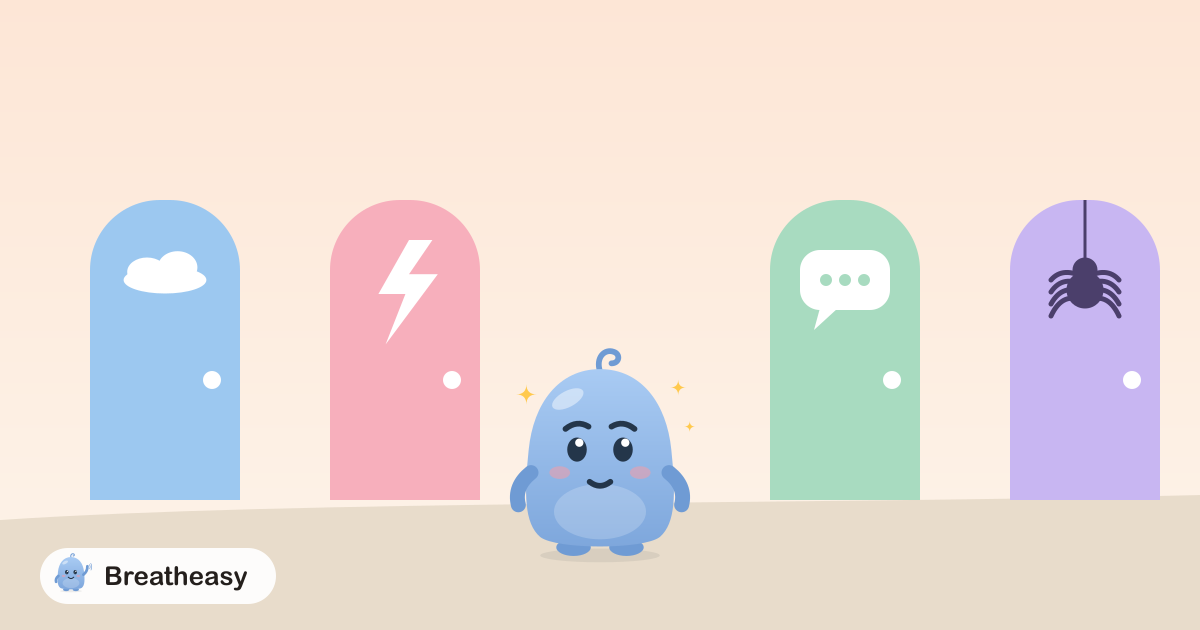
“Anxiety” covers a lot of ground. For one person it’s constant worry about everything; for another it’s sudden panic attacks; for someone else it’s dread before every social event, or a fear of spiders, or of leaving home.
Doctors group anxiety disorders by what the fear is about and how it shows up. Here’s a simple guide to each type, using the current classification in the DSM-5-TR, the manual US doctors use.
The anxiety disorders at a glance
| Type | What the fear is about | US adults in the past year |
|---|---|---|
| Specific phobia | A particular thing or situation, like heights, needles, flying or animals | about 9.1% |
| Social anxiety disorder | Being judged, embarrassed or rejected by others | about 7.1% |
| Generalised anxiety disorder (GAD) | Many everyday things, most days | about 2.7% |
| Panic disorder | Repeated panic attacks, and fear of the next one | about 2.7% |
| Agoraphobia | Places where escape or help might be hard | about 0.9% |
| Separation anxiety disorder | Being apart from people you’re close to | not in these figures |
| Selective mutism | Speaking in certain situations, mostly in children | mostly affects children |
Figures are from the National Institute of Mental Health. Many people have more than one type.
Generalised anxiety disorder (GAD)
Worrying about lots of different things, like health, money, work and family, most days for at least six months, and finding it very hard to stop. It often comes with restlessness, tiredness, trouble concentrating, irritability, tense muscles and poor sleep.
Panic disorder
Repeated, unexpected panic attacks, sudden surges of intense fear that peak within minutes, plus a month or more of worrying about having another one, or changing your life to avoid them. Our guide to anxiety and panic attacks covers it in depth.
Social anxiety disorder
An intense fear of being watched, judged or embarrassed in social or performance situations, like meetings, parties, eating in front of others or speaking up. It’s much more than shyness, and it often leads to avoiding people and opportunities. Our post on social anxiety disorder symptoms explains more.
Specific phobias
A strong, lasting fear of a particular thing or situation that’s out of proportion to the real danger. Common ones include:
- animals, like spiders, dogs or snakes
- heights, storms or water
- blood, injections or medical procedures
- situations like flying, lifts or enclosed spaces
- vomiting (emetophobia) or choking
Phobias are the most common anxiety disorder, and among the most treatable.
Agoraphobia
Fear of situations where it might be hard to escape or get help if panic or embarrassing symptoms strike, like public transport, crowds, shops, open spaces or being outside alone. Many people with agoraphobia also have panic attacks, and in severe cases people find it hard to leave home.
Separation anxiety disorder
Intense, lasting worry about being apart from people you’re close to, or that something bad will happen to them. It’s best known in children, but adults can have it too.
Selective mutism
Being consistently unable to speak in certain situations, like school, despite speaking comfortably elsewhere, like at home. It mostly affects young children and is closely linked to social anxiety.
Anxiety caused by something else
Doctors also recognise anxiety that’s directly caused by:
- substances or medicines, like caffeine, stimulants, cannabis, some prescription medicines, or withdrawal from alcohol or sedatives
- another medical condition, like an overactive thyroid, heart rhythm problems or breathing conditions
That’s one reason doctors may check your physical health when anxiety starts.
Where OCD, PTSD and health anxiety fit in
These conditions involve a lot of anxiety, and older articles often list them as anxiety disorders. Since 2013, doctors have grouped them separately:
- Obsessive-compulsive disorder (OCD) now has its own group. It involves unwanted, distressing thoughts (obsessions) and actions or mental rituals done to feel safe (compulsions). Our post on how to stop intrusive thoughts explains more.
- Post-traumatic stress disorder (PTSD) is grouped with trauma- and stress-related disorders. It follows a frightening event and involves flashbacks, nightmares, avoidance and feeling on edge.
- Illness anxiety disorder (health anxiety) is grouped with conditions involving body symptoms. Our post on illness anxiety vs somatic symptom disorder explains it.
How anxiety disorders are treated
Most types respond to the same core treatments:
- Cognitive behavioural therapy (CBT), especially gradual exposure to feared situations. It’s the most researched treatment for anxiety disorders.
- Medicine, often an SSRI or SNRI, particularly for GAD, panic disorder and social anxiety.
- Self-help based on CBT, plus exercise, sleep and cutting back on caffeine and alcohol.
Specific phobias often respond especially quickly to exposure-based therapy.
When to get help
Talk to a doctor if anxiety is affecting your work, relationships, sleep or daily life, or if you’re avoiding things because of it. You don’t need to know which type you have. That’s what an assessment is for.
If you’re having thoughts of ending your life, call or text 988 (US) now.
Frequently asked questions
What is the most common type of anxiety disorder?
Specific phobias, which affect about 9% of US adults in a given year, followed by social anxiety disorder at about 7%, according to the National Institute of Mental Health.
Can you have more than one type of anxiety?
Yes, and it’s very common. Many people have, for example, both panic disorder and agoraphobia, or GAD alongside social anxiety. Depression often comes along with anxiety too.
Is OCD an anxiety disorder?
Not in the current classification. Since 2013, OCD has been grouped separately, with related conditions like hoarding and body-focused repetitive behaviours. But anxiety is a big part of it, and it’s treated with a form of CBT called exposure and response prevention (ERP).
How do I know which type of anxiety I have?
A doctor or mental health professional can assess you. It helps to note what triggers your anxiety, what you avoid, how long it’s been going on and whether you have panic attacks. Our post on what anxiety is is a good starting point.
How Breatheasy can help
Whatever type of anxiety you have, Breatheasy can help in the moment and over time. Tap “I’m feeling anxious” and Luma walks you through slow breathing and grounding. Short lessons explain what anxiety is doing in your body, and a two-week anxiety check using the GAD-7 helps you see how you’re doing. Breatheasy is coming soon to iPhone and Android.
Sources
- Anxiety disorders, National Institute of Mental Health
- Specific phobia statistics, National Institute of Mental Health
- Social anxiety disorder statistics, National Institute of Mental Health
- Generalized anxiety disorder statistics, National Institute of Mental Health
- Panic disorder statistics, National Institute of Mental Health
- Agoraphobia statistics, National Institute of Mental Health
- Obsessive-compulsive disorder, National Institute of Mental Health
- Phobias, NHS